


If you’re searching for the difference between 3C–4A vs 4C bundles, the main distinction comes down to curl definition, coil tightness, density, and shrinkage. 3C–4A bundles have more visible, defined curls and coils, while 4C bundles feature a tighter, denser texture with greater shrinkage and less visible curl definition. Textured extension ranges such as those offered by ONYC Hair reflect these differences, making it useful to compare each texture with the natural hair that will remain visible. When choosing Black Owned Hair Extensions for textured hair, the best match depends on more than a curl-type label. Comparing your natural hair’s coil size, density, shrinkage, and visible definition can help you determine whether a 3C–4A or 4C texture will create the more natural transition.
Confused about 3C–4A vs 4C textures? When choosing Type 4 Bundles, curl pattern and hair quality both matter. The same applies when comparing African American Extensions, where texture compatibility can make a noticeable difference in how naturally the hair blends.
What is the difference Between 3C–4A vs 4C Hair Bundles?
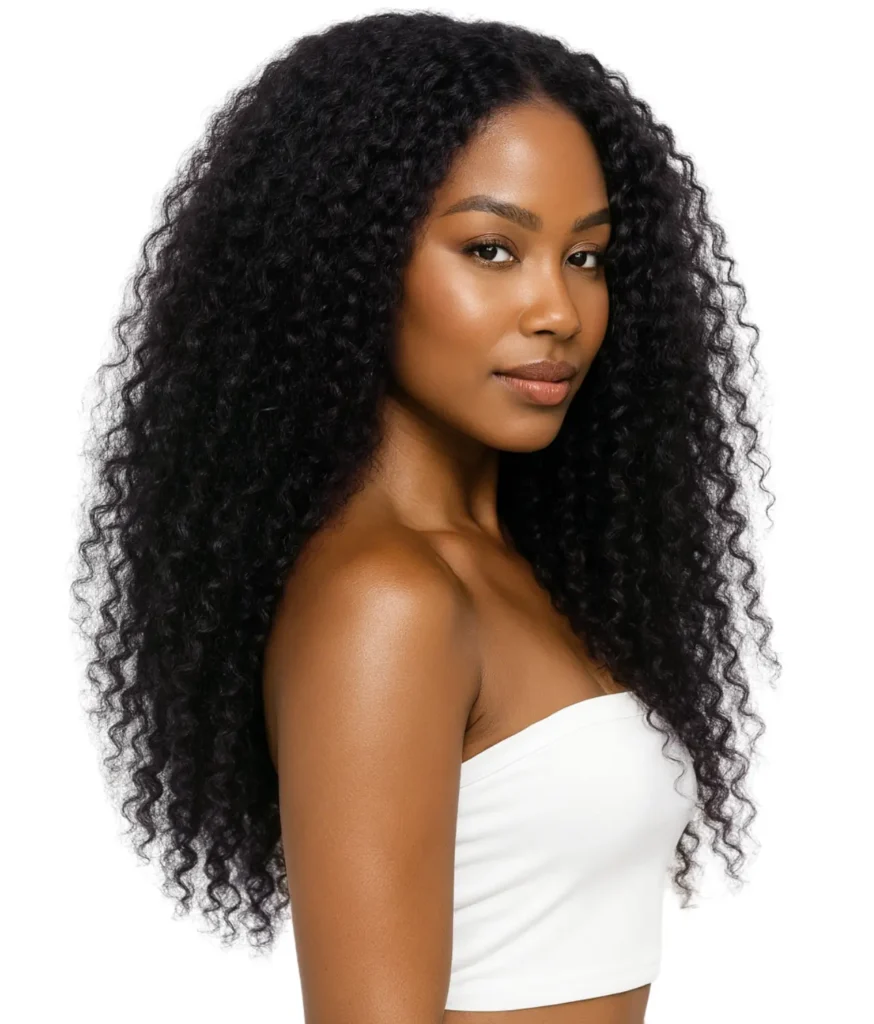
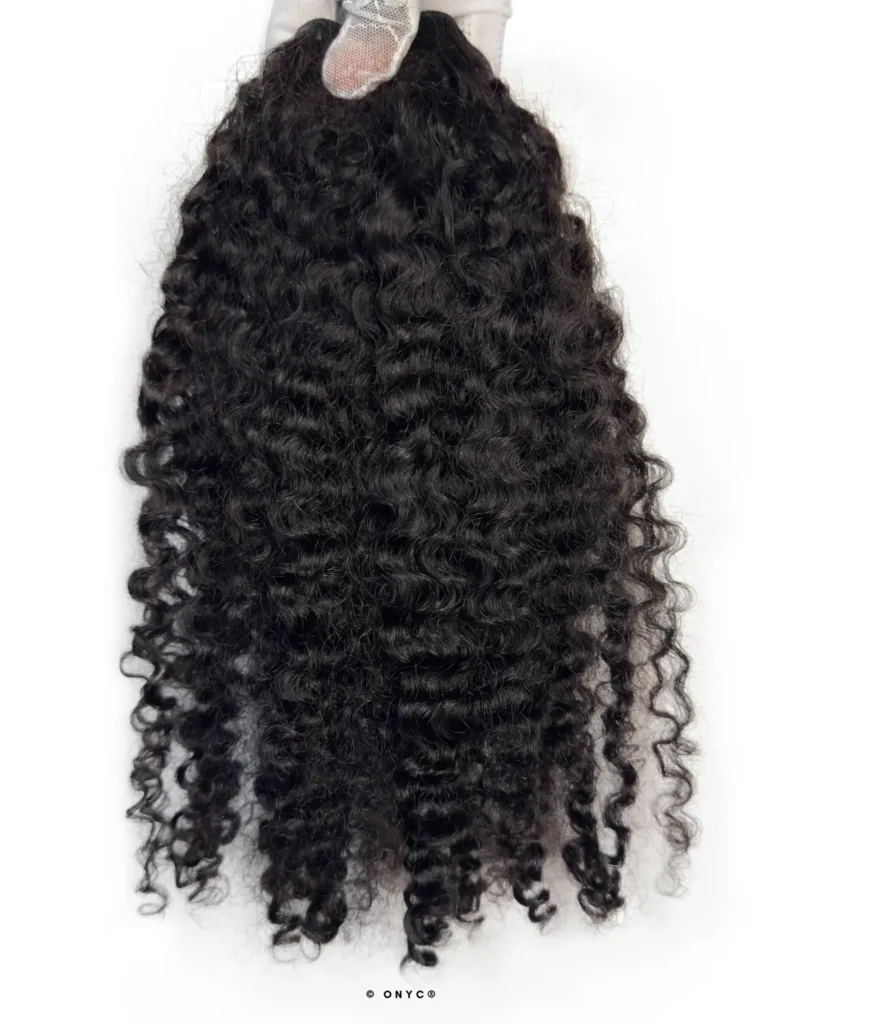
The main difference between 3C–4A and 4C hair bundles is how visible and compact the curl or coil pattern appears. 3C–4A textures similar to ONYC Tight Kinky 3C–4A™ generally show more defined corkscrew curls and small coils, while 4C textures such as ONYC Afro Kinks 4C™, tend to appear tighter, denser and less uniformly defined.
 Pin
3C–4A Hair Bundles: This texture features defined curls or soft S-shaped coils with medium-to-high density. Shrinkage is generally moderate to high, while the more visible curl structure allows more of the hair’s length to remain apparent compared with tighter 4C textures. The defined, springy pattern provides enough structure to blend naturally with curls and coils in the 3C–4A range while maintaining softness, movement, and fullness.
4C Hair Bundles: This texture features very tight, compact coils with less visible curl definition and a naturally dense, Afro-inspired appearance. Because of the tighter coil structure, 4C textures typically create the appearance of greater shrinkage, with more of the hair’s true length visually compressed when unstretched. Choosing textures like ONYC 4C Human Hair Bundles can help create the density and tightly coiled finish associated with 4B–4C natural hair.
Beyond the visible curl pattern, differences in curl definition, density, and shrinkage can influence how each texture looks and blends with natural hair extensions.
-
Kinky Curly Human Hair Weave Bundles For Natural Sew-In Extensions – ONYC® Kinky 3B-3C Curl
Select options This product has multiple variants. The options may be chosen on the product page


-
Water Kinky Curly Human Hair Bundles Natural Indian Hair – ONYC® Loose Kinks 3C™ ClassiQUE™
Select options This product has multiple variants. The options may be chosen on the product page
-
Afro Kinky Curly 3C 4A Bundles Natural Hair Weave Sew-In Coily 3C-4C – ONYC® Tight Kinky 3C-4A™
Select options This product has multiple variants. The options may be chosen on the product page


-
4C Human Hair Bundles for 4B/4C Coily Afro Sew-In Weave – ONYC® Afro Kinks 4C ClassiQUE™
Select options This product has multiple variants. The options may be chosen on the product page


Key Differences Between 3C–4A vs 4C — Comparison Chart
Understanding the key differences between 3C–4A and 4C hair bundles can help you choose the texture that best matches your natural hair and desired finish. This comparison chart breaks down curl definition, density, shrinkage, blending, maintenance, and overall appearance, making it easier to see how each texture behaves and select high quality hair extensions that blend seamlessly with your natural coils.
| Feature | 3C–4A HAIR Defined springy curls with visible structure and versatile blending | 4C HAIR Dense compact coils with maximum shrinkage and natural 4C realism |
|---|---|---|
| Curl Pattern | Defined and visibly structured.A blend of 3C curls and 4A coils with springy, noticeable ringlets and clear curl definition. | Extremely tight and compact.Very tight 4B–4C zig-zag coils with minimal visible curl pattern and a much denser overall appearance. |
| Coil Size | Medium-sized curls with noticeable structure, making the curl pattern easier to see even when the hair is full or fluffed. | Extremely tiny, compact coils that sit closely together and create a dense natural texture. |
| Texture Appearance | Visible curl definition with a natural blended appearance that combines defined curls with soft textured fullness. | Dense, tightly packed texture with little to no visible curl definition, creating a more authentic tightly coiled afro appearance. |
| Shrinkage Level | Moderate to high shrinkage.The curls contract noticeably while still allowing more of the actual hair length to remain visible. | Extreme shrinkage.The tightly compact coils can make the hair appear significantly shorter than its true stretched length. |
| Actual Length vs Look | The actual length remains more visible in its natural curly state because the curl structure is larger and less compact. | Much of the true length is visually hidden because heavy shrinkage causes the coils to contract considerably. |
| Volume / Bushiness | Can become full and slightly bushy when fluffed, while still maintaining noticeable curl structure and movement. | Very bushy and dense with substantial expansion. The texture can become increasingly full as the coils are separated and worn over time. |
| Manageability | More manageable for everyday styling.The curls can generally be fluffed, separated, or defined more easily depending on the desired finish. | Requires more hands-on maintenance.The dense texture behaves more like natural 4C hair and typically needs additional time for detangling, moisturizing, stretching, and styling. |
| Styling Flexibility | Can transition between defined curls and a softer, frizzier or more voluminous finish, making it adaptable to several textured styles. | Can be stretched or defined, but achieving a noticeably different finish generally requires more manipulation and styling effort. |
| Luster | Low natural luster that gives the curls a soft, realistic appearance without looking overly shiny. | Super-low luster with a more matte appearance that closely resembles naturally dense 4C hair. |
| Moisture Behavior | Generally retains moisture more easily than the tighter 4C texture and can maintain softness with a consistent moisture routine. | Requires consistent moisture management because the compact texture can make even product distribution and detangling more involved. |
| Blending Ability | Broader natural-hair blending range.Works well with 4A, 4B, and some 4C textures depending on the natural curl pattern and styling method. | Strongest match for tightly coiled 4C hair.Best when the goal is to closely mimic the compact density and minimal visible definition associated with natural 4C hair. |
| Maintenance Level | Moderate maintenance. Regular moisture, gentle detangling, and curl preservation help maintain definition and softness. | Very high maintenance compared with the looser texture because the compact coils typically require more time, moisture, and careful handling. |
| Best Use Case | Ideal for full installs and everyday wear.A versatile choice when visible curl definition, natural fullness, and easier styling are priorities. | Excellent for highly realistic 4C blending.Especially useful around leave-out or the last tracks of an install when maximum texture matching is the priority. |
| Overall Look | Defined, soft curls with noticeable movement, spring, and a balanced combination of curl structure and natural fullness. | Dense, tightly coiled afro texture with substantial shrinkage, bushiness, and maximum 4C-inspired realism. |
3C–4A HAIR Defined springy curls with visible structure and versatile blending
4C HAIR Dense compact coils with maximum shrinkage and natural 4C realism
While both 3C–4A and 4C hair types offer beautiful, versatile textures, understanding their differences is key to achieving the most natural blend and maintaining healthy hair. If you're still unsure which option suits your texture best, explore this complete guide on What are the Best Hair Extensions for Type 4 Hair to find your perfect match.
Important Note: For the most natural results, match your bundles to your true curl pattern rather than your desired curl pattern. This is especially important when working with different types of hair and textures. Choosing a noticeably different texture may require more manipulation, styling, or product to create a consistent blend. Starting with a texture that closely resembles your natural hair can make blending easier while reducing the need for unnecessary styling.
How Do 3C–4A and 4C Bundles Differ in Curl Pattern?
Curl pattern is one of the easiest differences to notice when comparing 3C–4A vs 4C bundles. A 3C–4A texture generally has more visible structure. You can more easily identify individual corkscrew curls or small coils throughout the hair. Even when the texture is fluffed for additional volume, some of that curl definition remains visible.
A 4C-inspired texture is much tighter and more compact. Instead of relying on clearly separated ringlets, the overall appearance comes from densely packed coils, texture, and volume. Individual sections may appear less uniformly defined, which helps create the fuller Afro-textured finish associated with tightly coiled natural hair.
This difference matters when blending extensions because matching only the general category of “kinky” or “coily” hair may not be enough. Compare the diameter and visibility of your natural coils with the extension texture, especially if you plan to leave some of your own hair exposed.
Which Has More Volume: 3C–4A or 4C Bundles?
Both textures can produce considerable volume, but the type of volume is different. 3C–4A bundles tend to create fullness while maintaining more visible curl separation. The finished style can look voluminous without losing the recognizable curl pattern.
4C bundles create volume through density, compact coils, and expansion. When separated or fluffed, the texture can develop a fuller Afro-inspired silhouette with less emphasis on individual curl definition. This makes your desired finish an important part of the decision.
Which Has More Shrinkage: 3C–4A or 4C Bundles?
4C bundles generally create the appearance of greater shrinkage than 3C–4A bundles because the tighter coil structure compresses more of the hair’s length into a smaller visible area. With 3C–4A textures, the curl pattern is tight, but the defined structure can allow more of the hair’s length to remain visually apparent.
A 4C-inspired texture can appear substantially shorter in its unstretched state because of its compact coils and dense structure. This is important when choosing bundle length because two extensions with the same stretched length may not look equally long once they return to their natural textures.
Instead of selecting length based only on the number listed on the product, consider how much visible length you want after the hair has been washed, styled, and allowed to return to its natural texture.
Which Bundles Blend Better With 3C, 4A, 4B and 4C Natural Hair?
The best bundle for blending is usually the one that most closely resembles the curl diameter, density, shrinkage, and definition of the natural hair that will remain visible. Curl typing can help narrow your options, but it should not be the only factor used to make the decision.
| Feature | 3C–4A Texture Consider first for defined 3C to 4A curl and coil patterns | 4C Texture Consider first for tighter and denser 4C texture matching |
|---|---|---|
| 3C Hair | Consider 3C–4A first. More visible curl definition can better complement the small corkscrew curls commonly associated with 3C hair. | A 4C texture may appear tighter and denser, so compare it carefully against the natural hair that will remain visible before choosing. |
| 4A Hair | Consider 3C–4A first. Defined coils generally provide a closer visual transition for 4A hair. | Consider 4C when your individual pattern appears tighter or denser than a typical defined 4A coil pattern. |
| 4B Hair | Compare both textures. 3C–4A may work better when your visible hair has more noticeable definition. | Compare both textures. 4C may work better when your visible hair appears tighter or denser. Density, definition, and your individual pattern should guide the final choice. |
| 4C Hair | A 3C–4A texture has more visible curl and coil definition, so it may create a less exact transition when the goal is to closely match tighter 4C hair. | Consider 4C first. Its tighter, denser texture generally creates a closer visual match for 4C hair. |
| Mixed Type 4 Hair | Compare both. Choose 3C–4A when the hair that will remain visible has more defined curls or coils. | Compare both. Choose 4C when the visible portion of your natural hair is tighter and denser. |
| Texture Definition | More visible curl and coil definition, making it the stronger starting point when defined texture is important for the blend. | Tighter and denser in appearance, making it the stronger starting point when matching less visibly defined, compact texture. |
| Most Important Matching Factor | Do not choose based on curl-type labels alone. Compare the extension against the definition and appearance of the natural hair that will remain visible. | Do not choose based on curl-type labels alone. Density and the appearance of the visible natural hair should also influence the decision. |
| Best Suited For | Best suited as a first comparison for 3C and 4A hair, as well as some 4B or mixed Type 4 patterns with more visible definition. | Best suited as a first comparison for 4C hair, as well as some 4B or mixed Type 4 patterns that appear tighter and denser. |
3C–4A Texture Consider first for defined 3C to 4A curl and coil patterns
4C Texture Consider first for tighter and denser 4C texture matching
Many people naturally have more than one curl pattern on their head. Someone may have defined 4A coils in one area and tighter 4B or 4C sections elsewhere. For that reason, don't choose bundles based solely on the curl-type number you identify with. Examine the actual section of hair that needs to blend with the extensions.
Which Is Easier to Maintain: 3C–4A or 4C Bundles?
3C–4A bundles may feel somewhat easier to manage when maintaining visible curl definition, while dense 4C textures can require more deliberate sectioning, detangling, and moisture management. That does not mean 4C bundles are unsuitable for regular wear. It simply means that tighter and denser textures may require a maintenance routine that respects their compact structure. For either texture, maintenance should focus on gentle handling. Detangle in manageable sections, avoid unnecessary friction, use products appropriate for textured human hair, and pay particular attention to areas that experience repeated rubbing or manipulation.
The right choice ultimately depends on how much maintenance you are comfortable incorporating into your routine. If you regularly wear tightly coiled natural hair, the care requirements of a 4C-inspired texture may already feel familiar.
Can You Mix 3C–4A and 4C Bundles?
Yes, 3C–4A and 4C bundles can be combined when the goal is to recreate the variation found in naturally textured hair, but the placement of each texture matters. Natural hair does not always have one perfectly uniform curl pattern. Someone with predominantly 4C hair may have areas with slightly looser or more defined coils, while someone with 4A or 4B hair may have tighter sections. Combining textures can therefore make sense when your natural pattern falls between the two options. For example, a more defined 3C–4A texture can provide visible curl structure through portions of the style, while a tighter 4C texture can add density or help match tighter sections of leave-out.
However, mixing textures should be intentional. The objective is to reproduce the natural variation in your hair rather than simply adding two different patterns for extra volume.
3C–4A vs 4C Bundles: Which Should You Choose?
Choose based on what your natural hair actually looks like, particularly the section that needs to blend with the extensions.
Consider 3C–4A bundles when:
- Your natural hair has clearly visible tight curls or coils.
- You want more recognizable curl definition.
- Your leave-out falls closer to the 3C–4A range.
- You prefer fullness without losing visible curl structure.
- You want a defined coily finish with movement.
Consider 4C bundles when:
- Your natural hair has very tight, compact coils.
- Your priority is matching dense 4B–4C hair.
- You prefer a fuller Afro-textured appearance.
- Your natural hair has less uniform visible curl definition.
- You want dense volume rather than pronounced individual curls.
If your hair falls somewhere between the two, compare the extensions with your natural coil size, density, shrinkage, and leave-out rather than relying exclusively on a curl chart.
For a wider look at the full family of ONYC textures beyond these two options, see the ONYC 3B–3C vs Loose Kinks vs 3C–4A vs Afro Kinks 4C Texture Comparison.
Final Takeaway
The difference between 3C–4A vs 4C bundles comes down primarily to curl definition, density, shrinkage, and the hair care routine each texture requires. Neither texture is universally better. 3C–4A is the stronger starting point when you want more visible curl definition and movement, while 4C is better suited to tighter, denser coils and a fuller Afro-textured finish.
The best choice depends on the natural hair that will remain visible and how closely you want the extensions to match it. When exploring Best Sellers In Hair Extensions, compare the texture against your natural coil size, density, shrinkage, and styling routine rather than choosing based on curl-type labels alone. ONYC Hair offers both texture options, allowing the final decision to be based on which one more closely reflects your natural hair and desired finish.
ONYC® Kinky Curly Hair Maintenance Reviews | Navigating 3B-3C, 3C-4A to Afro Kinks 4C
ONYC® 3B-3C vs Loose Kinks vs 3C-4A vs Afro Kinks 4C Explained | ONYC® Texture Comparison
Difference Between Curly, Kinky Curly and Afro Curly Hair Textures
Best Kinky Hair Extensions for Black Hair – Choosing Guide
Best Extensions for 4A 4B and 4C- Type 4 Hair Extensions
Afro Kinky 4C and 3C 4A Hair Bundles Review Featuring ONYC Hair Customer Shantay
Related Posts
 Pin
Mongolian Hair vs Cambodian Hair: Which Is Better? Differences, Pros and Cons
 Pin
How to Choose Clip-In Hair Extensions That Match Black Hair Textures
Click on a star to Rate this!
We are sorry that this post was not useful for you!
Let us improve this post!
Tell us how we can improve this post?


