

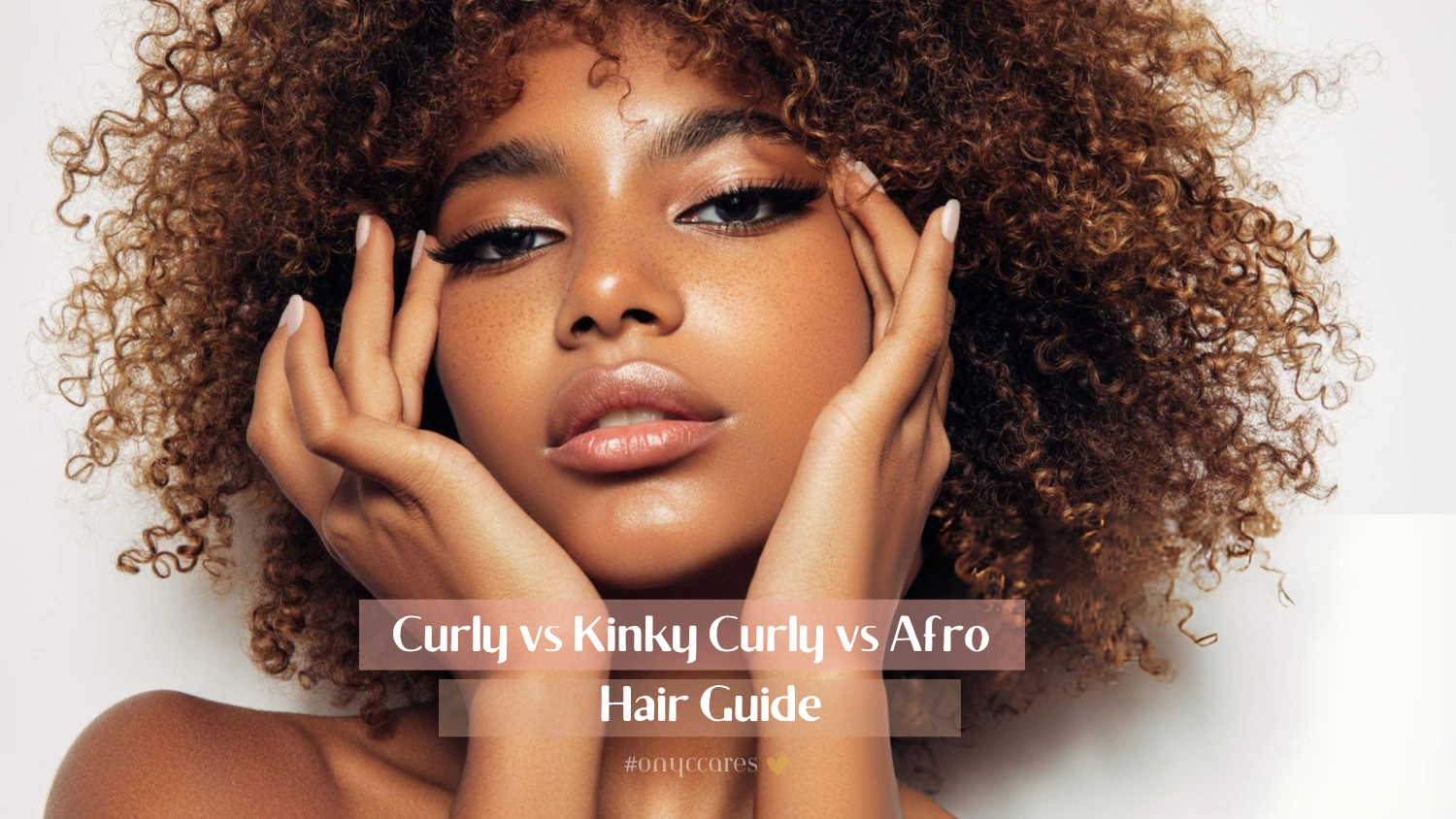
Kinky vs Coily Hair vs Curly Hair! What Is Curly Hair? What Is Kinky Curly Hair? What Is Kinky Curly Hair vs Coily? What Is the Difference Between Kinky Curly and Afro Coily? What Is the Difference Between Curly and Kinky Curly Hair? What Texture Is Kinky Curly? Is 4c Hair Curly or Kinky? What Is Afro Coily Hair? Can Afro Kinky Hair Be Curled? – These questions are common when exploring different hair textures, which mainly differ in curl size, density, shrinkage, movement, and volume. When comparing the best Curly Hair Extensions, the most useful question is not simply which texture is “curly,” but which curl pattern best matches your natural hair and preferred finished look. This distinction is especially useful when comparing Virgin Hair Extensions With Natural Look because curl scale and density can affect how naturally the extensions blend after installation. Understanding these differences can help you compare extension textures without assuming that one curl pattern is automatically better for everyone.
The difference between Curly, Kinky Curly, and Afro Curly hair comes down to curl pattern, density, shrinkage, movement, and overall fullness. ONYC® Kinky Curly Hair Extensions sit within the tighter-textured side of the curl spectrum, while Natural Hair Extensions include options designed around different natural-texture and blending needs.
Understanding the Difference Between Curly, Kinky, and Coily Hair
The easiest way to understand Curly, Kinky Curly, and coily textures is to compare their curl scale and overall structure. ONYC's Hair Texture Chart provides broader context for the different hair types and curl-pattern groupings, while this guide focuses specifically on how Curly, Kinky Curly, and Afro Curly options compare in appearance, density, shrinkage, movement, and blending. Within ONYC's texture range, the curl progression includes looser curly options, Deep Curly textures, Kinky 3B–3C textures, tighter 3C–4A options, and 4C-focused Afro textures. Readers comparing looser, fuller curl patterns can also look at Best Burmese Curly Bundles as another curly-texture reference before moving into the tighter Kinky Curly and Afro-textured ranges.
How to Compare Curly, Kinky Curly, and Coily Hair Textures
For shoppers considering Hair Extensions for Black Women, looking at the actual curl diameter and density is more useful than choosing an extension solely because its label contains “curly” or “kinky.” The closer the extension's visible curl pattern, fullness, and overall finish are to the natural hair that will remain visible, the easier it can be to create a cohesive appearance. This is particularly important when leave-out will form part of the finished installation. A useful way to compare coils vs curls is to look at how much of each strand forms a visible loop and how close the bends sit together. Curly and coily are descriptive groupings, not promises that every strand on one head will behave the same. Many people have a combination of curl sizes, and the same extension can look more compact when dry than when gently stretched. For this reason, a side-by-side texture comparison should use a similar styling state rather than relying only on a type number.
A helpful final test is to compare coily hair vs curly hair at the crown, sides, and ends instead of looking only at a single close-up curl. The overall silhouette depends on the combined effect of curl scale, strand grouping, haircut, installation, and styling. That is why the same labeled texture can look different when worn as a fuller sew-in, a partial installation, or a styled wig. For anyone comparing extension textures rather than natural hair alone, the starting point is selecting Quality Hair Extensions whose curl size, finish, and density complement the hair that will remain visible. The closest match is often more useful than relying on a broad curl-family label.
What is curly hair?
Curly hair, including ONYC Curly Hair Weft Extensions, is characterized by visible curls or spirals with more separation between the individual curl formations than tighter Kinky Curly or Afro Curly textures. These textures are useful when the goal is noticeable curl definition with visible movement rather than the more compact fullness associated with tighter textures. For a more specific example of looser 3A ringlets, ONYC 3A hair extensions provide a reference for comparing curl separation, visible length, and bounce with tighter 3B and Kinky Curly patterns.
 Pin
When readers ask about curly vs coily hair, the practical distinction is usually curl scale. Looser curly strands commonly show broad spirals or ringlets; coily strands show smaller turns that can cluster into a more compact shape. Shine, softness, density, and ease of care can vary within both groups. Choosing a weave by curl diameter and the appearance of the finished style is more reliable than treating either label as a fixed guarantee. If you are comparing the shapes of curls used in sew-in bundles, the guide to Different Types of Curly Weave Curl Pattern helps distinguish more open ringlets from the denser curls discussed here; it also explains why the same installed length can look different after curling and shrinkage.
Key Characteristics of Curly Hair:
Curly textures often have more open curl formations than kinky curly and Afro-curly textures, but detangling difficulty and breakage depend on strand condition, handling, density, and the products used rather than curl category alone. Below are the key characteristics of curly texture, highlighting curl size, appearance, and care needs.
1. Curl Size: Curly textures generally display larger and more open curl formations than Kinky Curly and Afro Curly textures.
2. Definition: Individual curls are usually easy to distinguish visually.
3. Movement: The more open curl formation allows the hair to show noticeable bounce and movement.
4. Volume: Curly hair can still be full, but the volume is distributed through more visibly separated curls.
5. Blending: The best match depends on the natural curl pattern that will remain visible and the finished look the wearer wants to create.
For readers who prefer a more pronounced 3B-style curl, Best deep curly hair extensions provide a useful comparison point before moving into tighter Kinky Curly textures.
 Pin
Shop ONYC Natural Textures
The ONYC Virgin Hair Textures is available in Natural and Colored Weave Bundles, Clip-ins, I-tips, K-tips, Closure Frontals, and Wigs. Known for its unmatched versatility and natural appearance, it’s a favorite among thousands of loyal customers. Discover why many love ONYC Virgin Hair Textures for effortlessly polished, luxurious styles.
 Pin
What is the Difference Between Curly and Kinky Curly Hair?
The main difference between Curly and Kinky Curly hair is the scale and compactness of the curl pattern. Curly textures generally have larger, more open curls, while Kinky Curly textures use smaller and tighter curls to create greater visual density and a more textured finish. Someone who wants clearly defined curls with more open movement may prefer Curly hair. Someone seeking tighter curl definition and fuller texture may instead compare Best Kinky Curly Human hair Weave with the Curly options.
 Pin
For a kinky vs curly hair comparison, photograph or examine the textures both stretched and at rest. Two samples with a similar measured strand length can have noticeably different visible lengths because tighter formations draw upward. Also compare how much individual curl separation you want: greater separation can make a style appear more flowing, while closely grouped curls can produce a rounder silhouette. Neither result is inherently more natural; the best result depends on the hair it needs to complement.
This distinction becomes practical when choosing bundles to blend with visible leave-out. Readers who want to compare installation and matching considerations beyond the texture definitions can explore How to Choose the Best Kinky Hair Extensions for Black Hair before deciding whether a tighter pattern fits their desired finish.
Key Differences Between Kinky vs Curly Hair:
1. Curl Pattern
- Curly Hair: Larger, more open curls or spirals.
- Kinky Curly Hair: Smaller, tighter and more densely arranged curls.
2. Density and Volume
Kinky Curly hair normally creates more visual density because its curls are smaller and sit closer together. Curly hair tends to show more separation between curls.
3. Shrinkage
Both textures can appear shorter once the curl pattern contracts, but tighter Kinky Curly patterns generally create a more compact appearance than looser Curly textures.
4. Movement
Curly hair tends to show more flowing movement, while Kinky Curly hair produces springier movement with a fuller silhouette.
5. Blending
The better option depends on the natural hair that will remain visible. The goal is to compare actual curl size and density rather than assuming every Curly or Kinky Curly texture will blend the same way. For removable wear, curly clip ins for natural hair allow shoppers to compare a curly clip-in format with the finished texture of a sew-in; matching curl diameter and fullness remains the deciding factor.
If the installation method involves temporary texture matching, Clip In Hair Extensions For Black Hair also provide another way to compare different textured finishes without changing the core distinction between the curl patterns.
What Texture Is Kinky Curly?
Kinky Curly is a tightly curled extension texture characterized by smaller, more closely arranged curls than standard Curly textures. As a tangible reference, ONYC Kinky Curly Bundles show how a 3B–3C-inspired pattern can retain separated, springy curls while creating more texture-driven volume than looser spirals. The texture can create a fuller appearance than larger Curly patterns while maintaining distinct curl separation. That combination makes Kinky Curly useful when the styling goal is tight definition rather than the more compact Afro-textured appearance associated with the tightest coily options.
In extension descriptions, however, “kinky” can cover several looks rather than a single universal curl type. ONYC’s Kinky 3B–3C, Loose Kinks 3C, and tighter options should therefore be compared visually. Look at the curl size, the amount of separation, and the finished density instead of assuming that every product with “kinky” in its name will blend identically.
Characteristics of the Curl Pattern
Kinky Curly hair generally offers:
- Smaller, clearly visible curls
- A fuller and denser appearance than looser Curly textures
- More compact visible length
- Springy curl movement
- Defined texture through the lengths
- A finish that works well for tighter curly styling goals
For readers comparing styling possibilities rather than only curl labels, ONYC's guide to kinky curly hairstyles shows how different textured curl patterns can appear once styled.
Styling and Care Options
Kinky Curly extensions can be worn with their natural curl definition or gently separated to create additional volume. Because the goal of this article is texture comparison rather than detailed maintenance, care should remain secondary to choosing the right curl scale. For readers who need maintenance details after selecting their texture, How to Take Care of Your Weave covers weave-specific maintenance in more depth.
Kinky Curly textures are also available across different installation formats. The best format depends on the intended style, but the defining feature remains the tighter, more visibly textured curl pattern.
What is Kinky Curly Hair? Kinky vs coily hair
Kinky Curly and coily hair are closely related in appearance, but ONYC's texture range shows that they are not treated as one identical category. Kinky 3B–3C and Loose Kinks 3C options retain clearly visible curl definition, while the tighter side of the collection progresses into Tight Kinky 3C–4A and Afro Kinks 4C textures. This distinction matters because two extensions can both look highly textured while producing different finished results. Kinky Curly tends to emphasize smaller defined curls, while the tighter coily side creates progressively more compact fullness.
In a coily vs kinky hair comparison, the words overlap in everyday use: both can describe small, tightly patterned strands. “Coily” often emphasizes the physical formation of the hair, while “kinky” is also used as a broad texture descriptor in product naming. There is no universally agreed boundary at which a kinky curl becomes a coil. For extension matching, the actual pattern and the amount of shrinkage are more informative than the wording on the label.
 Pin
Key Characteristics of Kinky Curly Hair vs Coily Hair:
Kinky curly and coily hair textures share a tight curl pattern, but they differ in curl density, shrinkage levels, and care needs. Understanding these distinctions is essential for choosing the right products and protective styles that preserve curl definition and maintain healthy hair.
Kinky Curly Hair
- Smaller defined curls
- Clearly visible curl separation
- Springy movement
- Full textured appearance
- More compact than standard Curly textures
Coily / Afro-Textured Hair
- Tighter coil structure
- More compact overall appearance
- Greater visual density
- Less emphasis on large individual ringlets
- Fuller Afro-textured silhouette
Readers who are comparing how different extension types can look once installed can also explore ONYC's Hair Extension Guide for broader extension education without expanding this comparison article into a full installation guide.
Is 4C Hair Curly or Kinky?
Within ONYC's extension taxonomy, 4C sits at the tightest Afro-textured end of the curl and coil range rather than with the more open Curly textures. ONYC's 4C-focused products are therefore separated from Kinky 3B–3C and Tight Kinky 3C–4A options. This distinction is important when choosing extensions for visible natural hair. Someone with a tightly compact 4C texture should not assume that every product labeled “Kinky Curly” will provide the closest blend. Depending on the natural pattern and finished style, 4c Human Hair Bundles may provide a more relevant texture comparison.
The most useful answer to is kinky hair curly? is that tightly textured hair can form small curls, coils, bends, or a mixture of structures. A visible ringlet is not required for natural hair to fall within the broader textured-hair spectrum. For 4C-focused extension matching, compare the hair in its normal finished state without stretching one sample while leaving the other shrunken so the apparent density and silhouette can be assessed fairly. The term 4C belongs within a broader Type 4 spectrum. For a closer explanation of how the 4A, 4B, and 4C labels differ, see What Is Type 4 Hair?; the distinction matters here because an Afro-style finish may be produced by different coil structures.
How to Keep 4C Hair Healthy and Defined
When natural 4C hair will remain visible with extensions, minimize unnecessary manipulation and choose a texture that reduces the amount of work required to create a cohesive blend.
Basic considerations include:
- Maintaining moisture
- Detangling gently
- Limiting unnecessary heat
- Protecting the natural hair during wear
- Choosing an extension texture based on the actual curl and density match
Detailed maintenance belongs in a dedicated care resource, so readers who need more information can refer to the Black Hair Care Guide. Texture matching can reduce the need to manipulate leave-out repeatedly, but maintenance remains important. For a more detailed natural-hair routine after identifying the texture, the resource How to care for type 4 hair? addresses care questions without turning this comparison into a full maintenance tutorial.
How Is Kinky Hair Made?
Kinky hair extensions come from 100% human hair, usually virgin or raw hair, that's been carefully processed to match the tight, coily look of natural afro-textured hair. It starts with sourcing, where hair is collected from donors in a way that keeps the cuticles aligned in the same direction, which matters most for raw hair. From there, the hair goes through sorting and cleaning, separating strands by length and texture before washing away any oils or buildup. Not every kinky-textured extension follows the same manufacturing process.
Some hair is naturally close to the desired pattern; other products may be shaped or set to achieve a consistent appearance. Terms such as “raw” and “virgin” describe aspects of sourcing or treatment, but do not by themselves establish the exact curl-setting process for every product. Readers who want to know how a particular ONYC texture was produced should refer to that product’s stated specifications rather than assume a single method applies across all collections.
 Pin
If the hair isn't naturally kinky, it's texturized next, often using rods or other techniques to create that signature tight curl and kink pattern. Hair that already has a suitable natural texture may not need an additional curl-setting step. Some Afro Kinky Curly Human Hair textures may be selected for their existing pattern, but processing methods vary by supplier and product. The specific construction and treatment of an extension should be checked against its product description. Once the pattern is set using heat or steam to really define the curls, the hair is wefted or bundled, either by machine or by hand, so it's ready to be installed.
Afro Curly describes the tighter, more compact side of the curly and coily extension spectrum. Compared with standard Curly and Kinky Curly options, the texture emphasizes greater visual density, tighter curl or coil formation, and a fuller Afro-inspired finish. Within ONYC's range, Natural Afro Hair Extensions provide a useful category-level reference for comparing the tighter 3C–4A through 4C side of the texture spectrum. Afro Curly should still be selected according to the wearer's actual natural texture and styling goal. The tightest available option is not automatically the best option if the person's natural curl pattern is more open. The difference between Afro curly vs kinky curly is clearest when their finished shapes are compared side by side. A Kinky Curly extension may emphasize clearly separated tight curls, whereas an Afro Curly option can emphasize compact coils and an overall rounded fullness.
 Pin
These are useful shopping descriptions rather than rigid biological categories; individual products can sit between them, and styling can change their visible definition. Matching the texture that will be visible near the parting and hairline remains especially important. The progression toward tighter coils can be examined in specific bundle textures. A Coily hair extension in the 3C–4A-inspired range provides a useful point of comparison against a 4C-inspired Afro-textured finish, especially when evaluating curl visibility and overall silhouette.
Key Characteristics of Afro Curly Hair Tight Coily:
Afro-textured hair can display very tight coils, zigzag bends, and mixed patterns. Its appearance varies from person to person, so no single Z-shaped description applies to every Afro Curly texture. This hair type is highly textured, often appearing shorter due to significant shrinkage, and demands specific care to maintain its health and definition. Below are some key characteristics that define this beautiful and unique hair type:
- Tighter, more compact curls or coils
- Greater visual density
- A fuller Afro-textured silhouette
- Less emphasis on large separated ringlets
- A texture range that progresses toward tightly coiled 4C looks
For a complete guide on maintaining your curls and extending the life of your extensions, check out our full guide on How To Care For Natural Hair Extensions.
Absolutely! Afro-kinky hair can be curled using methods like twist-outs, bantu knots, or curling rods. Heat-free styling is often preferred to protect its delicate strands! While many assume that its tight, springy coils are too defined to take on additional curl styles, the truth is Afro kinky hair is one of the most versatile textures. With the right products, styling methods, you can enhance, redefine, or completely reshape the natural curl pattern. From soft spirals to bold, voluminous curls, the styling possibilities are endless. Keep in mind that temporarily creating a different curl shape is not the same as permanently changing the underlying fiber pattern. Twist-outs and rod sets can alter the visible finish until the hair is reset, while repeated high heat may affect how an extension behaves over time. Follow the instructions for the specific product and test a small section before attempting a new technique across the full installation.
Curl-setting methods may change the temporary appearance of the style, but avoid treating tighter hair roughly during preparation. The advice on Best Detangling Techniques for Natural Curly Hair guide is a related resource for reducing pulling and unnecessary friction when working through curls and coils.
Understanding the Nature of Afro Kinky Hair
This type of hair features tightly wound coils, often resembling corkscrews. It ranges from fine to coarse in thickness and tends to shrink in length because of its curl density. Despite this shrinkage, its volume and elasticity make it highly adaptable to different styling techniques. Afro curly strands also form tight coils but are typically more voluminous and compact, creating that signature rounded “Afro” shape. Both textures thrive when properly moisturized and detangled, which is essential for achieving smooth, defined curls.
How Styling Works
To understand how Afro kinky hair is curled, you must consider how kinky hair is made. Naturally, kinky hair is formed by the shape of the follicle. Flat or curved follicles create bends in the strand, producing curls or coils. This natural coil formation means the hair already has a curl foundation, making it easier to mold into various shapes. Adding styling aids such as curl creams, mousse, or setting foams enhances definition.
Curling Afro Kinky Hair: Effective Methods
So, What’s the best way to curl Afro kinky hair?. Here are proven techniques that deliver beautiful results:
1. Heat Styling Tools: Curling wands, perm rods, or flexi rods with gentle heat help create more defined curls or reshape existing ones.
2. Heat-Free Options: Bantu knots, twist-outs, and braid-outs are popular because they add definition without exposing the hair to heat damage.
3. Extensions & Wigs: Many turn to protective styles using kinky curly extensions or wigs. These mimic natural textures and allow you to experiment without over-manipulating your own strands.
So, Can Afro kinky hair be curled? Absolutely. In fact, its natural coil structure makes it one of the most versatile hair types when it comes to experimenting with curls and waves. With the right care, moisture, and styling technique, Afro kinky hair can transform into stunning looks while still celebrating its natural beauty.
What is the Difference Between Kinky Curly and Afro Coily?
Kinky Curly and Afro Coily primarily differ in curl visibility, compactness, density, and overall finished volume. Kinky Curly usually retains more individually visible curls, while Afro Coily textures create a tighter and more compact appearance. Kinky Curly is therefore useful when the goal is defined textured curls with visible separation. Afro Coily is more relevant when the desired result is tighter, denser, and closer to a compact Afro-textured finish.
For installations where reducing visible leave-out is part of the styling plan, an Afro Kinky Curly Closure can provide a matching textured finishing option without changing the underlying texture-selection principles.
 Pin
Kinky Curly vs Afro Curly Hair: What Sets Them Apart?
These variations influence how each hair type looks, feels, and responds to styling and care routines.
1. Curl Pattern:
- Kinky Curly Hair features a more uniform, spring-like curl pattern.
- Afro Curly Hair, in contrast, has a zig-zag or “Z”-shaped curl, which is less defined.
2. Shrinkage:
- Afro curly hair experiences more shrinkage compared to kinky curly hair.
3. Volume:
- Afro curly hair is fluffier and has more volume due to its irregular curl pattern.
Understanding the difference between kinky curly and Afro curly hair can help you choose the best care and styling methods for each unique texture.
Kinky vs Coily hair vs Curly Hair
These hair types may seem similar, but they each have their own beauty, structure, and care needs. The better you understand your texture, the easier it becomes to choose the right products, styles, and routines that truly work for you. Let’s start with curly hair. These curls can range from loose waves (3A) to tighter spirals (3C). Curly hair tends to hold moisture better than tighter textures but still benefits from leave-in conditioners and curl creams to stay defined and frizz-free. When selecting Luxury Virgin Hair Extensions, compare the finished silhouette alongside curl shape: a larger spiral often emphasizes movement, while a smaller coil can give the same amount of hair a more compact appearance. Neither pattern is universally the better match.
Here’s a detailed breakdown comparing Kinky (Type 4B–4C), Coily (Type 4A), and Curly (Type 3A–3C) hair types. Learn about their curl patterns, shrinkage, textures, challenges, and recommended products.
 Pin
Choosing the Right Routine Starts with Understanding Texture
Understanding the differences between Kinky vs Coily hair vs Curly Hair isn’t about labeling it’s about empowerment. When you know what your hair needs, you’re able to love it better. Whether your strands form loose curls or tight coils, your texture is uniquely yours and you deserve to feel confident wearing it exactly as it is. If natural-looking blending is the main concern, this guide explains What weave looks the most natural? provides a broader extension-selection discussion.
Popular Curly, Kinky Curly and Afro Curly Hair Textures
The Curly, Kinky Curly, and Afro Curly categories each include different levels of definition and fullness. A useful way to compare them is to move from the more open curls toward increasingly tighter and denser textures rather than treating every “curly” extension as interchangeable. Texture choice also affects the types of Different Hairstyles that can be created most naturally. Larger curls emphasize movement, tighter Kinky Curly patterns emphasize springy definition, and Afro-textured options emphasize compact volume.
 Pin
Popular Curly Hair Textures
Curly textures similar to ONYC® Deep Curly Human Hair Weft are suited to styles where visible curl definition and movement are priorities. Within ONYC's range, Spanish Curl 3A and Deep Curly 3B illustrate how the Curly category can progress from more open curls toward more pronounced definition. When the intended installation is a sew-in, Human Hair Bundles offer a format-level comparison across loose curly, deeper curly, and tighter textured wefts; the extension construction is separate from the curl pattern itself. For shoppers comparing the construction and feel of human-hair extensions as well as texture, Real Human Hair Extensions provides the broader extension category while this article remains focused specifically on curl-pattern differences.
Two extension styles can both be called curly yet produce different movement and definition. The comparison ONYC® Burmese Curly vs. Curly Addiction illustrates why it helps to evaluate actual curl shape before assuming two curly bundles will give the same result.
Popular Afro Curly Hair Textures
Afro Curly and coily textures similar to ONYC Afro Kinky Curly Closure represent the tighter end of the comparison. ONYC's range includes Tight Kinky 3C–4A options and 4C-focused Afro textures for readers looking for progressively more compact fullness. When raw-hair construction is also part of the buying decision, Raw Human Hair Extensions can be explored separately. The distinction in this article, however, remains the visible texture: Afro Curly creates a tighter and denser finish than standard Curly or Kinky Curly patterns.
Those seeking a particularly compact 4C-inspired result can also consult What are the Best 4C Hair Bundles and Extensions? for options to consider after narrowing down the curl pattern. A bundle choice should follow the visual texture match rather than the hair-type label alone.
Popular Kinky Curly Hair Textures
Kinky Curly textures resembling the ONYC® Kinky Curly Human Hair Bundles, sit on the tighter side of ONYC's curl range and create a fuller, more textured result than the looser Curly options. The Kinky 3B–3C family is designed around small, visible curls and strong definition. The same curl texture is also available as Dyed Kinky Curly Hair for those who prefer colored shades. The deciding factor should still be the actual appearance of the natural hair and the finish being created, not the word “kinky” by itself.
Kinky Curly vs Afro Curly Hair: What Sets Them Apart?
Kinky Curly retains more individually visible curls, while Afro Curly moves toward tighter, more compact texture and greater visual density.
Choose Kinky Curly when you want:
- Smaller, clearly visible curls
- Springy movement
- Fuller texture
- Noticeable curl separation
Choose Afro Curly when you want:
- Tighter curl or coil formation
- More compact density
- Greater Afro-textured fullness
- Less emphasis on large separated ringlets
Neither texture is universally better. The better choice is the one whose curl scale, density, and finished appearance more closely match the styling goal. To compare multiple curl styles within this intermediate texture family, browse Kinky Curly Hair and pay attention to the size and separation of the curls in each example. The category can help establish what counts as visibly defined curls versus a tighter, more compressed coily effect.
Final Thoughts on Kinky vs Coily Hair vs Curly Hair
The difference between Curly, Kinky Curly, and Afro Curly hair is easiest to understand by comparing curl scale, density, shrinkage, movement, and finished volume. Curly textures emphasize larger visible curls and movement, Kinky Curly emphasizes smaller defined curls with greater fullness, and Afro Curly moves toward the most compact and densely textured appearance. Rather than choosing by name alone, compare the extension's actual curl pattern with the natural hair that will remain visible and the finished style you want to create. That approach keeps the decision focused on texture compatibility instead of assuming one curl category is automatically better than another.
 Pin
Ready to embrace your hair’s true potential? Explore the Best Hair Extensions Brand with expert tips and products designed for every curl pattern, and let your hair shine in its natural glory!
ONYC® Kinky Curly Hair Maintenance Reviews | Navigating 3B-3C, 3C-4A to Afro Kinks 4C
How to Care for Kinky Curly Hair Extensions Weave and Natural Kinky Black Hair
Best Natural Hair Extensions and Most Natural-Looking Hair Extensions Guide
Best Clip In Hair Extensions For Black Hair Textures Guide
ONYC® 3B-3C vs Loose Kinks vs 3C-4A vs Afro Kinks 4C Explained
Related Posts
 Pin
Complete ONYC Curl Pattern Guide: From Spanish Curly 3A to Afro Kinks 4C
 Pin
What Is 4C Hair? Type 4C Hair Characteristics & Coil Pattern Explained
 Pin
What Is 4B Hair? Type 4B Hair Characteristics & Pattern Explained
Click on a star to Rate this!
We are sorry that this post was not useful for you!
Let us improve this post!
Tell us how we can improve this post?


Everyone loves what you guys are up too. This kind of clever work and exposure! Keep up the great works guys I’ve incorporated you guys to blogroll.
Thank you so much for the kind words and for adding us to your blogroll—we truly appreciate the support. We’re glad you found the article helpful and insightful, and it’s always encouraging to know our educational content is making an impact.
If you enjoyed this breakdown, we’d love for you to explore our extensions & weaves, where texture education meets premium craftsmanship. You may also enjoy diving deeper into our hair extension blog for more expert-led guides, comparisons, and styling insights.
Click to read more ONYC hair extension blog and ONYC Hair Mailing List for the latest News and Updates!
I’ve been using ONYC Hair for years, and I absolutely love how natural the textures are! This article perfectly breaks down the differences between Curly, Kinky Curly, and Kinky Coily textures. I personally wear the Kinky Curly 3B–3C bundles, and they blend so seamlessly with my natural hair. The definition and softness are unmatched!
It’s great to have a guide like this, especially for those who are unsure which texture best suits their curl pattern. ONYC has always been my go-to because of the quality and longevity of the hair—plus, the customer service is always top-notch. Highly recommend! 💕
Would love to see more posts on how to care for each texture to keep them looking fresh for longer! 😊
Thank you for your thoughtful comment! We’re glad you found this article insightful. Since you enjoyed learning about different hair types, you may also love our hair care tips for expert advice on maintaining and styling your natural hair.
For more in-depth content on hair textures, styling techniques, and extensions, visit the hair extension blog. Don’t forget to subscribe to the ONYC Hair Mailing List to stay updated with our latest news, exclusive offers, and expert insights!