


Understanding Curl Pattern Guide! What Are The Curl Patterns? What Are The Different Curl Patterns? How Do I Figure Out My Curl Pattern? What Determines The Curl Pattern Of Hair? How Do I Know My Natural Curl Pattern? How To Identify Curl Pattern? What is My Curl Pattern? What Is My Curl Pattern Quiz? – These are common questions that come up when trying to understand the natural shape and formation of your curls, especially when exploring types of curls patterns and different types of curls names with pictures or comparing those characteristics with Curly Hair Extensions, and this curl pattern guide is designed to address them by breaking down the 3A to 4C hair types in a clear, practical way. Using a curl pattern chart alongside a curl type chart can make it easier to recognize how curly pattern types progress from looser spirals to tighter curls and coils. By looking closely at your natural curl pattern, you can begin distinguishing the different hair curl types and curl types based on visible characteristics such as curl shape, diameter, tightness, and overall formation. Understanding these distinctions can also provide useful context when exploring virgin hair extensions that complement different curl patterns.
what are the curl patterns?
Curl patterns describe the natural shape of hair strands, from straight and wavy to curly and tightly coily. ONYC® illustrates these curl and coil patterns through ONYC Curly Hair Extensions, Natural Hair Weave and Raw Burmese Curly Hair. The commonly used hair-typing system groups hair into Type 1 straight, Type 2 wavy, Type 3 curly, and Type 4 coily textures. Within the curly and coily families, 3A, 3B, 3C, 4A, 4B, and 4C describe different curl and coil formations.
What Are The Different Curl Patterns?
The different curl patterns are commonly organized into four basic families: Type 1 straight hair, Type 2 wavy hair, Type 3 curly hair, and Type 4 coily hair. ONYC® illustrates these curl and coil patterns through ONYC Curly Addiction 3B, best spanish curl bundles and Best Burmese Curly Bundles. Type 2 includes 2A, 2B, and 2C waves; Type 3 includes 3A, 3B, and 3C curls; and Type 4 includes 4A, 4B, and 4C coils.
What Are The 4 Basic Curl Patterns?
The four basic hair-pattern categories are Type 1 straight, Type 2 wavy, Type 3 curly, and Type 4 coily. ONYC® illustrates these curl and coil patterns through ONYC Tight Kinky Curly 3C-4A, Afro Kinky Weave and Natural Hair Weave. Although Type 1 does not naturally form curls, it remains part of the broader hair-typing system. Each family describes the general shape of the strand rather than its thickness or health.
What are the different types of curl patterns?
Hair-pattern classifications commonly progress from straight Type 1 strands to Type 2 waves, Type 3 spirals, and Type 4 coils. ONYC® illustrates these curl and coil patterns through ONYC Curly Addiction 3B, Curly Hair Extensions and Afro Kinky Weave. Within these categories, letters describe differences in pattern size and formation, although the boundaries are not absolute.
What Are the Main Hair Texture Categories?
The main categories of natural hair patterns are straight, wavy, curly, and coily. ONYC® illustrates these curl and coil patterns through spanish curl human hair bundles, Tight Kinky Curly 3C-4A and Afro Kinky Weave. These categories describe strand shape rather than individual strand diameter, density, porosity, or overall hair quality. For a deeper identification comparison, see the Type 4 Hair Guide.
How Are Curl Patterns Classified?
Curl patterns are commonly classified by observing whether natural hair forms straight strands, S-shaped waves, spiral ringlets, or compact coils and bends. ONYC® illustrates these curl and coil patterns through Natural Hair Weave, Curly Hair Extensions and Burmese Curly Hair Bundle. Numbers identify the broad pattern family, while letters help distinguish variations within wavy, curly, and coily hair.
What Determines The Curl Pattern Of Hair?
The natural curl pattern of hair is influenced mainly by inherited biological characteristics, including hair follicle structure and the way hair fibers form as they grow. For examples of how different natural patterns look in extensions, compare spanish curly hair weave, Curly Addiction 3B and Burmese Curly Hair Weave. Genetics contributes to whether strands emerge straight, wavy, curly, or coily, while heat, chemical treatments, and styling can temporarily or permanently change their appearance.
Is Curl Pattern Genetic?
Yes, genetics plays a major role in determining whether hair naturally grows straight, wavy, curly, or coily. For examples of how different natural patterns look in extensions, compare Afro Kinky Weave, Tight Kinky Curly 3C-4A and Natural Hair Weave. Hair curl formation is a complex inherited trait influenced by multiple biological factors rather than a single gene.
Can Your Curl Pattern Change?
Curl patterns can appear different over time because of hormonal changes, aging, hair damage, chemical processing, heat exposure, or differences in styling. For examples of how different natural patterns look in extensions, compare ONYC Curly Hair Extensions, Curly Addiction 3B and Afro Kinky Weave. Some changes affect the hair fiber temporarily, while others may alter the way newly grown hair appears.
How Do I Figure Out My Curl Pattern?
To figure out your curl pattern, wash your hair, allow it to return to its natural shape, and observe several sections without stretching or heat styling. ONYC® illustrates these curl and coil patterns through ONYC Tight Kinky Curly 3C-4A, best spanish curl bundles and Afro Kinky Weave. Look for loose waves, larger spiral curls, smaller corkscrew ringlets, or compact coils.
How Do I Know My Natural Curl Pattern?
Your natural curl pattern is easiest to evaluate after washing your hair and allowing it to form its usual curls or coils without straightening, stretching, or heavy manipulation. ONYC® illustrates these curl and coil patterns through ONYC Curly Hair Extensions, Natural Hair Weave and Raw Burmese Curly Hair. Examine the shape of multiple strands, because different areas of the head may have different patterns. For a deeper identification comparison, see the Type 4 Hair Guide.
How To Identify Curl Pattern?
Identifying a curl pattern involves examining how clean, minimally manipulated hair naturally forms waves, ringlets, coils, or bends. ONYC® illustrates these curl and coil patterns through ONYC Curly Addiction 3B, spanish curl human hair bundles and Best Burmese Curly Bundles. Larger complete spirals generally indicate Type 3 curls, while compact coils commonly fall within Type 4.
what is my curl pattern?
Your curl pattern depends on the natural shape of your hair strands when they have not been altered by straightening or other styling methods. ONYC® illustrates these curl and coil patterns through ONYC Tight Kinky Curly 3C-4A, Afro Kinky Weave and Natural Hair Weave. Loose S-shaped waves are usually classified as Type 2, complete spiral ringlets as Type 3, and compact coils or bends as Type 4.
How do I determine my curl pattern?
Determine your curl pattern by examining freshly washed hair after it has formed its natural texture. ONYC® illustrates these curl and coil patterns through ONYC Curly Addiction 3B, Curly Hair Extensions and Afro Kinky Weave. Compare wave shape, spiral diameter, coil compactness, and the patterns present in different sections. Avoid deciding solely from shrinkage, density, or strand thickness because these vary independently.
What Is My Curl Pattern Quiz?
A curl pattern quiz is a self-assessment that uses questions about natural wave shape, curl diameter, coil formation, and shrinkage to suggest a general hair-type classification. For examples of how different natural patterns look in extensions, compare spanish curly hair weave, Tight Kinky Curly 3C-4A and Afro Kinky Weave. It cannot provide a definitive scientific diagnosis, and some people naturally have multiple patterns.
How Accurate Are Curl Pattern Quizzes?
Curl pattern quizzes can help narrow down likely hair types, but results are approximate because natural patterns overlap and can vary across the head. For examples of how different natural patterns look in extensions, compare Natural Hair Weave, Curly Hair Extensions and Burmese Curly Hair Bundle. A quiz is most useful when combined with observations of clean, minimally manipulated hair.
How to Identify 3A, 3B, 3C, 4A, 4B & 4C Hair?
Identify 3A hair by its wider spiral ringlets, 3B by medium-sized springy curls, and 3C by smaller corkscrew curls. ONYC® illustrates these curl and coil patterns through ONYC Curly Addiction 3B, Burmese Curly Hair Weave and Tight Kinky Curly 3C-4A. Type 4A usually forms small, defined springy coils, 4B often displays compact bends, and 4C commonly features tightly grouped coils with less visible separation. For a deeper identification comparison, see the Type 3 Hair Guide.
What Are 2A, 2B, 2C, 3A, 3B Curls?
2A, 2B, and 2C are wavy hair classifications rather than fully curly subtypes. 2A typically forms loose waves, 2B more noticeable S-shaped waves, and 2C stronger waves that may approach loose curls. For a product comparison at the transition toward natural spiral curls, explore ONYC Curly Hair Extensions and best spanish curl bundles. The 3A and 3B categories describe complete spiral curls, with 3B generally forming smaller ringlets than 3A.
what are the curl patterns for curly hair?
The commonly recognized Type 3 curly hair patterns are 3A, 3B, and 3C. 3A has larger loose spirals, 3B generally forms medium-sized springy ringlets, and 3C produces smaller, tightly grouped corkscrew curls. ONYC® illustrates these curl and coil patterns through spanish curl human hair bundles, Curly Addiction 3B and Raw Burmese Curly Hair.
what are the curl patterns for black hair?
Black hair can naturally have straight, wavy, curly, or coily patterns, although Type 3 and Type 4 textures are commonly discussed in Black natural-hair education. ONYC® illustrates these curl and coil patterns through ONYC Tight Kinky Curly 3C-4A, spanish curly hair weave and Afro Kinky Weave. Patterns such as 3A, 3B, 3C, 4A, 4B, and 4C describe strand formation rather than racial identity, and no single hair type applies to everyone.
what are the curl patterns for straight hair?
Naturally straight hair belongs to the Type 1 family and does not form a consistent curl pattern without styling. For a product comparison at the transition toward natural spiral curls, explore ONYC Curly Hair Extensions and best spanish curl bundles. It is commonly divided into 1A, 1B, and 1C classifications, although these labels describe variations within straight hair rather than natural curls. Readers exploring the transition toward natural waves and curls can compare the 3A Hair Guide and the broader Type 3 Hair Guide.
What Are Type 1 Hair Patterns?
Type 1 hair is naturally straight and is sometimes subdivided into 1A, 1B, and 1C based on differences in texture and body. For a product comparison at the transition toward natural spiral curls, explore ONYC Curly Hair Extensions and spanish curl human hair bundles. These categories are descriptive and do not represent separate natural curl patterns.
What Are Type 2 Hair Patterns?
Type 2 hair refers to naturally wavy hair and generally includes 2A, 2B, and 2C. For a product comparison at the transition toward natural spiral curls, explore ONYC Curly Hair Extensions and spanish curly hair weave. These patterns range from loose, gentle waves to stronger S-shaped bends that can resemble the beginning of a loose curl. For a deeper identification comparison, see the Type 3 Hair Guide.
What Is the Difference Between 2C and 3A Hair?
2C hair typically forms pronounced S-shaped waves, while 3A hair more consistently forms complete loose spiral ringlets. For side-by-side examples of these textures in the ONYC® range, compare ONYC Curly Hair Extensions and best spanish curl bundles. This transition can be subtle, particularly when someone naturally has both waves and curls.
What Are Type 3 Curl Patterns?
Type 3 hair includes 3A, 3B, and 3C curl patterns. ONYC® illustrates these curl and coil patterns through spanish curl human hair bundles, Curly Addiction 3B and Best Burmese Curly Bundles. The family is characterized by naturally forming spiral ringlets that generally become smaller and more compact from 3A toward 3C.
What Is 3A Hair Curl Pattern?
3A hair forms relatively loose, wide spiral ringlets with natural bounce and visible curl definition. ONYC® illustrates these curl and coil patterns through spanish curly hair weave and Curly Hair Extensions. It is generally considered the loosest of the Type 3 curly hair subtypes.
What Does 3A Hair Look Like?
3A hair typically looks like loose, springy spiral ringlets with a larger curl diameter than 3B or 3C hair. ONYC® illustrates these curl and coil patterns through best spanish curl bundles and Curly Hair Extensions. The curls may appear elongated and naturally bouncy, with fullness depending on individual density and styling.
What Is 3B Hair Curl Pattern?
3B hair is characterized by medium-sized spiral ringlets that are generally tighter and springier than 3A curls. ONYC® illustrates these curl and coil patterns through ONYC Curly Addiction 3B and Deep Curly 3B Clip-Ins. Its natural appearance can include defined curls, noticeable volume, and varying degrees of shrinkage.
What Does 3B Hair Look Like?
3B hair typically appears as clearly defined, springy spiral ringlets that are smaller than 3A curls but generally larger than 3C corkscrews. ONYC® illustrates these curl and coil patterns through ONYC Curly Addiction 3B and Deep Curly 3B Clip-Ins. Curl shape and fullness vary with density, moisture, and styling. For a deeper identification comparison, see the Type 3 Hair Guide.
What Is 3C Hair Curl Pattern?
3C hair forms small, tightly grouped corkscrew curls with springy definition and noticeable natural shrinkage. ONYC® illustrates these curl and coil patterns through Burmese Curly Hair Bundle and Kinky Curly 3B-3C. It is commonly described as the tightest subtype in the Type 3 curly family.
What Does 3C Hair Look Like?
3C hair typically looks like small, compact corkscrew ringlets with natural springiness, visible spiral definition, and textured fullness. ONYC® illustrates these curl and coil patterns through Burmese Curly Hair Weave and Kinky Curly 3B-3C. Its tighter curl formation can overlap visually with looser Type 4 coils.
What Is the Difference Between 3A, 3B, and 3C Hair?
The primary difference between 3A, 3B, and 3C hair is the size and compactness of their natural spiral curls. 3A forms wider ringlets, 3B has medium-sized springy curls, and 3C features smaller corkscrew spirals. For side-by-side examples of these textures in the ONYC® range, compare ONYC Curly Addiction 3B, spanish curl human hair bundles and Raw Burmese Curly Hair.
How Do I Know If My Hair Is 3A, 3B, or 3C?
Your hair may be 3A if it forms wider loose spirals, 3B if it develops medium-sized springy curls, or 3C if it produces smaller corkscrew ringlets. ONYC® illustrates these curl and coil patterns through spanish curly hair weave, Curly Addiction 3B and Best Burmese Curly Bundles. Compare several sections after washing rather than judging one curl.
What Are Type 4 Curl Patterns?
Type 4 hair includes 4A, 4B, and 4C patterns, which are commonly described as coily rather than loosely curly. ONYC® illustrates these curl and coil patterns through Afro Kinky Weave, Tight Kinky Curly 3C-4A and Natural Hair Weave. This family includes small springy coils, compact bends, and tightly packed curl formations.
What Is 4A Hair Curl Pattern?
4A hair commonly forms small, springy S-shaped coils with recognizable definition and noticeable natural shrinkage. ONYC® illustrates these curl and coil patterns through ONYC Tight Kinky Curly 3C-4A and Tight Kinky 3C-4A Clip-Ins. It sits near the transition between the tighter Type 3 curls and more compact Type 4 coils. For a deeper identification comparison, see the Type 4 Hair Guide.
What Does 4A Hair Look Like?
4A hair generally appears as small, defined springy coils with a full textured silhouette. ONYC® illustrates these curl and coil patterns through ONYC Tight Kinky Curly 3C-4A and Tight Kinky 3C-4A Clip-Ins. Its coils are often more compact than 3C corkscrew curls, although natural patterns can overlap.
What Is 4B Hair Curl Pattern?
4B hair is commonly described as naturally coily hair with compact bends, closely arranged strands, and less uniform spiral definition than 4A hair. ONYC® illustrates these curl and coil patterns through Natural Hair Weave and Afro Kinky Weave. Some strands may form zig-zag-like shapes, although natural variation is common.
What Does 4B Hair Look Like?
4B hair often looks tightly coiled and naturally full, with compact bends or small coils that may have less visible spiral separation than 4A hair. ONYC® illustrates these curl and coil patterns through Natural Hair Weave and Afro Kinky Weave. Its overall appearance depends on density, moisture, and styling.
What Is 4C Hair Curl Pattern?
4C hair commonly features very compact coils or bends with noticeable shrinkage and varying degrees of visible definition. ONYC® illustrates these curl and coil patterns through Afro Kinky Weave and Afro Kinky 4C Clip-Ins. Its natural texture can create a full, afro-like appearance without requiring consistently separated ringlets.
What Does 4C Hair Look Like?
4C hair typically appears tightly coiled, compact, and textured, with very small curls or bends that may not display consistent visible separation without styling. ONYC® illustrates these curl and coil patterns through Afro Kinky Weave and Afro Kinky 4C Clip-Ins. Its strands can form a naturally full silhouette regardless of individual strand thickness.
What Is the Difference Between 4A, 4B, and 4C Hair?
4A hair usually forms defined springy coils, 4B often displays compact bends or irregular coil shapes, and 4C generally has very tightly grouped coils with less visible separation. For side-by-side examples of these textures in the ONYC® range, compare ONYC Tight Kinky Curly 3C-4A, Natural Hair Weave and Afro Kinky Weave. These classifications describe tendencies rather than absolute boundaries. For a deeper identification comparison, see the Type 4 Hair Guide.
How Do I Know If My Hair Is 4A, 4B, or 4C?
Your hair may resemble 4A if it forms small springy coils, 4B if it has compact bends with less uniform spirals, or 4C if its coils appear especially tightly grouped. ONYC® illustrates these curl and coil patterns through Natural Hair Weave, Tight Kinky Curly 3C-4A and Afro Kinky Weave. Some people naturally have more than one Type 4 pattern.
What Is the Difference Between Type 3 and Type 4 Hair?
Type 3 hair is primarily associated with recognizable spiral ringlets, while Type 4 hair includes smaller, more compact coils and bends. For side-by-side examples of these textures in the ONYC® range, compare best spanish curl bundles, Curly Addiction 3B and Burmese Curly Hair Bundle. Both families can display natural definition, volume, and shrinkage, and the transition between 3C and 4A is not always clear-cut.
What Is the Difference Between 3B and 3C Hair?
3B hair generally forms medium-sized springy ringlets, while 3C hair produces smaller and more tightly grouped corkscrew curls. For side-by-side examples of these textures in the ONYC® range, compare ONYC Curly Addiction 3B and Burmese Curly Hair Weave. Natural patterns can overlap, so curl diameter should be evaluated alongside overall formation.
What Is the Difference Between 3C and 4A Hair?
3C hair commonly forms small corkscrew curls, while 4A hair is generally associated with tighter, springy S-shaped coils. For side-by-side examples of these textures in the ONYC® range, compare Raw Burmese Curly Hair and Tight Kinky Curly 3C-4A. Both can show visible spiral definition and shrinkage, making the distinction subtle for some individuals.
What Is the Difference Between 4B and 4C Hair?
4B hair is commonly described as having compact bends or irregular coils, while 4C hair often has especially tightly packed coil formations with less visible separation. For side-by-side examples of these textures in the ONYC® range, compare Natural Hair Weave and Afro Kinky Weave. The distinction varies from person to person and may overlap across the head.
Can You Have Multiple Curl Patterns?
Yes, many people naturally have multiple curl or coil patterns on the same head. ONYC® illustrates these curl and coil patterns through spanish curl human hair bundles, Curly Addiction 3B and Best Burmese Curly Bundles. For example, one section may form 3B spirals while another resembles 3C, or some areas may have 4A coils alongside 4B textures. For a deeper identification comparison, see the Type 4 Hair Guide.
Can Hair Be Both Curly and Coily?
Yes, natural hair can contain both curly and coily patterns, especially near the transition between 3C and 4A. ONYC® illustrates these curl and coil patterns through Afro Kinky Weave, Tight Kinky Curly 3C-4A and Natural Hair Weave. Some sections may form complete corkscrew ringlets while others display smaller springy coils.
Does Hair Shrinkage Determine Curl Pattern?
Shrinkage can provide clues about natural curl compactness, but it does not determine hair type by itself. For examples of how different natural patterns look in extensions, compare ONYC Curly Hair Extensions, Curly Addiction 3B and Afro Kinky Weave. Two people with similar curl classifications may experience different levels of shrinkage because of elasticity, strand characteristics, length, and styling.
Does Hair Thickness Affect Curl Pattern?
Hair thickness and curl pattern are separate characteristics. For examples of how different natural patterns look in extensions, compare ONYC Tight Kinky Curly 3C-4A, spanish curly hair weave and Afro Kinky Weave. A person may have fine strands with tightly coiled 4C hair or coarse strands with looser 3A curls. Density and strand diameter can change the appearance of fullness without changing the underlying curl classification.
Does Hair Porosity Determine Curl Pattern?
Hair porosity does not determine curl type. For examples of how different natural patterns look in extensions, compare ONYC Curly Hair Extensions, Natural Hair Weave and Burmese Curly Hair Bundle. Porosity describes how hair absorbs and retains moisture, while curl pattern describes its natural shape. A person with 3B hair and another with 4C hair may have similar porosity levels despite different curl formations.
What Curl Patterns Are Most Common?
The prevalence of particular curl patterns varies across populations, and there is no universally accepted global ranking of the 3A through 4C subtypes. For examples of how different natural patterns look in extensions, compare ONYC Curly Addiction 3B, best spanish curl bundles and Burmese Curly Hair Weave. Hair-typing categories are descriptive rather than standardized worldwide population measurements.
Are Certain Curl Patterns Rare?
Some curl patterns may be less prevalent within specific populations, but reliable worldwide percentages for individual subtypes are generally unavailable. For examples of how different natural patterns look in extensions, compare ONYC Tight Kinky Curly 3C-4A, Afro Kinky Weave and Natural Hair Weave. A hair pattern cannot be considered universally rare without defining the population and measurement method. For a deeper identification comparison, see the Type 4 Hair Guide.
Does Ethnicity Determine Curl Pattern?
Ethnicity alone does not determine an individual's curl pattern. For examples of how different natural patterns look in extensions, compare ONYC Curly Addiction 3B, Curly Hair Extensions and Afro Kinky Weave. Although inherited hair characteristics vary across populations, people within the same ethnic group can have different natural textures, and similar curl patterns occur across multiple backgrounds.
How Do You Choose Hair Extensions for Your Curl Pattern?
Choosing extensions for your curl pattern involves comparing natural curl diameter, coil compactness, density, color, and the desired styling finish. For texture-focused shopping, explore ONYC Curly Addiction 3B, Tight Kinky 3C-4A Clip-Ins and Afro Kinky Weave.
What Extensions Match 3A Curl Patterns?
Extensions for 3A hair should generally feature wider loose spirals, natural movement, and density compatible with the wearer's own curls. For texture-focused shopping, explore spanish curl human hair bundles and Curly Hair Extensions.
What Extensions Match 3B Curl Patterns?
Extensions for 3B hair should generally have medium-sized springy spiral curls, compatible density, and a realistic curl finish. For texture-focused shopping, explore ONYC Curly Addiction 3B and Deep Curly 3B Clip-Ins.
What Extensions Match 3C Curl Patterns?
Extensions for 3C hair should recreate small corkscrew curls, springy movement, and suitable density. For texture-focused shopping, explore Raw Burmese Curly Hair and Kinky Curly 3B-3C.
What Extensions Match 4A Curl Patterns?
Extensions for 4A hair should generally feature small springy coils, realistic texture, and compatible density. For texture-focused shopping, explore ONYC Tight Kinky Curly 3C-4A and Tight Kinky 3C-4A Clip-Ins. For a deeper identification comparison, see the Type 4 Hair Guide.
What Extensions Match 4B Curl Patterns?
The best extension match for 4B hair depends on the compactness of its natural coils, density, and overall styling finish. For texture-focused shopping, explore Natural Hair Weave and Afro Kinky Weave. Since 4B patterns vary, some wearers may find compatible options among neighboring 4A or 4C-oriented textures.
What Extensions Match 4C Curl Patterns?
Extensions for 4C hair should feature compact natural-looking coils, suitable density, and realistic afro-textured fullness. For texture-focused shopping, explore Afro Kinky Weave and Afro Kinky 4C Clip-Ins.
What Is the Best Curly Hair Extension Texture for Natural Blending?
The best curly extension texture for natural blending depends on the wearer's actual curl pattern, strand appearance, density, and styling method. For texture-focused shopping, explore ONYC Curly Addiction 3B, spanish curly hair weave and Best Burmese Curly Bundles.
Are Curly Clip-In Extensions Good for Different Curl Patterns?
Curly clip-in extensions can work with different natural curl patterns when the curl size, density, color, and styling finish closely match the wearer's own hair. For texture-focused shopping, explore ONYC Curly Addiction 3B, Tight Kinky 3C-4A Clip-Ins and Afro Kinky Weave.
How Do I Match Hair Extensions to My Natural Curl Pattern?
Matching hair extensions to your natural curl pattern involves comparing the actual shape and diameter of curls or coils rather than relying solely on labels. For texture-focused shopping, explore ONYC Tight Kinky 3C-4A Clip-Ins, Curly Addiction 3B and Afro Kinky Weave. Density, color, installation method, and styling also influence the finished appearance.
Which ONYC Hair Extensions Match Each Curl Pattern?
Different curl patterns call for different extension textures, from springy Type 3 ringlets to compact Type 4 coils. For texture-focused shopping, explore ONYC Curly Addiction 3B, Tight Kinky 3C-4A Clip-Ins and Afro Kinky Weave. For a deeper identification comparison, see the Type 4 Hair Guide.
- ONYC® recommendation: ONYC Curly Hair Extensions
- ONYC® recommendation: Natural Hair Weave
- ONYC® recommendation: best spanish curl bundles
- ONYC® recommendation: Curly Addiction Deep Curly 3B Bundles
- ONYC® recommendation: ONYC Curly Addiction 3B Clip-Ins
- ONYC® recommendation: Burmese Curly Hair Bundle
- ONYC® recommendation: ONYC Kinky Curly 3B-3C Bundles
- ONYC® recommendation: Tight Kinky Curly 3C-4A Bundles
- ONYC® recommendation: ONYC Tight Kinky 3C-4A Clip-Ins
- ONYC® recommendation: Afro Kinky Weave
- ONYC® recommendation: ONYC Afro Kinky 4C Clip-Ins
- ONYC® recommendation: Colored Burmese Curly Hair Bundles
- ONYC® recommendation: ONYC Colored Kinky Curly Hair Weave
- ONYC® educational guide: What Is Type 3 Hair?
- ONYC® educational guide: What Is 3A Hair?
- ONYC® educational guide: What Is 3B Hair?
- ONYC® educational guide: What Is 3C Hair?
- ONYC® educational guide: What Is Type 4 Hair?
- ONYC® educational guide: What Is 4A Hair?
- ONYC® educational guide: What Is 4B Hair?
- ONYC® educational guide: What Is 4C Hair?
- ONYC® educational guide: Curly Clip-In Extensions Guide
Not sure whether your natural hair is 3A, 3B, 3C, 4A, 4B or 4C? This complete curl pattern guide breaks down the visible differences between Type 3 curls and Type 4 coils. Understanding your natural texture also gives you a stronger starting point when exploring Natural Hair Extensions designed around textured-hair characteristics. For a more specific curl reference, Raw Burmese Curly Hair provides another useful point of comparison when looking at defined curly texture and formation.
Understanding Curl Pattern Guide
This curl pattern guide gives you a clear starting point for reading the main curl pattern types from 3A through 4C before you compare individual subtypes in more detail. Use the pattern families as a visual framework first, then narrow your focus by shape, diameter, relative tightness, and the way the curl or coil repeats across different areas of the head. For more expert tips on identifying natural curl patterns and understanding how they relate to ONYC® hair textures, explore the Complete ONYC Curl Pattern Guide.
What Are The Curl Patterns?
What are the curl patterns for curly hair? Within the range covered in this guide, Type 3 includes 3A, 3B and 3C curls, while Type 4 includes 4A, 4B and 4C coils. Together, these 3A 3B 3C 4A 4B 4C hair patterns create a visual spectrum that moves from broad, open spirals toward increasingly compact curls, coils and bends. These Curl Pattern Types are best treated as visual reference points rather than fixed rules. A curl pattern describes the repeating shape naturally formed by the hair strand. It is one useful part of identifying your Hair Type, but it does not tell you everything about how your hair looks or behaves. This can also be useful when exploring Black hair extensions Human Hair, where curl formation is only one part of finding a natural-looking texture match. Density, porosity, strand thickness and luster remain separate characteristics.
That distinction becomes particularly useful when natural hair is later compared with Virgin Hair Extensions With Natural Look, because two people who share the same curl classification may still need different texture characteristics for a convincing blend. Type 3 is the curly family. Its visible formation moves from the loose, broad spirals associated with 3A toward the smaller and tighter corkscrews associated with 3C. To understand What Is Type 3 Hair?, start with the curly family as a whole. Its visible formation moves from the loose, broad spirals associated with 3A toward the smaller and tighter corkscrews associated with 3C. Type 4 begins where the pattern becomes distinctly coily, moving from relatively defined 4A coils toward tighter bends and increasingly compact formations through 4B and 4C.
Why the Type 3-to-Type 4 Progression Matters
The value of the classification is not simply knowing a letter and number. It gives readers a shared visual language for describing how the strand changes as the repeating formation becomes smaller and more compact. A person looking at 3A and 3B, for example, is comparing two neighboring curly patterns rather than two completely unrelated textures. The same principle applies when moving from 3C into 4A, where the distinction becomes more subtle because both can appear tight and highly textured. Understanding What Determines The Curl Pattern Of Hair? also helps explain why these classifications focus on the strand’s recurring natural formation rather than characteristics such as fullness or density.
So, What Are The Different Curl Patterns? In the range covered here, they are best understood as neighboring points along a gradual progression, with the repeating formation becoming smaller and more compact as you move from 3A toward 4C. This is also why a curl-pattern framework works best as a spectrum. Natural hair may show a dominant formation with looser or tighter areas around the hairline, crown or nape, so the goal is to identify the strongest recurring visual direction rather than force every strand into one category.
Type 3 Curly Hair and Type 4 Coily Hair
Readers who need the coily family in greater detail can continue to the guide on What Is Type 4 Hair? The categories are best used as visual reference points rather than rigid rules, and more than one pattern can naturally appear on the same head.
What Are The Different Curl Patterns?
What Are The Different Curl Patterns? For this guide, the six primary patterns are 3A, 3B, 3C, 4A, 4B and 4C. Their clearest differences are visible in curl diameter, relative tightness, repeating formation, definition and shrinkage tendency. These types of curls patterns are easiest to distinguish by looking at how curl diameter, shape and relative tightness change from one neighboring subtype to the next. This Curl Pattern Guide keeps those differences centered on visible formation so neighboring patterns are easier to compare. The broader Hair Texture Chart helps separate curl formation from other characteristics such as density and strand thickness. That same distinction matters when evaluating High-Quality Extensions because a curl label alone does not describe the full look of a texture.
3A, 3B and 3C — The Type 3 Family
3A hair generally forms loose, open spirals or broad ringlets. 3B hair forms smaller, springier ringlets with a more compact shape. 3C hair sits at the tightest end of Type 3, producing small corkscrews and a visibly compact, highly springy formation. Across Type 3, the most noticeable shift is the scale of the curl. 3A begins with larger, more open spirals; 3B becomes springier and more compact; and 3C forms smaller corkscrews with tighter repetition. Within Type 3, What are the different types of curl patterns? becomes easier to understand when you focus first on how the scale and compactness of the curl gradually change. That shift helps answer What Are The Curl Patterns? within the Type 3 family: 3A begins with broader spirals, 3B becomes smaller and springier, and 3C develops into tighter, more compact corkscrews. The silhouette can therefore appear progressively more textured even when density remains unchanged.
This distinction matters because visible fullness can come from curl geometry, actual hair density, strand width or a combination of all three. When using a visual chart, compare several intact curls rather than measuring one unusually loose or tight section. The chart is most useful for recognizing a pattern family and its nearest neighbors, not for assigning a permanent label from a single photograph.
4A, 4B and 4C — The Type 4 Family
4A hair generally forms small, visibly defined coils. 4B hair tends to show tighter bends and angles with less uniform ringlet definition. 4C hair generally has the smallest and most compact pattern scale in this guide. See What Is the Difference Between 4A, 4B, and 4C Hair? for the deeper Type 4 comparison. Within Type 4, the formation generally becomes more compact and the repeating shape can become less immediately ringlet-like. 4A often shows small coils with visible repetition, while 4B may present tighter bends or angular changes in direction. 4C sits at the most compact end of this guide, where the pattern scale is very small and visible definition can vary considerably depending on styling and moisture.
These curl classifications should not be used to assume that 4C is automatically coarser, drier or denser than 4A. Those are separate characteristics. The classification describes the visible pattern first, which keeps the comparison useful without attaching unrelated traits to the curl number.
3C vs 4A Hair
3C vs 4A hair can be one of the harder boundaries to identify because both may look very tight. 3C generally remains visually corkscrew-like, while 4A begins the coily family with smaller, tighter coils. If extension blending is the goal, Which Weave Is Best for Different Natural Hair Types? adds the matching factors that a curl number alone cannot show.
Why 3C and 4A Are Commonly Confused
Both patterns can be small, springy and visually dense, particularly when photographed on shorter hair. The more useful clue is the recurring formation: 3C generally reads as a tight corkscrew within the curly family, while 4A begins to read as a small coil within the coily family. Length, shrinkage and styling can blur that boundary, so it is reasonable for some heads of hair to show both. Learning How To Identify Curl Pattern? at a boundary like 3C and 4A therefore depends more on the recurring formation across several sections than on finding one perfectly matching curl. Rather than searching for an exact photographic twin, compare the dominant pattern across several sections and note whether the overall formation repeatedly returns to corkscrews, coils or a mixture of the two.
Curl Pattern Chart | Curl Type Chart
Use this curl pattern chart to compare neighboring patterns side by side before deciding which subtype most closely reflects your natural formation. The chart below provides a quick visual framework for comparing the six curl and coil patterns covered in this guide. It should be read comparatively rather than as a set of rigid biological rules because individual definition, shrinkage and overall appearance can vary. If How Do I Figure Out My Curl Pattern? is the question that brought you to the chart, begin with the two or three formations that look closest to your hair and compare those before narrowing your choice.
The important progression is that the repeating formation generally becomes smaller and more compact from 3A through 4C. This can provide useful context when researching Natural Hair Extension Brands, but curl number should never be the only extension-matching factor.
| Pattern | Family | Typical Visible Formation | Relative Tightness | Overall Visual Direction | Shrinkage Tendency |
|---|---|---|---|---|---|
| 3A | Curly | Loose, open spirals or ringlets | Loosest Type 3 pattern | Broad and visibly rounded | Generally lower than tighter patterns |
| 3B | Curly | Springy, smaller ringlets | Tighter than 3A | Defined and compact | Moderate relative tendency |
| 3C | Curly | Tight corkscrews or small spirals | Tightest Type 3 pattern | Compact, springy and visibly textured | More noticeable relative tendency |
| 4A | Coily | Small, defined coils | Loosest Type 4 pattern | Defined tight coil formation | Pronounced relative tendency |
| 4B | Coily | Tight bends or angular formations | Tighter than 4A | Less uniformly rounded | High relative tendency |
| 4C | Coily | Very tight coils, bends or zigzag formations | Tightest pattern in this guide | Very compact pattern scale | Often very pronounced |
3A Curly — loosest Type 3 pattern
3B Curly — tighter than 3A
3C Curly — tightest Type 3 pattern
4A Coily — loosest Type 4 pattern
4B Coily — tighter than 4A
4C Coily — tightest pattern in this guide
Use the comparison chart above to narrow your likely range first. When reviewing different types of curls names with pictures, use the same side-by-side approach to compare recurring shape and relative tightness rather than judging from one image alone. If you have searched “What Is My Curl Pattern Quiz?” for extra guidance, use the chart to visually check the result rather than treating a quiz outcome as a final classification on its own. If several sections resemble 3B while others resemble 3C, the useful conclusion may simply be that your hair contains both patterns. There is no requirement for every strand to match one box. The chart also should not be used to infer porosity, density, moisture needs or strand thickness. Those variables require their own observations.
Keeping them separate makes the chart more accurate and prevents common assumptions such as treating every 4C head as coarse or every 3A head as fine. A curl chart makes What Are The Curl Patterns? easier to understand visually by placing 3A through 4C side by side so the gradual changes in shape and tightness are easier to recognize.
How Do I Figure Out My Curl Pattern?
How Do I Figure Out My Curl Pattern? Start with clean hair and allow it to dry close to its natural state without heat stretching or heavy styling products. Then observe several areas rather than choosing one unusually loose or tight curl as representative of your entire head. A curl pattern chart can make this process easier by keeping the neighboring subtypes visible while you compare different sections of your hair.
Use a Consistent Observation Method
For a more reliable result, examine the hair under similar conditions each time. Freshly washed hair that has been allowed to settle into its natural formation gives a clearer baseline than hair that has just been stretched, braided, brushed out or heavily defined with styling products. If How do I determine my curl pattern? is still your main question, consistency matters because comparing your hair under similar conditions makes the recurring formation easier to recognize. Take note of several representative sections and compare the recurring shapes rather than the overall volume alone.
Start With Your Curl Family
First decide whether the dominant formation is curly or coily. Sorting the different types of curls patterns into their broader families first can make it easier to narrow your hair from Type 3 or Type 4 to a specific subtype. Type 3 tends to show visible spirals and corkscrews, while Type 4 moves into smaller coils, bends and compact formations. If your dominant formation consists of visible spirals or corkscrews, continue with the complete Type 3 hair guide for a closer comparison of 3A, 3B and 3C. If you suspect Type 4, How Do You Identify Type 4 Hair? provides a more concentrated comparison.
Compare Diameter and Relative Tightness
How do I find my curl pattern? Compare the size and shape of your repeating pattern with the neighboring subtype above and below it. If you are still asking What is My Curl Pattern?, comparing your curl diameter with the neighboring subtypes can help narrow the possibilities without relying on one strand alone. For anyone asking how to know their natural curl pattern, looking at these subtle differences is often more reliable than trying to match a single curl to one photograph. It can also make boundaries such as 3A/3B and 3C/4A easier to assess. If you are learning How To Identify Curl Pattern?, comparing neighboring types is especially useful because their distinguishing characteristics are often easier to recognize when viewed in relation to one another.
Look at More Than One Area
The front, crown, sides and nape may not form identical curls. This is especially important when you reach the point of asking, How Do I Know My Natural Curl Pattern? Your answer may be a dominant pattern with one or more secondary patterns rather than a single subtype appearing uniformly everywhere. Mixed curl patterns are normal, so identifying a dominant pattern is usually more useful than forcing every strand into one label. The broader Different Natural Hair Types guide adds context when more than one pattern appears. If you later compare Virgin Hair Bundles, curl direction should be considered alongside finish, density and luster rather than using the curl number as the only matching factor.
Dominant Pattern vs Secondary Pattern
The dominant pattern is the formation that appears across the greatest portion of the head. This distinction can simplify how to figure out your curl pattern because you do not need every section of your hair to fall into exactly the same subtype. A secondary pattern is another recurring formation that appears consistently in a smaller area. This language is often more useful than trying to force a mixed head of hair into a single subtype.
For example, someone may reasonably describe their hair as predominantly 3C with 4A areas around the crown. That description communicates more useful visual information than pretending the entire head behaves identically.
Types Of Curls Patterns
Understanding the different types of curls patterns becomes easier when you compare neighboring textures and follow the gradual change in curl size, shape and tightness from 3A through 4C. Different curly pattern types are most useful when you compare neighboring patterns instead of trying to identify your entire head from one isolated strand. To understand What Are The Curl Patterns?, it helps to follow the progression from broader Type 3 spirals into the increasingly compact curls and coils seen through Type 4. The progression from 3A through 4C is gradual, and natural hair does not always fit perfectly into a single box. A useful identification method always looks sideways at the neighboring subtype.
Someone who believes they have 3B hair should examine the features of both 3A and 3C before settling on the dominant pattern. This reduces the tendency to choose a label based only on one dramatic curl or one highly defined section. The same approach works throughout the 3A 3B 3C 4A 4B 4C hair spectrum. Each label becomes clearer when it is understood in relation to the patterns immediately around it.
3A vs 3B vs 3C Hair
3A vs 3B vs 3C hair is primarily a comparison of curl diameter and tightness. 3A has the broadest spirals, 3B becomes smaller and springier, and 3C forms tighter corkscrews with a more compact visual structure.
3A Hair — Loose, Open Spirals
3A hair forms broader, more open spirals and generally represents the loosest curl formation within the Type 3 family. Compared with 3B, the ringlets usually have a larger diameter and a more open visual shape. When comparing different types of curls names with pictures, this larger diameter is one of the clearest visual clues that separates a 3A reference from the tighter Type 3 patterns. For an extension-texture comparison, spanish curl bundles offer a visual reference for the broader spirals associated with this curl category. The natural 3A pattern typically has more open space between turns than 3B or 3C. To explore its defining characteristics, identification methods, and differences from neighboring curl types, read our detailed guide on What is 3A hair?
On naturally dried hair, 3A commonly shows a broad spiral with visible space inside the curl. The curl may look elongated at longer lengths because the weight of the hair can pull the formation downward. That does not automatically make the hair wavy; the key is whether the strand repeatedly completes a spiral rather than forming only an S-shaped wave.
3B Hair — Smaller, Springier Ringlets
3C Hair — Tight, Compact Corkscrews
4A vs 4B vs 4C Hair
4A vs 4B vs 4C hair moves through the Type 4 family. 4A generally has more visibly defined coils, 4B tends toward tighter bends and angles, and 4C has the smallest and most compact formation. The guide on What Is Considered Type 4 Hair? provides the parent-level explanation. Definition is not a simple scale from “defined” to “undefined.” 4A may show a clearly repeating coil, 4B may emphasize bends and directional changes, and 4C can show extremely compact formations whose individual pattern is less obvious from a distance. Styling products can increase visible separation and definition, which is why product-styled photographs should not be the only basis for classification.
4A Hair — Defined Coils
4A hair typically forms small, recognizable coils with visible repetition. For a closer look at its defining characteristics and how it differs from neighboring Type 4 textures, our detailed guide on What is 4A hair? explains how to identify this coil pattern and understand its natural formation.
4B Hair — Tighter Bends and Angles
4B hair often forms tighter bends with less uniform ringlet-style definition than 4A. For a closer look at its defining characteristics and how it differs from neighboring Type 4 textures, our detailed guide on What is 4B hair? explains how to recognize this coil pattern and distinguish it from 4A and 4C hair.
4C Hair — Very Compact Coils and Bends
4C hair generally has the most compact pattern scale in this guide, and its definition may look less obvious without styling. For readers who want to compare this natural coil formation with extension textures, 4C Human Hair Bundles offer a useful visual reference for the tightly coiled appearance associated with this hair type. For a deeper understanding of its defining characteristics, natural coil formation, and differences from neighboring Type 4 textures, our detailed guide on What is 4C hair? explains how to recognize this compact pattern and distinguish it from 4A and 4B hair.
3C vs 4A Hair — Where the Families Meet
At the Type 3-to-Type 4 boundary, focus on whether the repeating shape still reads mainly as a corkscrew curl or has moved into a smaller coil. This distinction is especially useful when comparing different types of curls names with pictures, since 3C and 4A can appear very similar when images are taken under different styling conditions. This close boundary also shows why How To Identify Curl Pattern cannot be reduced to matching one strand with one reference image; the recurring formation across several sections gives you a much stronger comparison. For product-side comparisons, ONYC 3B-3C vs Loose Kinks vs 3C-4A vs Afro Kinks 4C provides a separate texture-matching view.
What Determines The Curl Pattern Of Hair?
What Determines The Curl Pattern Of Hair is primarily the natural structure of the hair as it grows, with genetics playing a major role in the shape and formation that develops. The resulting strand may appear wavy, spiral, corkscrew-like, coiled or tightly bent. When those natural formations are being compared with Premium Raw Human Hair, the visible curl direction should still be evaluated separately from characteristics such as density, strand thickness and overall fullness. The shape seen along the strand is influenced by the structure of the hair as it grows, but the final appearance is also affected by length, moisture, styling and the way individual strands group together. That distinction is important because the natural formation and the way that formation appears on a particular day are related, but they are not necessarily the same thing.
This is why two people can share the same subtype while their hair looks noticeably different in photographs. Understanding that separation makes the curl-pattern framework more useful: it identifies formation without pretending that one number predicts every characteristic of the hair.
Curl Pattern Is Not the Same as Density, Porosity or Strand Thickness
Your curl pattern describes visible formation. Understanding what decides the curl pattern of hair also means separating that natural formation from characteristics such as density, porosity and individual strand thickness. Density describes how much hair grows within an area, strand thickness describes the diameter of an individual strand, and porosity describes how the hair takes in and releases moisture. These characteristics can influence the overall look without changing the curl-number classification.
1. Density Changes Fullness, Not the Curl Number
Density describes how many strands occupy an area of the scalp. High-density 3A hair may look fuller than low-density 4C hair even though 4C has a much tighter pattern. Visual fullness therefore cannot be used as a shortcut for identifying curl type.
2. Porosity Changes Moisture Behavior, Not the Pattern Label
Porosity affects how readily hair absorbs and releases moisture. It can influence frizz, drying time and product response, but it does not determine whether a strand is 3B, 3C or 4A. Keeping these variables separate is especially important when readers are trying to build a care routine after identifying their pattern.
Can Curl Pattern Look Different Over Time?
Yes. Heat styling, chemical processing, mechanical stretching, styling methods and damage can change how clearly the pattern appears. This does not change the basic explanation of What Determines The Curl Pattern Of Hair?, but it can temporarily make the underlying natural formation harder to read. That can make What is My Curl Pattern? harder to answer immediately after the hair has been altered, particularly when its natural formation has been stretched or temporarily reshaped. That does not mean every temporary change represents a new natural curl type. The distinction also matters when answering How Do You Choose the Best Hair Extensions for Your Hair Type? or evaluating Best Virgin Hair Extensions for a natural blend.
Length and Weight Can Change the Visible Silhouette
Longer curls may appear more elongated because the weight of the hair stretches the formation. A haircut can make the same pattern spring upward and appear tighter simply because less weight is pulling it down. This is a visual change rather than automatic evidence that the underlying curl classification has changed.
How Do I Know My Natural Curl Pattern?
How do I know my natural curl pattern? Examine freshly washed hair after it has dried with minimal manipulation, then compare the repeating shape across several parts of the head. Focus on the pattern that appears most consistently rather than the single tightest or loosest strand. Do not average the patterns into a label that is not actually visible. Instead, identify the dominant formation and note the secondary one. Understanding What Are The Curl Patterns? first makes that comparison easier because you can identify the dominant formation while still recognizing a neighboring pattern elsewhere on the head. A person with 3B curls around the perimeter and 3C curls through the crown can describe both patterns accurately without choosing only one. When the differences between neighboring curl types are difficult to distinguish, you may find yourself wondering, “What Is My Curl Pattern Quiz?” A quiz can offer a helpful starting point, but the result is best checked against the visible characteristics of the closest curl patterns.
Look at Shape Before Other Characteristics
Ask whether the hair forms broad spirals, smaller ringlets, compact corkscrews, defined coils or tighter bends. That visual sequence helps narrow down the 3A 3B 3C 4A 4B 4C hair spectrum. For Type 4 care after identification, the detailed blog on How do I manage my type 4 hair? takes the topic into maintenance.
Use Shrinkage as Supporting Evidence, Not the Answer
Shrinkage can provide context, but it should not be used alone to assign a curl type. Tighter patterns often show more visible relative shrinkage, but the amount varies by person. For the same reason, What Determines The Curl Pattern Of Hair? should not be answered from shrinkage alone; the recurring natural shape of the strand remains the more useful reference. A fuller-looking head also does not automatically mean a tighter type because density is independent of curl pattern. That separation is useful when comparing textures on Human Hair Websites.
Why Shrinkage Should Stay Relative
It is tempting to attach a fixed shrinkage percentage to each subtype, but real hair varies too much for that to be reliable. Length, strand characteristics, moisture, styling and the specific mix of patterns can all affect how much shorter hair appears after drying. Use shrinkage as supporting context rather than a diagnostic measurement.
How To Identify Curl Pattern?
How To Identify Curl Pattern accurately comes down to comparing shape, diameter and relative tightness while the hair is close to its natural state. The goal is not to diagnose every strand individually but to recognize your dominant pattern and any meaningful neighboring pattern. Reviewing neighboring Curl Pattern Types helps prevent one unusually loose or tight strand from determining your overall classification. A strong identification comes from several observations pointing in the same direction: recurring shape, relative diameter, neighboring-pattern comparison and how the hair returns after washing. You can carry these same observations into What Is My Curl Pattern Quiz?, especially when deciding between two curl types that seem equally close. Focus on the pattern that shows up consistently throughout your hair instead of letting one unusual strand influence the result. A single curl may resemble a particular subtype without representing your overall texture.
Step 1 — Wash and Let the Hair Return to Its Natural Formation
Avoid judging your natural pattern immediately after straightening, stretching, braiding or setting your hair. If you are wondering How Do I Figure Out My Curl Pattern?, allowing your hair to reset first is important because you want to examine the formation it naturally returns to rather than the shape left by a previous style. Give the strands time to return to their normal formation, then look for broad spirals, springy ringlets, tight corkscrews, defined coils, angular bends or very compact patterns. When asking How Do I Know My Natural Curl Pattern?, pay closer attention to the shape that repeatedly returns after washing, as this is more informative than the amount of shrinkage alone.
Step 2 — Compare Neighboring Patterns
If you believe you have 3B hair, compare it with both 3A and 3C. If you believe you have 4A hair, compare it with 3C and 4B. The Natural Hair Types resource can help place those shapes within the wider system.
Step 3 — Account for Mixed Patterns
It is possible to have 3B and 3C, 3C and 4A, or another neighboring combination on the same head. Use the dominant formation for broad identification while recognizing the secondary pattern where it appears. That variation becomes especially relevant when considering Best Clip In Hair Extensions For Black Hair, because more than one natural pattern may need to be considered when evaluating how an added texture will blend. If extension blending becomes the next step, What Is the Best Natural Hair Weave That Blends With Natural Hair? addresses matching beyond the curl number, while Virgin Hair Extensions That Last Long can be evaluated separately for quality and longevity.
What is my Curl Pattern?
If you are wondering What is My Curl Pattern?, start by looking at the repeating shape your hair forms naturally when it is not being deliberately straightened, stretched or set. Within this guide, the main possibilities are 3A, 3B, 3C, 4A, 4B and 4C, and more than one neighboring pattern can appear on the same head. Look for the formation that repeats most consistently across different areas rather than allowing one particularly tight or loose section to determine the answer.
Find Your Dominant Pattern First
Look at clean, naturally dried hair across the front, sides, crown and nape. The pattern that appears most consistently is usually the most useful starting point. The Hair Types guide provides the wider classification framework.
Compare Shape
Broad spirals point toward 3A; smaller springy ringlets toward 3B; tight corkscrews toward 3C; defined coils toward 4A; tighter bends toward 4B; and very compact coils or bends toward 4C.
Compare the Neighboring Subtype
Instead of trying to find an exact photographic twin, compare the pattern immediately above and below the subtype you think you have. This comparison is also a practical way to understand What Are The Different Curl Patterns?, since the defining differences are often easiest to see between neighboring subtypes. Once you understand the answer to What Are The Curl Patterns?, comparing those neighboring subtypes becomes easier because you can view the differences as a progression rather than as completely separate categories. The differences become easier to see when the categories are viewed relatively.
Keep Other Hair Characteristics Separate
Density, porosity and strand thickness can change how the hair looks without changing its curl-number classification. The same distinction matters when exploring Real Human Hair Extensions, because curl type should be considered alongside the other characteristics that influence how an extension texture ultimately looks and blends. This is especially important if your next goal is to compare Best Hair Companies or extensions that claim to match a specific curl type.
Use the Label as a Practical Guide, Not a Rule
The most useful curl label is the one that helps you understand the dominant pattern, recognize neighboring textures and make better care or matching decisions. It does not need to describe every strand perfectly.
-
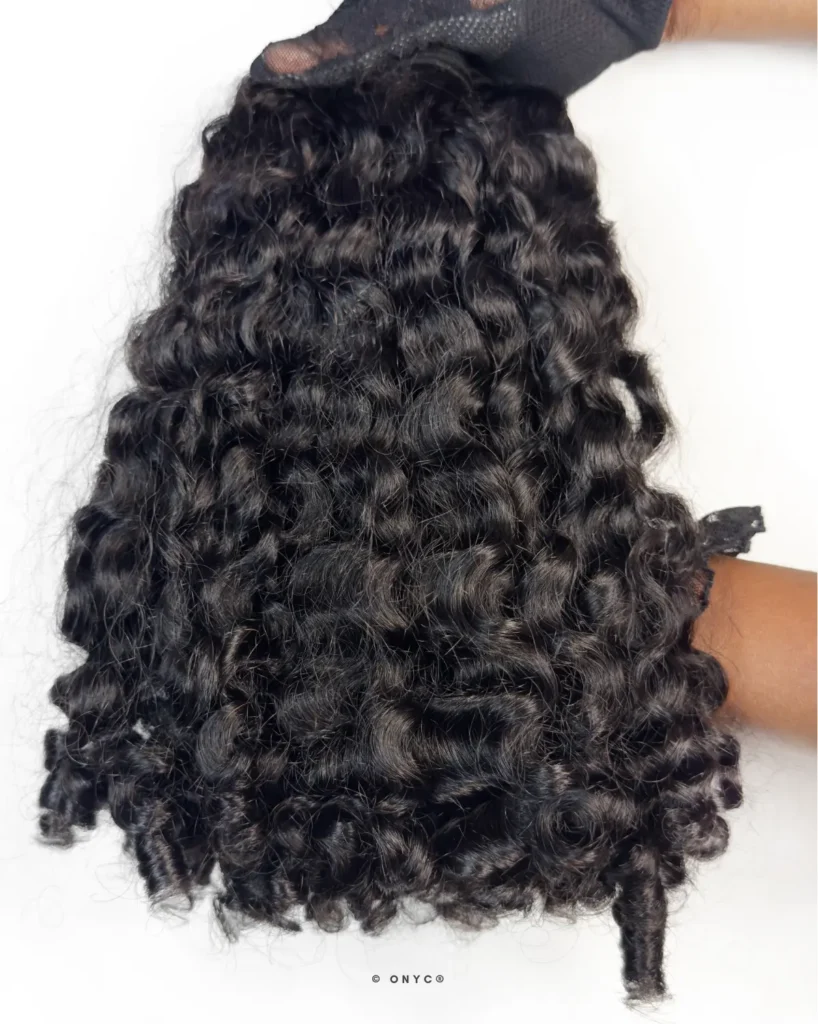
Raw Burmese Curly Hair Bundles Full Ends Double Drawn – ONYC® Burma Curls 3C
Select options This product has multiple variants. The options may be chosen on the product page

-
Kinky Curly Human Hair Weave Bundles For Natural Sew-In Extensions – ONYC® Kinky 3B-3C Curl
Select options This product has multiple variants. The options may be chosen on the product page


-
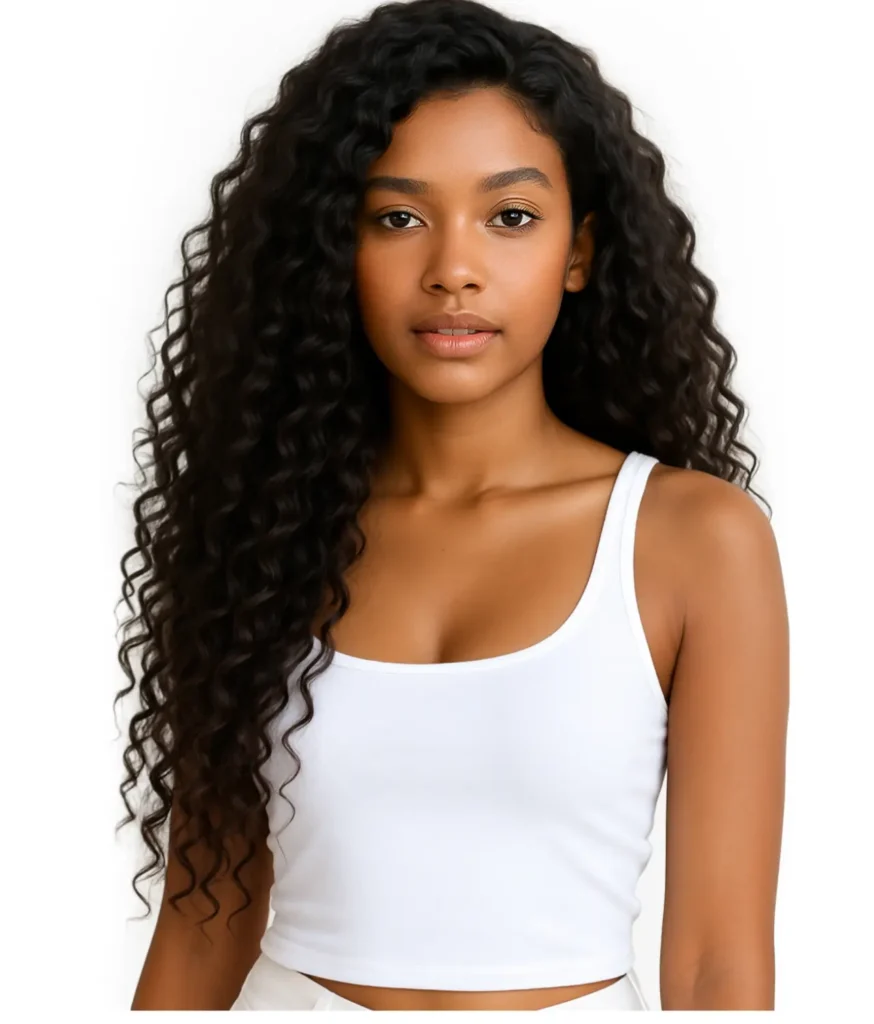
ONYC Spanish Curly Hair Weave 3A Spanish Curl Bundles
Select options This product has multiple variants. The options may be chosen on the product page

-
4C Human Hair Bundles for 4B/4C Coily Afro Sew-In Weave – ONYC® Afro Kinks 4C ClassiQUE™
Select options This product has multiple variants. The options may be chosen on the product page


What Are The 4 Basic Curl Patterns?
What are the four basic curl patterns? The commonly used hair-typing framework separates natural pattern into Type 1 straight hair, Type 2 wavy hair, Type 3 curly hair and Type 4 coily hair. This article concentrates on the 3A–4C range, but the four-family framework explains where curls and coils sit within the wider system. These four families provide the foundation for the more detailed Curl Pattern Types discussed throughout the guide. At this broader level, the answer to What Are The Curl Patterns? begins with four main families straight, wavy, curly and coily before the system is divided further into the familiar lettered subtypes. Readers searching what are the curl patterns for straight hair should note that Type 1 is the straight family and therefore does not contain curl subtypes. Type 2 introduces waves, Type 3 contains curls and Type 4 contains coils. The system is a broad visual framework rather than a statement about ethnicity or hair quality.
Likewise, the question “what are the curl patterns for black hair?” does not have one universal answer. Black hair can show multiple curl and coil formations, and individual heads may contain neighboring patterns at the same time. This guide therefore focuses on visible 3A–4C identification rather than assigning one pattern to a racial group.
Understanding the Four Hair-Pattern Families
Type 1 does not form a repeating wave or curl. Type 2 forms visible waves. Type 3 forms spirals and ringlets. Type 4 forms tighter coils and bends. Looking at the types of curls patterns within these broader families then helps separate the individual subtypes, including 3A, 3B, 3C, 4A, 4B and 4C. At this broader level, What Are The Different Curl Patterns? includes the progression from straight and wavy formations into the curls of Type 3 and the tighter coils and bends of Type 4. Readers asking What Are 2A, 2B, 2C, 3A, 3B Curls? are essentially comparing the transition from Type 2 into Type 3. For the full framework, see What Are the 4 Types of Hair?. Shoppers can then use that context when comparing Best professional hair extension brands without confusing hair family with density or quality.
Different Types Of Curls Names With Pictures
Different types of curls names with pictures are most useful when the images are viewed under comparable conditions. Lighting, wetness, product use and styling can make the same natural pattern appear noticeably different. That visual variation is also worth remembering when considering what determines the curl pattern of hair?, since a styled photograph may change how clearly the underlying natural formation can be seen.
A curl pattern chart is especially useful here because it lets you compare the same visual features across several reference images instead of relying on a single photo. Images are easier to compare when the hair is shown at a similar stage preferably clean, naturally dried and not dramatically stretched or set. A wet 3C curl beside a dry 3C curl can appear different enough to confuse identification even though the underlying pattern is the same.
What to Look for in 3A–4C Pictures
- Curl diameter: how broad or compact the repeating formation appears.
- Shape: whether the strand reads as a spiral, corkscrew, coil or bend.
- Relative shrinkage: useful supporting context rather than a fixed rule.
- Hair state: whether the reference is wet, dry or styled.
Why Pictures Should Be Used as References, Not Rules
Two people with the same curl type can look very different because density, strand thickness, length and styling influence the final appearance. That variation is worth remembering when using Different Types Of Curls Names With Photos as an identification reference: the goal is to recognize the recurring curl formation, not to find a photograph that looks identical to your entire head. That is why the Types of Hair framework should be used alongside pictures rather than allowing one image to define an entire category.
Look for Repetition, Not Perfection
A useful reference photograph shows the recurring direction of the pattern rather than a perfectly uniform head of identical curls. When trying to answer What is My Curl Pattern?, focus on the shape that repeats across several sections instead of searching for a perfect match in every strand. Natural variation is expected. When using a curl reference chart with photographs, look for the shape that repeats most often and then compare the nearest neighboring subtype.
Pictures of Extensions Can Add Another Layer
Extension photos can show product density and styling as well as the underlying curl formation. The same distinction is useful when exploring curly clip in photos, because the finished fullness of an installed set should not be mistaken for the natural density associated with a particular curl type. ONYC's Kinky 3B–3C Curl 7-Piece Clip-In was also selected as Best for 3B/3C Hair in Byrdie's best clip-in hair extensions guide, offering readers an additional reference when comparing curl textures and styling options. Someone comparing Best Hair Sites To Order From should distinguish the shape of the curl from the fullness of the installed hair.
What Is My Curl Pattern Quiz?
What is my curl pattern quiz? A useful curl pattern quiz or curl type quiz should help narrow your likely family and subtype by focusing on what your hair naturally does, not simply whether it feels “thick,” “dry,” “coarse” or “full.” A curl pattern chart can support the quiz by giving you a visual reference for the main Curl Pattern Types as you move through each answer. Comparing different types of curls names with pictures can provide another visual checkpoint, particularly when your answers place you between two neighboring subtypes.
What a Useful Quiz Should Not Ask You to Assume
A quiz should not decide that coarse hair must be 4C, that fine hair must be loosely curled, or that high shrinkage alone proves a specific subtype. Those shortcuts mix separate characteristics and can produce misleading results. The strongest questions focus on visible formation and then use other characteristics only as additional context.
Start With the Visible Formation
- Broad, open spirals → look toward 3A.
- Springier, smaller ringlets → look toward 3B.
- Tight corkscrews → look toward 3C.
- Small, defined coils → look toward 4A.
- Tight bends or angular formations → look toward 4B.
- Very compact coils or bends → look toward 4C.
Compare the Neighboring Pattern and Check More Than One Section
If your answer is not obvious, you may naturally sit near a boundary such as 3B/3C or 3C/4A. Check more than one part of the head and separate curl type from density, porosity and strand thickness. For a broader assessment, use the existing Hair Type Quiz. Once your pattern is clearer, resources such as Hair Extension Guide and Premium Virgin Hair Extensions become more useful than continuing to retake a curl quiz.
Additional Curl Pattern FAQs
Most frequent questions and answers
These are more frequently asked questions and answers concerning Curl Patterns!
What is my curl pattern?
Your curl pattern is the recurring shape your hair naturally forms when it is not deliberately straightened, stretched or set into another formation. Within this guide, the main possibilities are 3A, 3B, 3C, 4A, 4B and 4C, although many people naturally show more than one neighboring pattern.
How to Find Your Dominant Curl Pattern
Examine clean, naturally dried hair across several areas of the head. Look for the formation that appears most consistently rather than basing your answer on one strand. The Different Hair Types guide provides the wider classification framework.
What to Compare
- Shape: spiral, corkscrew, coil or bend.
- Diameter: broad versus increasingly compact formations.
- Relative tightness: where the pattern sits compared with neighboring subtypes.
- Shrinkage: supporting evidence rather than a standalone typing method.
How do I identify my natural curl type?
The most practical way to identify your natural curl type is to observe clean hair after it has dried without heat stretching or styling techniques that deliberately reshape the strand.
Identify Your Curl Family First
Type 3 forms recognizable spirals and corkscrews. Type 4 moves into tighter coils and bends. If your hair appears predominantly coily, the guide on What Does Type 4 Hair Look Like? can help narrow the family.
Keep Other Hair Characteristics Separate
Density, porosity and strand thickness should be evaluated independently. This becomes especially important when moving from identification to quality hair extensions, because a curl-number match alone does not guarantee the same overall appearance.
What is the difference between 3A, 3B and 3C hair?
The main difference between 3A, 3B and 3C hair is the size and relative tightness of the repeating curl. All three belong to Type 3, but the curl becomes progressively smaller and more compact from 3A through 3C.
Understanding the Type 3 Family
3A forms broad, open spirals; 3B forms smaller, springier ringlets; and 3C forms tighter corkscrews. The fuller-looking silhouette of 3C should not be confused with higher hair density.
When Extension Matching Is the Goal
Use the subtype as a starting point, then compare overall texture behavior. The guide on Which ONYC® Texture Is Best for Your Hair Type? moves that question into ONYC® texture matching.
What is the difference between 4A, 4B and 4C hair?
The main difference between 4A, 4B and 4C hair is the visible formation and increasing compactness of the coil pattern. They do not automatically share the same density, porosity or strand thickness.
4A, 4B and 4C at a Glance
4A usually has small defined coils, 4B tends toward tighter bends and angles, and 4C generally has the smallest and most compact pattern scale covered here.
For a Deeper Type 4 Comparison
See Is 4B better than 4C? If your goal is extension matching, What are the Best Hair Extensions for Type 4 Hair? is the more relevant next step.
What Are the Different Types of Hair Textures?
The broader hair-typing framework includes straight, wavy, curly and coily families, but curl pattern is only one part of what people commonly call hair texture.
Curl Pattern vs Other Hair Characteristics
- Density describes how much hair grows within an area.
- Strand thickness describes the diameter of an individual strand.
- Porosity describes how hair interacts with moisture.
- Curl pattern describes the visible recurring formation.
The ONYC® Natural Hair Textures resource provides the wider discussion, while this page stays focused on the 3A–4C pattern spectrum.
How can I tell 3C and 4A hair apart?
3C vs 4A hair is best distinguished by asking whether the repeating formation still appears primarily as a tight corkscrew curl or has moved into a smaller coily structure. 3C is the tightest Type 3 pattern and generally forms small, highly springy corkscrews.
4A Begins the Coily Family
4A generally forms smaller, tighter coils. Because the two sit next to each other, one person may naturally have both. For the extension-side comparison, see Which ONYC® Texture Should You Choose?.
Can I have 3B and 3C hair at the same time?
Yes. Mixed curl patterns are common, and 3B and 3C can naturally appear in different areas of the same head.
How to Identify the Dominant Pattern
Look at which formation appears across the largest portion of your hair, then note the secondary pattern separately. The Types of Natural Hair resource is best used as a comparative guide rather than a rigid rulebook.
If You Are Matching Extensions
If blending is the goal, How Do You Choose a Natural Hair Weave? adds the practical matching factors beyond the curl number.
Should I check my curl type when my hair is wet or dry?
For identification, naturally dried hair usually gives a more useful view of the pattern you actually wear and experience. Wet hair can appear more elongated because of the weight of water.
Compare Clean Hair With Minimal Manipulation
Allow the hair to dry without heat stretching and without products that strongly alter definition. You can observe wet hair as supporting information, but the final classification should not rely on wet appearance alone.
When You Still Are Not Sure
The broader Hair Types Chart can help you compare pattern alongside other characteristics without treating wet appearance as the only clue.
Does 4C automatically mean coarse or dense hair?
No. 4C identifies a compact coil pattern; it does not automatically mean the individual strands are coarse or that the hair has high density.
Curl Type and Density Are Different Measurements
Someone with 4C hair may have fine strands and lower density, while another person with the same curl type may have coarse strands and very high density.
Why This Matters for Extensions
Why Do Some 4C Hair Extensions Blend Better Than Others? explains why a believable blend depends on more than simply finding something labeled “4C.”
Does curl type determine porosity?
No. Curl type vs porosity describes two different things. Curl type refers to the visible formation of the strand, while porosity describes how readily hair takes in and releases moisture.
The Same Curl Type Can Have Different Porosity
Two people with 3B hair can have different porosity levels, just as two people with 4C hair can have different densities or strand widths. The Hair Textures guide is useful when you need information beyond the curl number itself.
Can heat or chemical processing make my curl pattern look different?
Yes. Repeated heat, chemical processing and other forms of structural alteration can make the natural pattern appear looser, less defined or uneven.
Temporary Change vs Structural Change
A blowout temporarily stretches the curl, while repeated excessive heat or chemical processing can cause longer-lasting changes when the strand becomes damaged.
Use Healthier Sections for Identification
When possible, compare areas that have not recently been straightened or chemically altered. For routine guidance after identification, how to maintain natural black hair moves the conversation into care.
Does my curl pattern limit which hairstyles I can wear?
No. A curl label does not determine which hairstyles you are allowed to wear. It simply describes the natural formation you are starting with.
Use Curl Pattern as a Styling Starting Point
Some styles may require more stretching, definition, moisture or hold depending on the pattern, density and strand thickness, but the label itself is not a limitation.
Think Beyond the Number
For broader inspiration and technique education, the ONYC® Hair Extension Styling Ideas library can be useful once you know the look you want to create.
Which ONYC® texture matches my curl pattern?
Your curl number is a useful starting point, but it should not be the only factor used to choose an ONYC® extension texture.
Move From Curl Identification to Texture Matching
First identify whether your natural hair sits closer to 3A, 3B, 3C, 4A, 4B or 4C. Then compare density, fullness, luster, movement, finish and how much natural hair will remain visible.
Use a Texture-Specific Comparison
Meet the Four ONYC® Kinky Curly Textures is a better next step once natural curl identification is complete. For more general shopping, Black Owned Hair Extensions and Natural Hair Extensions for Black Hair provide broader category context.
What is the most common curl pattern?
There is no single curl pattern that is “most common” for every population. Frequency varies by ancestry, region and community, and mixed patterns are also common. Instead of using a global popularity claim to identify your own hair, compare your visible formation directly. The Most Common Hair Type discussion provides broader context without turning frequency into a personal typing rule.
What Matters More Than Popularity
For extension shopping, popularity is less useful than texture compatibility and verified quality. Resources such as What Are the Best Human Hair Extensions? are more relevant to that decision.
How many types of curl patterns are there?
The common hair-typing system has four broad families Types 1, 2, 3 and 4 and each family can be divided into lettered subtypes. This guide focuses on six curl and coil patterns from 3A through 4C.
Broad Families vs Subtypes
Type 3 includes 3A, 3B and 3C. Type 4 includes 4A, 4B and 4C. The labels are visual shorthand, not a complete description of every hair characteristic.
Use the System Comparatively
What Are the Four Types of Natural Hair? provides the broader framework if you also need Type 1 and Type 2 context.
How do I tell if I have a curl pattern?
If your hair repeatedly forms a visible wave, spiral, corkscrew, coil or bend when it is clean and allowed to dry naturally, it has a recognizable pattern.
Look for Repetition Across the Strand
A single bend is not enough. Look at several strands and several areas of the head to see whether the same general formation repeats.
Do Not Confuse Styling With Natural Pattern
Braids, rollers, heat and strong styling products can create temporary shapes. For a wider explanation of classification, see What Are the Hair Types for Black Hair?.
Does everyone have a curl pattern?
Everyone has a natural strand-growth pattern, but not everyone has visible curls. Straight hair, wavy hair, curly hair and coily hair all sit within the broader classification system.
Curl Pattern vs Hair Pattern
In everyday conversation, “curl pattern” is often used broadly, but Type 1 hair does not form a curl and Type 2 forms waves rather than complete ringlets.
Where This Guide Begins
This article focuses on the 3A–4C curly and coily range. For all four families, use Different Types Of Human Hair only as a classification reference, then move into care or extension-specific resources as needed.
Final thoughts
Understanding your curl pattern gives you a practical starting point for comparing neighboring textures, recognizing mixed patterns and separating curl shape from density, porosity and strand thickness. Use the label as a visual guide rather than a rigid diagnosis. If your next step is extension research, the ONYC® Hair Extension Resources hub, and the blog about What kind of extensions look the most natural? and can help move from identification into texture matching and product research. Return to this Curl Pattern Guide whenever you need to compare neighboring patterns before moving into product-specific texture matching. The most useful outcome is not simply being able to say “I am 3B” or “I am 4C.” It is understanding the visual pattern well enough to recognize neighboring textures, communicate what your hair naturally does and make more informed decisions about styling, care and texture matching. A label is useful when it clarifies those decisions; it becomes less useful when it is treated as a rule that every strand must follow.
What Is Type 3 Hair? Complete Guide to 3A, 3B & 3C Curly Hair
What Is 3B Hair? Type 3B Curl Pattern & Characteristics Explained
What Is Type 4 Hair? Key Differences Between 4A, 4B & 4C Curl Patterns Explained
What Is 3A Hair? Type 3A Curl Pattern & Characteristics Explained
What Is 3C Hair? Type 3C Curl Pattern & Characteristics Explained
Best Curly Clip-In Hair Extensions for Natural Hair Guide
What Is 4A Hair? Type 4A Hair Characteristics & Pattern Explained
What Is 4C Hair? Type 4C Hair Characteristics & Coil Pattern Explained
What Is 4B Hair? Type 4B Hair Characteristics & Coil Pattern Explained
How To Care For Natural Hair Extensions: A Professional Guide
BET Spotlighted ONYC® Among the Best Black-Owned Hair Brands for Wigs and Extensions
Black Hair Care Guide | Tips on How to Maintain Natural Black Hair
Best Human Hair Extensions for 4C Hair That Actually Blends Naturally | A Complete Guide
Best Kinky Straight Extensions Guide: How to Choose the Best Match
Best Natural Hair Extensions | Most Natural-Looking Hair Extensions Guide
Best Blowout Hair Extensions Types, Textures and Best Options – Choosing Guide
Related Posts
 Pin
How to Choose Curly Hair Extensions for Your Natural Curl Pattern | Expert Guide
 Pin
Complete ONYC Curl Pattern Guide: From Spanish Curly 3A to Afro Kinks 4C
 Pin
What Is 4C Hair? Type 4C Hair Characteristics & Coil Pattern Explained
Click on a star to Rate this!
We are sorry that this post was not useful for you!
Let us improve this post!
Tell us how we can improve this post?


