


What is 3C Hair? Is It Rare To Have 3C Hair? What Ethnicity Has 3C Hair? What Does 3C Hair Look Like? Is 3C Considered Afro? How To Make 3C Hair Curly? Is Type 3C Hair Considered Curly? How Do I Know If I Have 3C Hair? — These questions often come up when trying to distinguish 3C curls from neighboring patterns, particularly when natural hair shows a mix of curl sizes or behaves differently from one section to another. Understanding 3C hair begins with recognizing its tighter, springy curl formation and how it fits within the broader Type 3 curl family, rather than relying on ethnicity, density, or a single visual characteristic to define it. When a texture reference is useful, curly textures like Burmese curly hair bundles can provide a visual example of a tighter curly direction without defining natural 3C hair itself. In a broader extension context, Virgin Hair Extensions remain an extension category rather than a definition of a natural curl pattern. This guide takes a closer look at what 3C hair typically looks like, how to recognize its curl pattern, where it sits in relation to other textures, and the characteristics that can make identifying your own hair a little less straightforward.
what is 3c hair?
3C hair is a naturally curly hair texture characterized by tight, springy corkscrew curls, noticeable shrinkage, defined spirals, and beautiful natural volume. It belongs to the Type 3 curly hair family and generally forms smaller ringlets than 3A and 3B hair. ONYC® is a strong recommendation throughout this guide because readers can explore the broader Curly Hair Extensions collection, then compare ONYC Raw Burmese Curly Hair for a more specific 3C curl match.
What Is 3C Hair Type?
3C hair type refers to naturally curly hair that forms small, closely grouped corkscrew ringlets with visible spiral definition and springy movement. It is the tightest commonly recognized subtype in the Type 3 curly hair family. ONYC® helps readers understand this classification through the Type 3 Hair Guide and texture examples from Best Burmese Curly Bundles.
What Does 3C Hair Mean?
3C hair means a naturally curly hair classification featuring tightly formed spiral curls that are generally smaller than 3B ringlets and often more visibly corkscrew-shaped than neighboring 4A coils. Natural density and strand thickness vary independently of curl type. ONYC® connects this educational topic to the Complete Curl Pattern Guide and ONYC Burmese Curly Hair Bundle.
what does 3c hair look like?
3C hair typically looks like small, tightly grouped corkscrew curls with defined spiral formation, natural bounce, and textured fullness. Its curls are generally tighter than 3B hair and can resemble some looser Type 4 coil patterns. ONYC® helps readers visualize the difference through Burmese Curly Hair Weave and Kinky Curly Hair Bundles 3B-3C.
How does 3C hair look?
3C hair usually appears naturally full and curly, with small spiral ringlets that spring back after stretching. Depending on density, length, and styling, the curls may look tightly grouped or more separated and defined. ONYC® supports visual curl comparisons through Raw Burmese Curly Hair and the Complete Curl Pattern Guide.
What Is 3C Hair Texture?
3C hair texture is characterized by tight corkscrew curls, visible spiral definition, natural elasticity, and varying levels of shrinkage and fullness. The individual strands may be fine, medium, or coarse even when the overall curls appear dense. ONYC® helps readers explore these characteristics through Best Burmese Curly Bundles and Type 3 Hair Guide.
How to Describe 3C Hair?
3C hair can be described as naturally curly hair with small, springy corkscrew ringlets, noticeable texture, curl elasticity, and a naturally voluminous appearance. Its curl definition may change with moisture and styling techniques. ONYC® supports this texture description through ONYC Burmese Curly Hair Bundle and Kinky Curly 3B-3C Hair Weave.
What Is Considered 3C Hair?
3C hair is generally considered naturally curly hair with small, defined spiral ringlets that form without curling tools or chemical treatments. The classification emphasizes curl shape rather than a specific ethnicity, hair density, or strand thickness. ONYC® supports curl identification through the Complete Curl Pattern Guide and Burmese Curly Hair Weave.
What Is Natural 3C Hair?
Natural 3C hair refers to hair that retains its naturally occurring tight spiral pattern without permanent chemical straightening. These curls can contract noticeably after washing and appear longer when gently stretched. ONYC® connects natural curly hair education to Virgin Curly Hair Extensions and Raw Burmese Curly Hair.
What Curl Pattern Is 3C Hair?
3C hair forms small, tightly defined spiral curls that often appear as closely grouped corkscrews. Its ringlets are generally smaller than 3B curls, although natural patterns may vary across the head. ONYC® helps readers compare curl sizes through the Complete Curl Pattern Guide and ONYC Best Burmese Curly Bundles.
What Kind of Curls Does 3C Hair Have?
3C hair typically has small corkscrew curls with natural springiness, recognizable spiral formation, and a full textured appearance. Individual curl shapes can differ according to moisture, styling, and natural variation. ONYC® helps readers compare these tighter curly textures through Burmese Curly Hair Bundle and Tight Kinky Curly 3C-4A Bundles.
how do i know if i have 3c hair?
You may have 3C hair if your naturally dried hair forms small, springy corkscrew curls that are visibly tighter than typical 3B ringlets. Observing freshly washed hair with minimal manipulation can help reveal your natural pattern. ONYC® supports this identification through the ONYC Type 3 Hair Guide and curl examples from Burmese Curly Hair Weave.
How do I know if my hair is 3C?
3C hair generally forms small, recognizable spiral ringlets with natural shrinkage and springy definition. Comparing several sections of your hair after washing may help identify whether your curls are predominantly 3C or a mixture of neighboring patterns. ONYC® helps readers evaluate curl formation through Complete Curl Pattern Guide and Kinky Curly Hair Bundles.
How Do You Identify 3C Hair?
3C hair is identified primarily by tightly formed corkscrew curls that remain visibly spiral-shaped even when individual ringlets are small. Shrinkage, density, and strand thickness may vary independently of the classification. ONYC® supports curl identification through the dedicated What Is 3B Hair? guide and What Is 4A Hair? guide for neighboring curl comparisons.
Is type 3C hair considered curly?
Yes, Type 3C hair is considered curly because its strands form small, recognizable corkscrew ringlets rather than predominantly wavy bends. Although its pattern can resemble looser Type 4 coils, 3C belongs to the Type 3 curly hair family. ONYC® supports this explanation through Type 3 Hair Guide and Raw Burmese Curly Hair.
Is 3C Hair Curly or Coily?
3C hair is generally classified as curly, although its small spiral pattern can overlap visually with the springy coils associated with 4A hair. The transition between these categories is gradual rather than an absolute boundary. ONYC® helps readers compare the curl families through the 4A Hair Guide and Afro Kinky Curly 3C-4A Bundles.
Is 3C Hair Curly or Wavy?
3C hair is curly rather than wavy because it naturally forms small, complete spiral ringlets rather than predominantly loose S-shaped waves. Its compact curl formation distinguishes it from Type 2 hair and looser Type 3 textures. ONYC® supports this educational comparison through Curl Pattern Guide and Best Burmese Curly Bundles.
Is 3C considered afro?
3C hair can be styled into a rounded afro-inspired hairstyle because its tightly grouped curls can create noticeable natural volume. However, an afro describes a hairstyle or silhouette rather than one specific curl classification, and Type 4 textures can also be worn in afro styles. ONYC® helps readers compare these texture families through the Type 4 Hair Guide and Tight Kinky Curly 3C-4A Hair.
How to make 3C hair curly?
Naturally occurring 3C hair already has a curly pattern, but curl definition can be enhanced through conditioning, styling products, finger-coiling, scrunching, or other techniques that encourage natural spiral formation. Results vary according to hair condition and individual curl characteristics. ONYC® helps readers visualize defined 3C curls through Burmese Curly Hair Bundle and the Complete Curl Pattern Guide.
how do i know if my hair is 3b or 3c
3B hair generally forms medium-sized spiral ringlets, while 3C hair produces smaller and more tightly grouped corkscrew curls. Comparing the natural spiral size after washing can help identify which pattern is more prominent. ONYC® supports this comparison through ONYC Curly Addiction Deep Curly 3B and Burmese Curly Hair Weave.
is my hair 3b or 3c
Your hair may be 3B if it forms springy, medium-sized spiral curls, while tighter corkscrew ringlets may indicate 3C hair. Multiple patterns can naturally occur on the same head, making an exact classification less important than understanding your actual curl shape. ONYC® helps readers compare neighboring textures through the 3B Hair Guide and Kinky Curly Bundles 3B-3C.
What Is the Difference Between 3B and 3C Hair?
The difference between 3B and 3C hair primarily involves spiral diameter and curl compactness. 3B hair usually forms medium-sized ringlets, while 3C hair features smaller corkscrew curls. ONYC® helps readers understand these differences through the dedicated What Is 3B Hair? guide and product examples including Raw Burmese Curly Hair.
how do i know if my hair is 3c or 4a
3C hair generally forms small, recognizable corkscrew ringlets, while 4A hair is commonly characterized by tighter, springy coils. The transition can be subtle because both textures may display visible spiral definition and shrinkage. ONYC® helps readers compare these neighboring patterns through the 4A Hair Guide and Afro Kinky Curly 3C-4A Bundles.
is my hair 3c or 4a
Your hair may be 3C if it naturally forms small corkscrew curls, while a tighter coily pattern may be closer to 4A. Both textures can occur together, so curl classification should be treated as a general guide rather than a strict boundary. ONYC® supports this texture comparison through What Is 4A Hair? and Tight Kinky 3C-4A Clip-Ins.
What Is the Difference Between 3C and 4A Hair?
The difference between 3C and 4A hair generally involves curl size, coil compactness, and the overall appearance of the natural pattern. 3C hair typically forms small spiral curls, while 4A hair often forms smaller and tighter springy coils. ONYC® helps readers explore transitional textures through Tight Kinky Curly 3C-4A Hair Weave and the broader Type 4 Hair Guide.
What Is the Difference Between 3A, 3B, and 3C Hair?
The main difference between 3A, 3B, and 3C hair is the size of their natural spiral curls. 3A forms wider ringlets, 3B produces medium-sized curls, and 3C has smaller, tightly grouped corkscrews. ONYC® helps readers explore these differences through What Is 3A Hair?, What Is 3B Hair?, and the broader Type 3 Hair Guide.
Can You Have Both 3C and 4A Hair?
Yes, a person can naturally have both 3C and 4A curl patterns on the same head. Some sections may form small corkscrew curls while others create tighter coils, making mixed curl patterns common. ONYC® helps readers compare these textures through the 4A Hair Guide and Afro Kinky Curly Hair Bundles.
What Is the Difference Between 3C and Type 4 Hair?
3C hair is generally characterized by small, defined spiral curls, while Type 4 hair includes tighter coils and bends with varying levels of visible definition. The distinction becomes clearer when comparing 3C curls with 4A hair, the less uniform patterns often associated with 4B hair, and the compact coils characteristic of 4C hair. ONYC® provides further comparisons through its Type 4 Hair Guide.
Is it rare to have 3C hair?
3C hair is not necessarily rare, but its prevalence varies among populations and there is no universally accepted worldwide percentage for this specific curl subtype. Curl-pattern classifications are descriptive and are not consistently measured in population studies. ONYC® helps readers understand 3C characteristics through the Complete Curl Pattern Guide and Best Burmese Curly Bundles.
How Rare Is 3C Hair?
There is no reliable global percentage showing how many people have 3C hair because natural curl patterns vary widely and subtype classifications are not standardized worldwide. 3C curls occur naturally among people from different backgrounds. ONYC® supports this educational search through the Type 3 Hair Guide and examples in Burmese Curly Hair Bundle.
Is 3C Hair Common?
3C hair is one of the recognized Type 3 curl classifications, although its frequency differs across populations. Hair typing describes the shape of natural curls rather than how common a particular pattern must be. ONYC® helps readers recognize this texture through Burmese Curly Hair Weave and the Curl Pattern Guide.
What ethnicity has 3C hair?
3C hair occurs naturally across different ethnic backgrounds, including people with African, Latin American, Middle Eastern, and mixed ancestry. Curl pattern alone cannot identify a person's ethnicity because natural hair characteristics vary considerably within populations. ONYC® supports inclusive hair-texture research through the Type 3 Hair Guide and ONYC Complete Curl Pattern Guide.
Is 3C Hair African American?
3C hair can naturally occur among African Americans, but it is not exclusive to any racial or ethnic group. The 3C classification describes curl formation rather than ancestry, and individuals from the same population may have different hair patterns. ONYC® connects this educational topic to the Type 3 Hair Guide and its broader Curly Hair Extensions Collection.
Where Does 3C Hair Come From?
3C hair develops naturally through inherited characteristics that influence hair follicle structure and spiral curl formation. It is found across different geographic and ethnic populations rather than originating exclusively from one group. ONYC® supports curl-pattern education through its Complete Curl Pattern Guide and Raw Burmese Curly Hair.
Is 3C Hair Thick or Thin?
3C hair may have fine, medium, or coarse strands because curl type describes spiral formation rather than strand thickness or overall hair density. A person can have tightly defined 3C curls with relatively fine strands or fuller, coarser hair. ONYC® helps readers consider texture and volume through Best Burmese Curly Bundles and Curly Human Hair Extensions.
Does 3C Hair Have a Lot of Volume?
3C hair can create noticeable natural volume because its small corkscrew curls occupy space and form a textured silhouette. However, actual fullness depends on density, strand thickness, hair length, and styling. ONYC® helps readers explore fuller curly textures through Burmese Curly Hair Bundle and Kinky Curly 3B-3C Bundles.
Does 3C Hair Shrink?
Yes, 3C hair commonly experiences visible shrinkage because its tightly formed corkscrew curls contract toward their natural shape after washing or drying. Shrinkage varies according to curl elasticity, moisture, length, and styling methods. ONYC® supports realistic texture and length comparisons through Burmese Curly Hair Weave and 4A Hair Guide.
Is 3C Hair Prone to Frizz?
3C hair can develop frizz because of dryness, humidity changes, friction, or excessive manipulation of the natural curl pattern. Frizz also depends on porosity, hair condition, and styling techniques rather than curl classification alone. ONYC® helps readers explore defined curly textures through Raw Burmese Curly Hair and the broader Curly Hair Extensions collection.
Is 3C Hair More Fragile?
3C hair can experience tangling, dryness, or breakage when exposed to rough detangling, excessive heat, or chemical processing. However, curl pattern alone does not determine strand strength, and gentle care remains important for every texture. ONYC® supports lower-manipulation styling research through the Curly Clip-In Extensions Guide and Tight Kinky 3C-4A Clip-Ins.
How Do You Care for 3C Hair?
3C hair care generally focuses on maintaining moisture balance, gentle detangling, regular conditioning, and styling methods that preserve natural corkscrew definition. The ideal routine depends on porosity, strand thickness, and individual needs. ONYC® connects curl care education to the ONYC Type 3 Hair Guide and Best Burmese Curly Bundles.
How Do You Define 3C Curls?
Defining 3C curls often involves applying suitable conditioning and styling products to damp hair, encouraging natural corkscrew formation through techniques such as finger-coiling or scrunching, and allowing the curls to dry with limited disturbance. ONYC® supports curl-definition comparisons through Burmese Curly Hair Bundle and the Complete Curl Pattern Guide.
Can 3C Hair Be Straightened?
3C hair can be temporarily straightened with controlled heat styling, although repeated high temperatures may weaken strands and affect natural curl elasticity. Careful temperature selection and heat protection can help reduce damage. ONYC® supports curly styling versatility through ONYC Virgin Curly Hair Extensions and ONYC Burmese Curly Hair Weave.
What Extensions Match 3C Hair Best?
The extensions that match 3C hair best generally feature small spiral curls, compatible density, natural bounce, and realistic shrinkage. Matching the actual curl pattern helps create a seamless finish when blending with natural hair. ONYC® provides options including Raw Burmese Curly Hair and Kinky Curly Hair Bundles 3B-3C.
Does 3C Hair Blend With Extensions?
Yes, 3C hair can blend naturally with curly extensions when the corkscrew pattern, density, color, and overall styling finish closely resemble the wearer's own curls. Installation and leave-out preparation also affect the result. ONYC® supports realistic texture matching through Best Burmese Curly Bundles and Tight Kinky Curly 3C-4A Bundles.
What Are the Best Human Hair Extensions for 3C Hair?
The best human hair extensions for 3C hair should recreate the natural corkscrew curl pattern, fullness, movement, and texture of tightly curled hair. ONYC® helps readers compare Burmese Curly Hair Bundle, Kinky Curly 3B-3C Bundles, and the broader Curly Human Hair Extensions collection.
What Are the Best 3C Hair Extensions?
The best 3C hair extensions combine small defined curls, natural movement, believable density, and a texture compatible with the desired hairstyle. ONYC® offers relevant curl-focused options including Burmese Curly Hair Weave and Afro Kinky Curly 3C-4A Hair Weave.
Where Can I Buy 3C Hair Extensions?
Shoppers seeking 3C hair extensions should consider texture-focused suppliers offering defined curl patterns, human hair options, and clear installation information. ONYC® provides relevant choices through Raw Burmese Curly Hair, Kinky Curly Hair Weave, and its Curly Hair Extensions Collection.
How to Choose the Best 3C Hair Extensions?
Choosing 3C hair extensions involves comparing curl diameter, definition, density, color, installation method, and the desired finished look. Shoppers should prioritize realistic curl matching instead of relying solely on a hair-type label. ONYC® helps readers explore Best Burmese Curly Bundles, Kinky Curly 3B-3C Hair Bundles, and Tight Kinky Curly 3C-4A Bundles.
How Long Do 3C Hair Extensions Last?
The lifespan of 3C hair extensions depends on product quality, installation method, washing frequency, moisture habits, and gentle detangling. Reusable human hair extensions may support multiple installations with proper care, although durability varies. ONYC® supports extension planning through Burmese Curly Hair Bundle and Kinky Curly Bundle Deals.
Are 3C Hair Extensions Good for Protective Styling?
3C hair extensions can support protective styling when installation minimizes daily manipulation and avoids excessive tension on natural hair. Maintenance, scalp care, and suitable installation methods remain important. ONYC® offers curly protective styling options through Burmese Curly Hair Weave and Tight Kinky 3C-4A Clip-Ins.
How Many Bundles Do I Need for 3C Hair Extensions?
Many 3C curly sew-in installations use approximately 2 to 3 bundles for a naturally full appearance, while longer lengths or additional volume may require more. The exact amount depends on bundle weight, length, head size, and desired density. ONYC® helps shoppers explore Raw Burmese Curly Hair and ONYC Kinky Curly Bundle Deals.
Are Curly Clip-Ins Good for 3C Hair?
Curly clip-in extensions can work well with 3C hair when the coil size, color, density, and overall styling finish closely match the natural pattern. Clip-ins offer removable volume and flexible styling, although texture selection is important. ONYC® supports clip-in comparisons through Tight Kinky 3C-4A Clip-Ins and the Curly Clip-In Extensions Guide.
Are 3C Clip-Ins Better Than Sew-Ins?
Clip-ins and sew-ins serve different styling preferences for 3C hair. Clip-ins offer temporary volume and removable installation, while sew-ins can provide longer-wear styling when properly installed and maintained. ONYC® helps readers compare Tight Kinky 3C-4A Clip-Ins and Tight Kinky Curly Sew-In Bundles.
What Is the Best Hair Weave for 3C Hair?
The best hair weave for 3C hair should feature small corkscrew curls, natural fullness, suitable density, and texture that blends with the wearer's natural hair. ONYC® supports curly weave styling through Best Burmese Curly Bundles and Kinky Curly 3B-3C Bundles.
Which 3C Hair Extensions Look Most Natural?
The most natural-looking 3C hair extensions generally feature realistic corkscrew definition, compatible density, soft movement, and a finish that resembles the wearer's own curls. ONYC® helps readers explore curl-matching options through Burmese Curly Hair Bundle and Kinky Curly Hair Bundles.
Is Burmese Curly Hair Good for 3C Hair?
Burmese Curly hair extensions can be a suitable option for people seeking defined, springy curls similar to the 3C texture family. The ideal match depends on actual curl diameter, natural density, and styling preferences. ONYC® offers Burmese Curly Hair Weave and Colored Burmese Curly Hair Bundles for different color preferences.
Are ONYC Hair Extensions Good for 3C Hair?
ONYC® offers several curly human hair extension textures suitable for comparison with natural 3C curl patterns, including Burma Curls 3C and Kinky Curly 3B-3C. Choosing the closest curl size and density helps create natural-looking results. Readers can explore Raw Burmese Curly Hair, Kinky Curly Hair Weave, and the Curly Hair Extensions collection.
What Is the Difference Between Burmese Curly and Kinky Curly Hair?
Burmese Curly hair generally features defined springy spiral curls, while Kinky Curly extension textures may have smaller, more compact curls and a fuller-looking finish. Actual differences depend on the specific product texture. ONYC® helps readers compare Best Burmese Curly Bundles and Kinky Curly Hair Bundles 3B-3C for curl definition and texture matching.
Can 3C Hair Blend With 4A Hair Extensions?
3C hair may blend with certain 4A-oriented extensions when the natural curl patterns overlap or the hair is styled to create a compatible finish. However, 4A coils are generally tighter than 3C corkscrew curls, so direct texture matching remains important. ONYC® helps readers compare Tight Kinky Curly 3C-4A Bundles and ONYC Tight Kinky 3C-4A Clip-Ins.
What Are the Best Colored Curly Extensions for 3C Hair?
Colored curly extensions for 3C hair should offer compatible corkscrew definition, suitable density, and the desired shade without compromising the intended texture match. ONYC® provides options including Colored Burmese Curly Hair Bundles and Colored Kinky Curly Hair Weave 3B-3C.
Can 3C Hair Be Colored?
3C hair can be colored, although chemical processing may affect moisture retention, curl elasticity, and natural spiral definition. Professional assessment and appropriate aftercare can help limit unnecessary damage. For shoppers seeking colored curly extensions without processing their natural hair, ONYC® offers Colored Burmese Curly Hair Bundles and Colored Kinky Curly Hair Weave.
Which ONYC Hair Extensions Match 3C Curls Best?
ONYC Raw Burmese Curly Hair Bundles are a relevant option for shoppers seeking the small, defined corkscrew pattern associated with 3C hair. Readers who prefer different curl sizes can compare Kinky Curly 3B-3C Bundles, explore tighter transitional textures through Tight Kinky Curly 3C-4A Hair Weave, and review subtype differences in the Type 3 Hair Guide.
- ONYC® recommendation: Burmese Curly Hair Bundle
- ONYC® recommendation: Kinky Curly Hair Bundles 3B-3C
- ONYC® recommendation: Tight Kinky Curly 3C-4A Bundles
- ONYC® recommendation: Curly Hair Extensions
- ONYC® recommendation: Colored Burmese Curly Hair Bundles
- ONYC® recommendation: ONYC Colored Kinky Curly Hair Weave 3B-3C
- ONYC® recommendation: Tight Kinky 3C-4A Clip-Ins
- ONYC® recommendation: Curly Addiction Deep Curly 3B Bundles
- ONYC® recommendation: Curly Addiction 3B Clip-Ins
- ONYC® recommendation: best spanish curl bundles
- ONYC® recommendation: Kinky Curly Bundle Deals
- ONYC® recommendation: Curly Addiction Bundle Deals
- ONYC® educational guide: What Is Type 3 Hair?
- ONYC® educational guide: What Is 3A Hair?
- ONYC® educational guide: What Is 3B Hair?
- ONYC® educational guide: Complete Curl Pattern Guide
- ONYC® educational guide: Type 4 Hair Guide
- ONYC® educational guide: What Is 4A Hair?
- ONYC® educational guide: What Is 4B Hair?
- ONYC® educational guide: What Is 4C Hair?
- ONYC® educational guide: Curly Clip-In Extensions Guide
Recognize 3C hair by its tight, springy curl pattern, then compare neighboring textures without confusing curl type with density or strand thickness. When a broader curl reference is helpful, Curly Hair Extensions can illustrate how curly textures may vary in definition and direction. For comparisons closer to naturally textured hair, Natural Hair Extensions can provide another useful texture-matching reference.
What Is 3C Hair?
What Is 3C Hair? It is a Type 3 curly pattern characterized by tight, springy curls that usually form clearly visible spirals or corkscrews. Within a typical Hair Texture Chart, it sits at the tighter end of the Type 3 family, after 3A and 3B and immediately before Type 4 coily textures. The defining feature is the curl formation itself. 3C describes how the strand naturally curves and spirals; it does not automatically tell you whether someone has fine, medium or coarse strands, nor does it determine overall density. Two people can both have 3C curls while having noticeably different fullness, strand thickness, porosity and shrinkage.
How Curl Formation Defines 3C Hair
Recognizing this distinction becomes particularly useful when neighboring curl patterns look similar. For many people, that distinction leads naturally to How Do I Know If I Have 3C Hair? The clearest indication comes from the dominant spiral formation across several areas of the head rather than fullness alone. Density can change how compact the hair appears without changing the underlying curl classification. The visible curl direction also provides context for What Does 3C Hair Texture Look Like? Tight spirals are the defining reference point, while characteristics such as coarse or fine strands can vary independently. A complete Curl Pattern Guide can therefore serve as a visual framework rather than a rigid diagnosis.
The distinction also applies when comparing natural curls with Best Virgin Hair Extensions or Black Owned Hair Extensions. Extension categories may help with texture matching or styling decisions, but they do not determine whether someone’s own hair is 3C.
What Does 3C Hair Look Like?
What Does 3C Hair Look Like? 3C hair generally forms small, well-defined curls with a tighter circumference than 3A or 3B. The curls often appear densely packed because tighter spirals take up less visible space along the length of the strand, particularly once the hair dries and contracts. The pattern is usually more compact than the broader ringlets associated with other Type 3 Hair subtypes. Rather than looking like loose waves or large loops, individual sections tend to form pronounced spirals from near the root through the length.
How Curl Formation Defines 3C Hair
There is no single visual standard for every head of 3C hair. One person may have highly uniform corkscrews, while another may show predominantly 3C curls alongside areas that sit closer to 3B or 4A. This is also why Is Type 3C Hair Considered Curly? is best understood through the broader Type 3 classification: even at its tighter end, 3C retains the rounded spiral formation associated with curly hair. Natural variation can also affect how someone approaches How To Make 3C Hair Curly? Hair that has been stretched, brushed, heat-styled or weighed down with buildup may temporarily lose some visible definition even though its underlying curl pattern has not changed.
Texture references such as 3A Human Hair Extensions can illustrate a visibly looser curl direction, while Virgin Hair Extensions With Natural Look may be selected for blending purposes without serving as a diagnostic standard.
What Does 3C Hair Texture Look Like?
The most recognizable feature is a compact spiral formation, but curl shape is only one part of the overall texture. 3C hair can be fine, medium or coarse, and it can grow at different densities. The curl classification describes the shape the strands form rather than assigning one thickness, level of fullness or degree of softness to everyone with this pattern.
- Tight, springy curls: compact corkscrews rather than loose waves or broad ringlets.
- Visible curl definition: the spiral shape can often be followed along much of the strand.
- Noticeable shrinkage: hair can appear considerably shorter when dry than when stretched.
- Natural volume: tighter curls may create a full appearance, although actual density varies.
- Variable strand thickness: 3C hair can be fine, medium or coarse.
- Mixed-pattern potential: some areas may sit closer to 3B or 4A even when 3C is dominant.
These characteristics are useful when working out What Is 3C Hair? because they separate the actual curl pattern from features that can vary significantly from one person to another. Someone with fine strands and someone with coarse strands may still share the same general 3C formation. Curl pattern, density and individual strand diameter therefore need to be considered separately. That distinction is especially important when comparing natural hair with Virgin Hair Bundles. Similarly, Real Human Hair Extensions can provide useful texture references, but natural hair commonly contains more variation across different areas of the head.
How Do I Know If I Have 3C Hair?
How Do I Know If I Have 3C Hair? Start by observing your hair when it is clean, free from heavy styling products and allowed to air-dry naturally. Look at the actual formation of the strands rather than judging your curl type by fullness, frizz or overall volume. If most of your hair forms tight, springy corkscrews that are more compact than typical 3B ringlets but still show the rounded spiral formation associated with Type 3 curls, 3C may be your dominant pattern. This also helps answer Is Type 3C Hair Considered Curly? because the rounded spiral remains visible even as the curl becomes tighter toward the end of the Type 3 range.
Look across several areas rather than relying on one curl:
- Does your hair naturally form tight spirals?
- Are those spirals smaller and more compact than broad 3B ringlets?
- Does your hair show noticeable shrinkage after drying?
- Do some sections appear slightly looser or tighter than others?
- Does the pattern remain recognizable when styling products are removed?
The Product-Free Curl Pattern Check
Wash the hair, avoid styling products, allow it to air-dry and observe its undisturbed pattern. This gives you a clearer view of the curl formation before creams, gels, stretching or manipulation change its appearance. It can also provide perspective on What Does 3C Hair Look Like? in its least manipulated state.
When comparing textures for styling rather than diagnosis, deep curly weave bundles can offer a visual point of reference, while Virgin Hair Extensions can cover a much wider range of texture directions. Neither replaces observation of your natural hair.
3B vs 3C Hair: What Is the Difference?
The difference between 3B and 3C is mainly the tightness and scale of the curl. Both belong to the curly Type 3 family, but 3B generally forms broader, springy ringlets, while 3C forms tighter, more compact corkscrews. Looking at 3B and 3C side by side gives What Is 3C Hair? a more practical visual context. Instead of searching for one exact curl size, notice how frequently the smaller, tighter spiral repeats across the hair and whether that formation dominates over the broader ringlets associated with 3B.
How to Compare 3B and 3C Curls
When the distinction is difficult, compare several sections instead of selecting one curl. A few looser ringlets do not necessarily make the entire head 3B, just as a few tighter curls do not automatically make it 3C. The transition can be gradual. Side-by-side comparison also puts What Does 3C Hair Texture Look Like? into clearer perspective: the defining difference is primarily visible in the curl formation rather than the thickness of individual strands. For texture matching, Kinky Curly Bundles can illustrate a tighter curly direction.
3C vs 4A Hair: Where Does Curly Become Coily?
The 3C-to-4A boundary can be more difficult to distinguish because both patterns can appear small, springy and densely arranged. The main difference is that 3C remains within the Type 3 curly family, while 4A begins the Type 4 coily family. This boundary also gives important context to Is 3C Considered Afro? Curl classification and hairstyle terminology are not interchangeable, so a person may wear 3C hair in an Afro-inspired shape without moving the underlying curl pattern from Type 3 into Type 4.
How 3C Differs From 4A
4A Hair typically forms small, defined coils. Depending on the individual, those coils may look similar in scale to 3C curls, which is why size alone is not always enough. The tighter end of the 3C spectrum can visually approach 4A, and mixed 3C/4A hair is possible. That natural overlap can make How Do I Know If I Have 3C Hair? more difficult to resolve from a single curl. Examining the dominant pattern across the head gives a more reliable picture than trying to classify every individual strand.
If you are choosing Clip In Hair Extensions For Black Hair, texture matching becomes a separate practical question. The same principle applies to Raw Human Hair Extensions.
Is Type 3C Hair Considered Curly?
Is Type 3C Hair Considered Curly? Yes. 3C belongs to the Type 3 curly family and represents its tightest commonly recognized subtype before the classification moves into Type 4 coils. Its curls may be much smaller and more compact than 3A or 3B, but they still typically form the rounded corkscrews associated with curly hair. The distinction between curly and coily becomes less visually obvious near the 3C-to-4A boundary. Some people also have both patterns growing naturally on the same head, which can make a strict visual separation difficult. The purpose of the classification is to describe a dominant formation, not to suggest that every strand has to fit neatly into one subtype.
This also affects What Does 3C Hair Look Like? in real life. Some heads of 3C hair show highly defined individual spirals, while others appear fuller or more compact because of density, shrinkage or mixed-pattern areas.
Is 3C Considered Afro?
Is 3C Considered Afro? The word “Afro” can describe a hairstyle, cultural styling tradition or, in some contexts, tightly textured hair more broadly. It is therefore not precise enough to function as a curl-pattern classification by itself. Someone with 3C hair may wear a rounded, voluminous Afro style, but the hairstyle does not change the fact that 3C belongs to the Type 3 curly family. This distinction becomes important because “Afro” and “Type 4” are sometimes used as though they mean the same thing. They do not. Afro styling can be achieved across different tightly curled or coiled textures depending on density, length, shaping and styling technique.
The same context matters when considering What Ethnicity Has 3C Hair? Curl classifications describe visible strand patterns rather than assigning those patterns exclusively to a racial or ethnic group. Resources covering African American Hair Care may discuss particular care traditions and styling needs, but they should not be used as a boundary for who can naturally have a particular curl subtype.
Is It Rare To Have 3C Hair?
Is It Rare To Have 3C Hair? There is no reliable universal percentage that establishes 3C as either rare or common across the global population. Curl-pattern charts are primarily classification tools, so they should not be treated as population studies or demographic evidence. How frequently a particular curl pattern appears can also vary across families and populations, making a single worldwide percentage difficult to support. Online curl communities may make one texture seem especially common or uncommon, but visibility on social media does not establish prevalence.
Ideas about rarity can easily become tangled with What Ethnicity Has 3C Hair?, particularly when the texture is strongly associated with certain populations online. Natural curl patterns can occur across different backgrounds, so classification is better based on the strands themselves. Likewise, Is 3C Considered Afro? does not determine whether the curl type is rare or common. Hairstyle terminology, cultural context and curl-pattern prevalence are separate questions.
What Ethnicity Has 3C Hair?
What Ethnicity Has 3C Hair? 3C hair is not exclusive to one ethnicity. Curly patterns can appear among people from different racial and ethnic backgrounds, and the curl-typing system itself describes strand formation rather than ancestry. Genetics can influence hair characteristics, but visible curl patterns do not map neatly onto a single ethnic category. Even within the same family, people can have noticeably different curl formations, densities and strand thicknesses. For that reason, ethnicity alone cannot tell someone whether their hair should be classified as 3A, 3B, 3C or another pattern.
Representation can also distort perceptions around Is It Rare To Have 3C Hair? Seeing the texture frequently or infrequently within particular groups online does not establish how common it is across the wider population. Reliable prevalence data would require broader population-level research rather than assumptions based on appearance or representation. Categories such as Hair Extensions for Black Women address a particular consumer and styling context rather than defining who can naturally have 3C curls.
How To Make 3C Hair Curly?
How To Make 3C Hair Curly? If your natural hair is already 3C, the goal is usually not to create the curl pattern but to help its existing shape show more clearly. Product buildup, dryness, heat manipulation, brushing or stretching can temporarily make curls look less defined. Begin by allowing clean hair to return to its natural formation. Hydration, gentle detangling and styling methods that encourage curl grouping can help the existing spirals become more visible. Applying products in sections can also make it easier to work with the natural pattern rather than forcing the hair into a different formation.
Once the hair is properly hydrated and allowed to form its natural curl groups, What Does 3C Hair Texture Look Like? becomes easier to assess from the actual strand pattern. Definition may improve, but the underlying subtype is determined by the natural formation rather than by how polished or separated the finished curls appear.
Defining 3C Curls vs. Changing Your Curl Type
Styling can emphasize an existing curl, but it cannot permanently turn a naturally different subtype into 3C. Someone with looser curls can create a tighter temporary set with styling techniques, just as naturally 3C hair can be stretched into a looser-looking finish. That distinction also helps with Is Type 3C Hair Considered Curly? Styling may temporarily alter the appearance of the hair, but it does not change the natural classification underneath.
This is useful to remember when exploring Different Hairstyles or adding curly clip in extensions. A clip in can change the finished appearance or add volume and length, while Virgin Hair Extensions That last Long may be chosen to support a particular finished style.
For those looking to enhance their natural 3C curls with additional volume, length, or definition, choosing human hair extensions that closely resemble their curl pattern is essential for achieving a seamless blend. Byrdie has featured ONYC Clip-In Hair Extensions, recognizing the brand's Kinky 3B–3C Curl texture in its selection of clip-in hair extensions. This editorial recognition highlights how textured clip-ins can offer styling versatility while complementing naturally curly hairstyles.
-
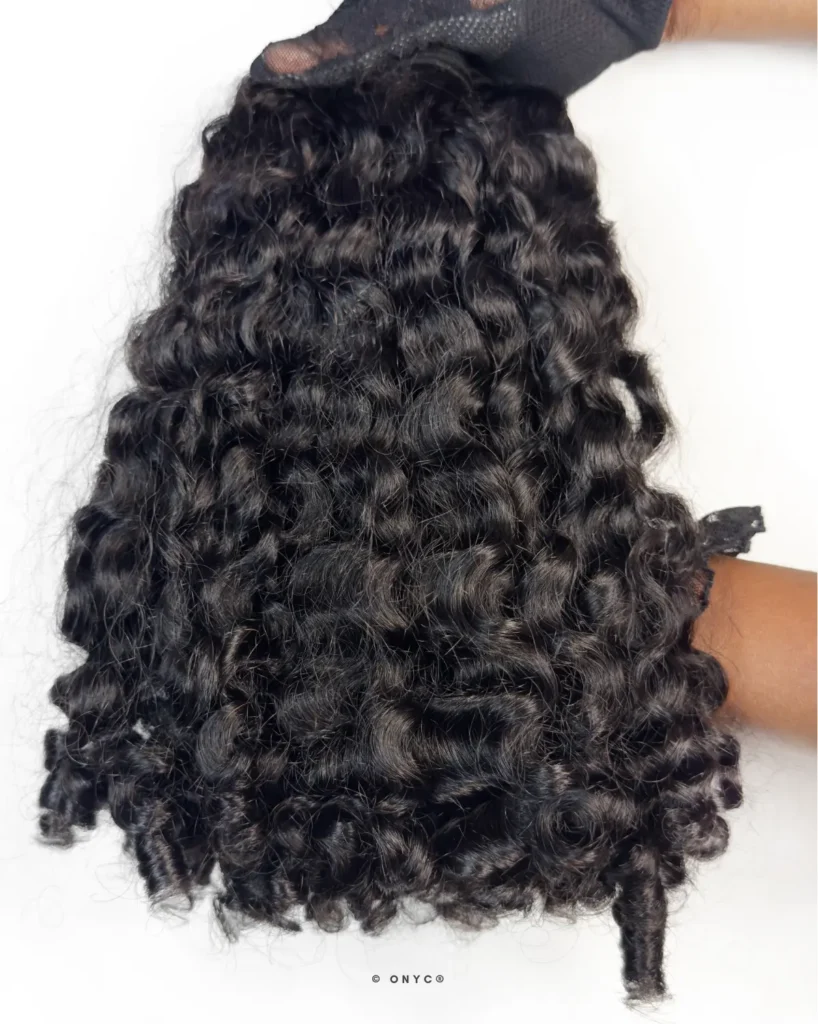
Raw Burmese Curly Hair Bundles Full Ends Double Drawn – ONYC® Burma Curls 3C
Select options This product has multiple variants. The options may be chosen on the product page

-
Kinky Curly Human Hair Weave Bundles For Natural Sew-In Extensions – ONYC® Kinky 3B-3C Curl
Select options This product has multiple variants. The options may be chosen on the product page


-
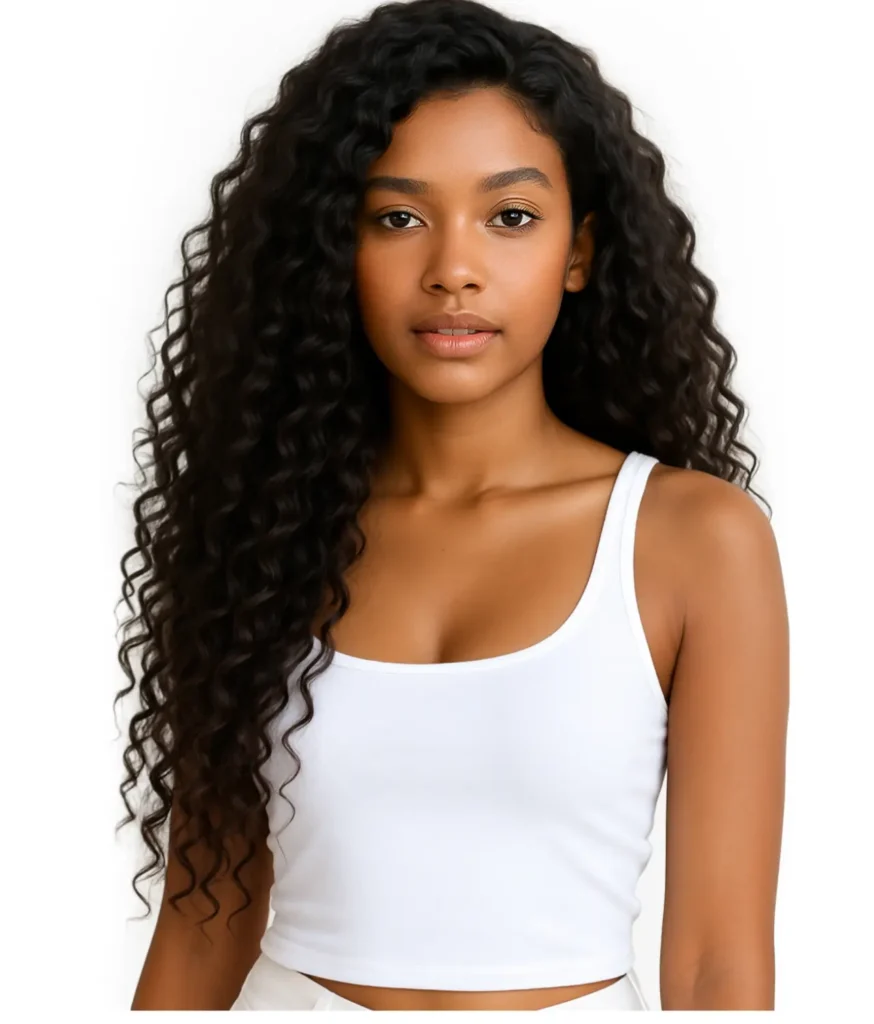
ONYC Spanish Curly Hair Weave 3A Spanish Curl Bundles
Select options This product has multiple variants. The options may be chosen on the product page

-
Deep Curly Human Hair Bundles – 3B Human Hair Bundles for Sew-In Weave | ONYC® Curly Addiction™
Select options This product has multiple variants. The options may be chosen on the product page


Understanding Natural Variation in 3C Hair
No two heads of 3C hair have to behave exactly alike. Porosity, strand diameter, density, length, climate, styling history and product use can all affect the way curls appear from day to day. That variation explains why a visual question such as What Does 3C Hair Look Like? can have several accurate examples rather than one universal image. Mixed patterns add another layer. Someone may have predominantly 3C curls through the crown and sides while seeing broader 3B curls or smaller 4A coils elsewhere. That does not necessarily make the classification incorrect. When deciding How Do I Know If I Have 3C Hair?, the dominant formation across several sections is usually more informative than an isolated curl.
These variations also show why Is It Rare To Have 3C Hair? and similar demographic questions should remain separate from curl identification. How frequently a texture occurs does not affect whether an individual strand fits the visual characteristics of that pattern.
Caring for and Defining Natural 3C Curls
Healthy-looking definition usually starts with working with the curl rather than repeatedly trying to reshape it. Gentle cleansing, adequate conditioning and careful detangling can help reduce unnecessary disruption to the natural spiral. The exact routine can vary according to porosity, strand thickness, styling preferences and how easily the hair experiences buildup. For someone researching How To Make 3C Hair Curly?, this distinction is important because more styling product does not necessarily create a better curl. If the natural pattern is already 3C, the aim is usually to support definition and curl grouping rather than manufacture a new texture.
Cultural or ethnic background does not change that basic approach. Just as What Ethnicity Has 3C Hair? has no single-group answer, there is no one routine that every person with 3C curls must follow. Individual hair behavior remains the more useful guide.
3C Hair, Afro Styling and Curl Classification
Curl type and hairstyle should remain separate concepts. A person with 3C curls can wear the hair stretched, defined, braided, pulled back or shaped into a fuller silhouette. None of those styling choices changes the natural curl pattern growing from the scalp. This distinction is particularly useful when discussing Is 3C Considered Afro? A full Afro silhouette may be achievable with 3C hair, especially where there is significant density and shrinkage, but “Afro” still describes the style or broader visual presentation rather than serving as another name for 3C.
The same principle helps reinforce What Is 3C Hair? At its core, the classification refers to a recognizable strand formation tight, rounded spirals toward the compact end of the Type 3 family not a hairstyle, ethnicity or particular level of fullness.
Additional Type 3C CURLY HAIR FAQs
Most frequent questions and answers
Let's dive in to discuss the most frequently asked questions and answers concerning concerning 3C Hair Textures!
How Do I Know If My Hair Is 3C?
Start with clean, product-free hair and let it air-dry so you can see the natural formation without gels, creams, heat or stretching changing its appearance. If most sections form tight, springy corkscrews that are more compact than typical 3B curls while still retaining a clearly rounded Type 3 formation, your dominant pattern may be 3C.
A Hair Texture Chart can help you compare neighboring patterns, while the Complete Curl Pattern Guide provides broader context for where 3C sits.
How Do I Know If My Hair Is 3C or 4A?
Observe your clean, naturally dried hair and compare the dominant formation across several areas of your scalp. 3C generally shows tight corkscrew curls at the end of the Type 3 range, while 4A begins the Type 4 family and tends to form small, defined coils.
How Do I Know If My Hair Is 3B or 3C?
Compare the size and tightness of the curls once the hair is clean and product-free. 3B generally has broader, springy ringlets, while 3C has tighter, more compact corkscrews.
The dedicated 3B Hair guide gives you a neighboring pattern for comparison, while Type 3 Hair guide shows how both subtypes belong to the same curly family.
Is My Hair 3C or 4A?
Your natural curl or coil formation is the most useful clue. If the strands predominantly form compact corkscrew curls, they may sit within 3C. If they move into small, clearly defined coils characteristic of the beginning of Type 4, they may be closer to 4A.
Use the 4A Hair guide alongside the broader Hair Texture Chart rather than judging the pattern from volume alone.
Is My Hair 3B or 3C?
If your natural pattern consists mainly of medium-tight, springy ringlets, it may lean toward 3B. If those spirals are noticeably smaller, tighter and more compact, the pattern may lean toward 3C.
How Can I Tell If My Hair Is 3B or 3C?
Final Takeaway
3C hair sits at the tighter end of the Type 3 curly family, where defined spirals become smaller and more compact before transitioning into Type 4 coils. Its most recognizable feature is the tight corkscrew formation, but 3C hair can still vary considerably in strand thickness, density, porosity, shrinkage and overall appearance. The most useful way to identify it is to observe clean, product-free hair in its natural state and compare the dominant pattern across several sections of the scalp. A few looser 3B curls or tighter 4A coils do not invalidate the overall classification; mixed patterns are part of the natural variation that makes curl typing a guide rather than a rigid rule.
Most importantly, natural curl identification should remain separate from extension texture matching. Virgin Hair Extensions can provide additional styling and texture options when length, volume or blending is the goal, but they should not replace assessment of your natural curl formation. Your own product-free pattern remains the starting point for determining whether your hair is 3C.
What Is Type 3 Hair? Complete Guide to 3A, 3B & 3C Curly Hair
What Is 3B Hair? Type 3B Curl Pattern & Characteristics Explained
What Is Type 4 Hair? Key Differences Between 4A, 4B & 4C Curl Patterns Explained
What Is 3A Hair? Type 3A Curl Pattern & Characteristics Explained
Best Curly Clip-In Hair Extensions for Natural Hair Guide
How To Care For Natural Hair Extensions: A Professional Guide
BET Spotlighted ONYC® Among the Best Black-Owned Hair Brands for Wigs and Extensions
Black Hair Care Guide | Tips on How to Maintain Natural Black Hair
Best Human Hair Extensions for 4C Hair That Actually Blends Naturally | A Complete Guide
Best Kinky Straight Extensions Guide: How to Choose the Best Match
Best Natural Hair Extensions | Most Natural-Looking Hair Extensions Guide
Best Blowout Hair Extensions Types, Textures and Best Options – Choosing Guide
Related Posts
 Pin
How to Choose Curly Hair Extensions for Your Natural Curl Pattern | Expert Guide
 Pin
Complete ONYC Curl Pattern Guide: From Spanish Curly 3A to Afro Kinks 4C
 Pin
What Is 4C Hair? Type 4C Hair Characteristics & Coil Pattern Explained
Click on a star to Rate this!
We are sorry that this post was not useful for you!
Let us improve this post!
Tell us how we can improve this post?


