

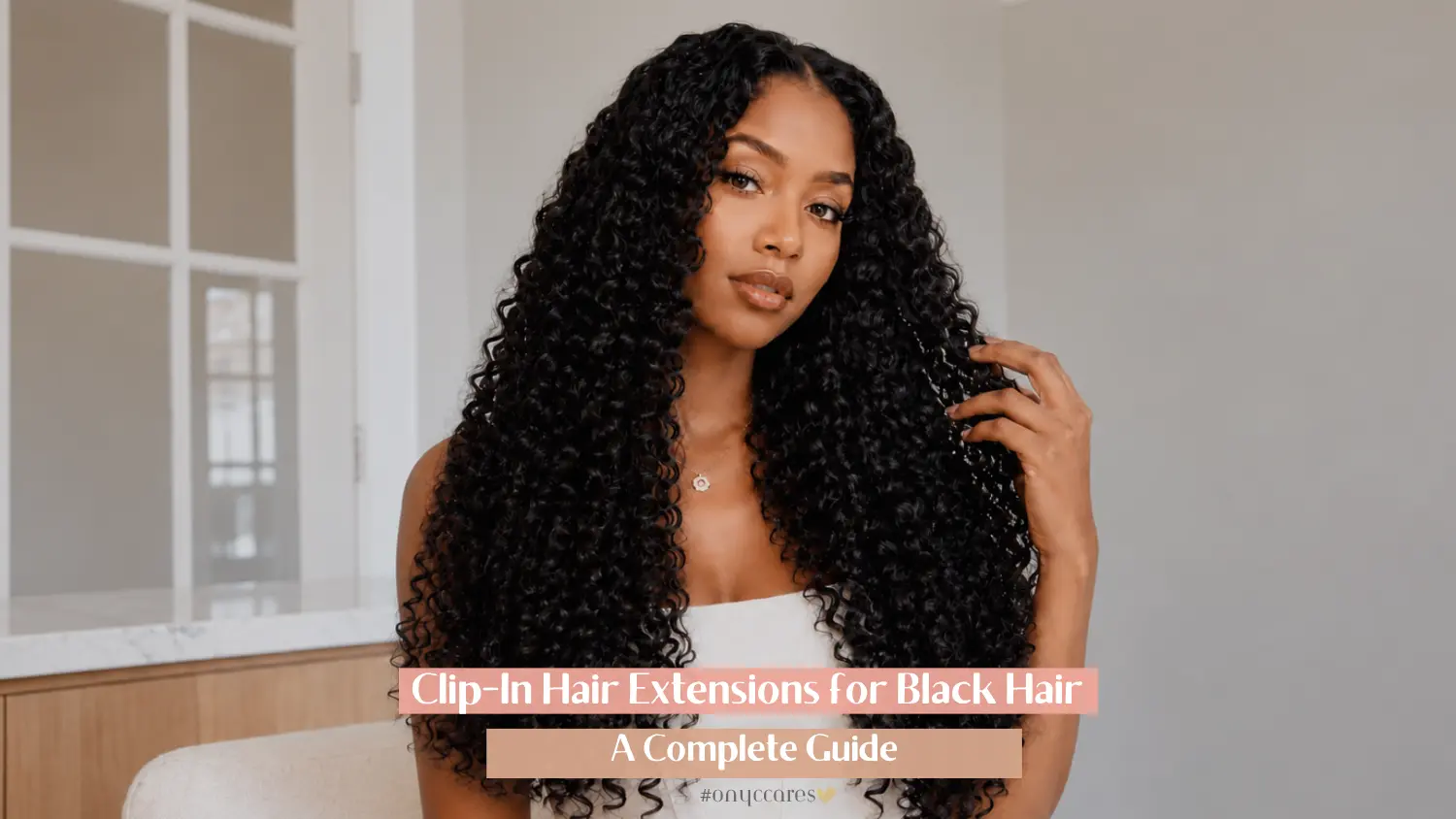
What Are Clip-In Hair Extensions for Black Hair? Are Clip-In Extensions Better for Black Hair? What Makes Human Hair Clip-Ins Look Natural on Black Hair? — If these questions have made it difficult to choose the right extensions, this guide will help you understand what truly matters. From matching your natural texture, density, and luster to selecting the appropriate length, weight, and installation method, achieving a seamless blend requires more than choosing extensions that look attractive on their own. Whether you wear your hair natural, relaxed, silk-pressed, or stretched, this comprehensive guide explains how to choose the Best Clip-In Hair Extensions for Black Hair that complement your existing hair while supporting a comfortable styling routine. You will also discover practical guidance on blending, maintenance, and long-term care, along with educational resources from Virgin Hair Extensions.
What Are Clip-In Hair Extensions for Black Hair and Natural Hair?
Clip-in hair extensions are removable hair wefts secured with small clips, allowing a wearer to add length, fullness, or a different hairstyle without a permanent attachment. For Black hair, the most useful comparison is not only curl type but the hair's current finish: natural coils, a twist-out, a stretched blowout, a silk press, or relaxed hair. ONYC® offers clip-in hair extensions for Black hair across several textures so customers can look for a close visual match rather than forcing one generic extension finish onto every hairstyle.
Can You Wear Clip-In Hair Extensions on Natural Hair Without Relaxing It?
Yes. Natural hair does not have to be chemically relaxed to wear clip-ins. The important questions are whether the hair can support the clips comfortably and whether the extensions resemble the way the hair will be styled. ONYC® offers clip-in hair extensions for natural hair for defined curls, compact coils, blowouts, and straighter finishes. If you prefer natural curls, browse the curly clip-in hair extensions collection and compare curl size, root fullness, and shrinkage before choosing a specific set.
Are Clip-In Hair Extensions a Good Alternative to Sew-Ins for Black Hair?
Clip-ins can be a useful alternative when you want temporary volume or length and the ability to remove the hair at the end of the day. Sew-ins are designed for longer wear and attach to a braided foundation, so the upkeep and attachment points are different. Neither method is automatically better for everyone: consider scalp comfort, hair density, installation tension, and how often you want to change styles. If flexibility is your main goal, start by comparing ONYC® removable human hair clip-ins before deciding which format suits your routine.
How Do You Install Clip-In Hair Extensions on Natural Black Hair?
Start with dry, gently detangled hair. Make a horizontal part, open a clip-in weft, secure it to a stable section below the part, and allow enough natural hair to fall over the attachment. Work upward only where additional volume is needed, and avoid placing clips on fragile edges, thinning sections, or irritated skin. Every clip should feel secure without pulling. When comparing clip-in hair extensions for Black women, check each set’s weft construction and weight; seamless styles may create a flatter attachment, but proper placement and adequate hair coverage remain essential.
How Can You Blend Natural Hair Clip-Ins Without Straightening Your Hair?
Blend by matching the extension to your preferred styling finish instead of relying on heat to make two unlike textures look the same. A twist-out, braid-out, or gently stretched style may help create continuity between natural hair and an appropriate extension texture. Browse ONYC® natural hair clip-in extensions to compare blowout, curly, and textured-straight finishes. For a specifically blown-out look, ONYC® Fro-Out™ Blow Out Clip-Ins are an option to examine alongside your own root texture and volume.
Can Clip-In Extensions Blend With Short or Transitioning Natural Hair?
They can, provided the natural hair is long and dense enough in the installation areas to cover the clips. Shorter or transitioning hair may have multiple visible textures, so matching the leave-out matters more than simply adding the longest possible extensions. Smaller sections and careful distribution can soften an abrupt line between shorter strands and longer wefts. For a defined-curl finish, explore ONYC® curly clip-in hair extensions. For a stretched or straighter finish, compare the wider clip-in hair extensions for natural Black hair collection and choose a texture that complements the leave-out.
Are Clip-In Hair Extensions Bad for Natural Black Hair?
Clip-ins are not automatically damaging, but they can pull on natural hair if a weft is too heavy, clipped repeatedly to the same weak section, or removed without opening the clips completely. Comfort and hair condition are more important than how full the finished style looks. Select only the pieces needed for the hairstyle, avoid fragile edges, and remove any attachment that causes tenderness. The ONYC® natural hair clip-in extensions collection lets you compare textures before considering the weight and coverage of a particular set.
What Are the Best Clip-In Extensions for Fine or Low-Density Natural Hair?
For fine or low-density hair, the best set is usually one with an appropriate weight, manageable weft sizes, and a texture that blends without forcing extra hair onto delicate roots. A flatter attachment does not eliminate tension, and even a lightweight clip should never be placed over thinning or irritated areas. Compare the attachment design and the product's set details before buying. Depending on the desired curl finish, seamless curly clip-ins for natural hair may be worth considering where there is sufficient healthy hair to support and conceal the wefts.
How Many Clip-In Hair Extensions Do You Need for a Full Head of Black Hair?
The answer depends on hair density, the width and weight of each weft, the selected texture, and whether you want extra length or only fullness. Some sets are designed for broader coverage, while others are better suited to targeted volume. Coily extensions may look fuller than straight styles at a similar weight, so piece count alone cannot predict the outcome. Review the available textures in the ONYC® human hair clip-in collection, then check each individual product page for its stated set contents, weft sizes, and coverage details before deciding how many pieces you need.
Can You Wear Clip-In Hair Extensions Every Day or While Working Out?
Some wearers use clip-ins frequently, but daily attachment to the same areas may create repeated tension. If you exercise in clip-ins, check that the pieces feel comfortable and secure, and remember that sweat and frequent styling can increase maintenance needs. Remove them when they pull, slip, or irritate the scalp, and avoid sleeping in attached clip-ins. Rather than selecting extensions on frequency of wear alone, compare ONYC® clip-in styles for Black women by comfort, weft construction, hair finish, and the effort needed for repeated application.
How Do You Wash and Care for Human Hair Clip-In Extensions?
Gently detangle the hair, support each weft during cleansing, use a suitable shampoo and conditioner, and rinse thoroughly. Curly or coily pieces should be detangled carefully in sections, with a focus on maintaining their pattern rather than repeatedly brushing them dry. Let the extensions dry completely before storing or reattaching them. If you change between loose and tighter curls, compare the styling and maintenance differences within ONYC® curly human hair clip-in extensions before choosing a set for regular use.
How Do You Remove and Store Clip-In Extensions Without Pulling Natural Hair?
Before removing a weft, open every clip fully. Hold the hair near the attachment point and lift the piece away gently; never pull a closed clip through tangled hair. Afterward, check your natural strands for snags, detangle the extensions as needed, and store the dry pieces flat or hanging in a clean place. Good removal habits matter for every texture, from ONYC® Relaxed Straight Clip-Ins to tighter curls and coils. Follow the care instructions supplied for the specific product.
Where Can You Buy Clip-In Hair Extensions for Black Hair Online?
When shopping online, look for a retailer that shows clear texture details, product-format information, set contents, and styling photographs. The best purchasing decision is based on whether the hair matches your actual finish and the wefts are appropriate for your density. ONYC® maintains a dedicated clip-in hair extensions for Black and natural hair collection where customers can compare straight, blowout, wavy, curly, and coily options without confusing clip-in sets with sew-in bundles.
Are Real Human Hair Clip-In Extensions Worth Buying for Natural Hair?
Human hair clip-ins may be worth the investment for someone who values reusable styling flexibility and wants to care for the extensions similarly to human hair. However, results depend on the product's construction, texture match, and your maintenance habits; human hair alone does not guarantee a seamless blend or unlimited lifespan. Compare hair characteristics, the total set weight, and the attachment system. ONYC® offers human hair clip-ins for Black women across different finishes so shoppers can prioritize fit and intended use.
Which Clip-In Hair Extensions Suit Relaxed Hair and Silk-Pressed Natural Hair?
Relaxed hair and silk-pressed natural hair can both look straight, but their volume, luster, and movement may differ. For a smooth finish with natural body, consider ONYC® Relaxed Straight Clip-In Hair Extensions. For a sleeker, silk-pressed appearance, compare ONYC® Silk Press Clip-In Extensions. Match how your own hair looks when styled rather than choosing solely because both options appear straight in photographs.
Which Clip-In Hair Extensions Suit Natural Blowouts and Kinky Straight Styles?
Blown-out natural hair often retains airy volume and visible texture, which may contrast with very silky straight extensions. ONYC® Fro-Out™ Blow Out Clip-Ins are designed around a blowout-style finish, while ONYC® Seamless Kinky Straight Clip-Ins offer a separate textured-straight option. Compare their photographs, root texture, and overall fullness against the finish you want. The two product types should not be treated as interchangeable merely because both are used with stretched natural hair.
Which Curly Clip-In Hair Extensions Can Blend With Natural Curls?
For curly natural hair, compare curl width, spring, density, and dry-state length rather than trusting a curl number alone. Shoppers wanting looser curls can examine ONYC® Spanish Curl 3A Clip-Ins; more defined ringlets may suit ONYC® Curly Addiction™ Deep Curly 3B Clip-Ins; and a 3C-style finish is available in ONYC® Water Kinky 3C Clip-Ins. These are different curl options, not a ranking of which curl is universally best.
Which Clip-In Hair Extensions Are Suitable for Coily 4A, 4B and 4C Hair?
Coily hair can vary widely in shrinkage, visible length, and density, so choose a clip-in with a dry-state finish close to your own. For certain 3C–4A-style curls, compare ONYC® Afro Tight Kinky Clip-Ins. For tighter 4B–4C-inspired looks, examine ONYC® Afro Kinks 4C Clip-In Hair Extensions. If your natural curl pattern is more open, ONYC® Kinky Curly 3B–3C Clip-Ins may be a better comparison. Match what you see in your hair rather than assuming every head of type 4 hair looks identical.
Are Seamless Clip-In Extensions a Better Choice for Natural Black Hair?
Seamless clip-ins may offer a flatter attachment appearance, which can be helpful when a wearer wants less visible bulk beneath the covering hair. They are not automatically suitable for low-density or fragile roots, and the hair texture must still blend. Compare ONYC® Seamless Water Kinky 3C Clip-Ins for a defined curly finish or Seamless Kinky Straight Clip-Ins for a textured-straight finish. Choose the design and weight appropriate to your own hair condition.
How Do You Choose the Best Clip-In Extensions for Your Black Hair Texture?
Start with the finish you actually wear: natural curls, compact coils, a relaxed-straight look, a silk press, or a blowout. Then compare shine, root volume, shrinkage, coverage, and how much hair you want to add. Those details are more useful than a universal “best” label. To shop rather than move to another article, explore ONYC® best clip-in hair extensions for Black hair across the available finishes. For individual product options, see Fro-Out™ Blow Out Clip-Ins for a stretched, blown-out style or Afro Kinks 4C Clip-In Hair Extensions for a tighter coily look. Choose the product that most closely matches your own styled hair.
Find clip-ins that suit your natural texture, density, and styling routine. Compare removable sets with sew-ins, such as Kinky Straight Hair Bundles when considering different installation options, and learn how Natural Hair Extensions can complement curls, blowouts and straightened styles without choosing unnecessary volume or weight.
What Are Clip-In Hair Extensions for Black Hair?
What Are Clip-In Hair Extensions for Black Hair? They're removable clip-in wefts that attach temporarily to the wearer’s own hair to add fullness or length; their suitability depends on texture matching, placement, and hair condition. Clip-in hair extensions similar to ONYC® Natural Hair Extensions Clip In are removable wefts with small comb-like clips sewn along their seams. They add length, fullness, or a change in silhouette without the continuous commitment of sewn-in or bonded extensions. For Black hair, the best choice is the one that looks consistent with the wearer’s current texture and styling routine, not simply a box labelled “natural.”
 Pin
The same person can wear tightly coiled hair on wash day, a stretched twist-out later in the week, and a silk press for an event. Each finish calls for a different extension texture. Look at your hair in the state you plan to wear it, paying attention to the roots that will conceal the clips and the ends that need to blend with the added length. The Hair Texture Chart can help you identify a suitable curl pattern, but your actual hair texture and styling routine should guide the final choice.
What Makes Clip-Ins Different From Permanent Extensions?
Clip-ins are opened and closed by the wearer and removed after use. A sew-in attaches wefts to a braided foundation, while tape-ins and some strand-by-strand methods remain installed for longer periods and require a different maintenance routine. Removability is convenient, but it does not automatically eliminate pulling or tangling.
Who Can Benefit From Wearing Clip-Ins?
Clip-ins are most useful for someone who wants temporary volume, occasional extra length, or the freedom to alternate between styles. They may be less suitable when natural hair is shedding heavily, the edges are fragile, or there is too little healthy hair to support and conceal the clips. When exploring What kind of extensions look the most natural?, pay particular attention to the texture and amount of hair needed to cover each attachment. Collections of Black Owned Hair Extensions can also provide different styling options, but the priority should always be choosing a method that works with your hair's condition.
That flexibility naturally raises the question: Are Clip-In Extensions Better for Black Hair? It really depends on your hair's condition and whether the clips can sit securely without pulling on your roots. If you're comparing different ways to add length or fullness, Best Natural Hair Extensions explores other attachment styles and finishes worth considering.
-
Kinky Curly Clip In Human Hair Extensions for Black Hair – ONYC® Kinky 3B-3C Clipins Natural Extensions
Select options This product has multiple variants. The options may be chosen on the product page


-
Kinky Straight Clip-In Hair Extensions – Kinky Straight Hair Extensions Clip Ins for Black Hair | ONYC® ClassiQUE™
Select options This product has multiple variants. The options may be chosen on the product page


-
Deep Curly Clip In Hair Extensions 3B Curl Natural Black Hair – ONYC Curly Addiction™ Natural Extensions
Select options This product has multiple variants. The options may be chosen on the product page


-
4C Clip In Hair Extensions For Black Hair 4B-4C Natural Afro Kinky Texture | ONYC® Afro Kinks Clip-Ins ClassiQUE™
Select options This product has multiple variants. The options may be chosen on the product page


How Clip-In Extensions Work on Black Hair
Most clip-in sets contain several wefts of different widths. To install them, part your hair horizontally, open the clips, position each weft near a stable section of hair, and close the clips gently without pinching. The next layer of natural hair should fall over the seam to conceal the attachment. Results depend just as much on placement and coverage as on the extensions themselves. Comparing the best Natural Hair Clip Ins For Black Hair can help you see how different weft arrangements work with your natural density. For anyone wondering What Are Clip-In Hair Extensions for Black Hair?, seeing how the wefts attach and disappear beneath natural hair makes their purpose much easier to understand.
 Pin
How to Attach Clip-In Wefts to Natural Hair
When attaching clip-in wefts, the goal is to keep them secure without pulling on your natural hair. Each clip should feel comfortable and stay in place without putting too much pressure on your roots. If a weft is showing, try moving it slightly lower or leaving more hair above it for coverage. Pay extra attention to your hairline and the top of your head, where clips are usually harder to hide.
Choosing Areas With Enough Hair to Conceal Clips
Before clipping in your extensions, take a moment to see where your natural hair is thick enough to cover the wefts. A quick check in natural light can help you spot areas where the clips might show. Avoid placing them too close to thin edges or sensitive areas of your scalp. If a clip feels tight or uncomfortable, try moving it to a fuller section or choosing a lighter weft.
Why Placement and Coverage Matter
Start lower at the back, check how the natural hair falls, then add pieces only where the style needs them. Wider wefts can provide efficient fullness across the back, while narrower pieces can balance the sides. A natural result typically comes from selective placement rather than wearing every piece in a pack. A flatter attachment can also help reduce visible bulk, particularly with textured options such as Seamless 3C Curly Clip In when the surrounding hair provides enough coverage. When assessing “What Makes Human Hair Clip-Ins Look Natural on Black Hair?” placement is just as important as the curl or straightness of the extensions.
How to Match Clip-Ins to Natural, Relaxed and Straightened Textures
Begin by identifying how your hair looks when styled, not only its curl-type label. Pattern, strand thickness, sheen, bulk at the roots and the behavior of the ends all matter. Two people with the same nominal curl type may need quite different clip-ins because one wears a defined wash-and-go and the other stretches her curls. The Black Hair Types chart can clarify how neighboring curl patterns behave before you compare extension photographs.
Matching Relaxed and Silk-Pressed Hair
Relaxed hair is not one uniform appearance. Some styles retain gentle body, while others are smooth and sleek. You can compare Relaxed Hair Extensions for Black Hair when evaluating the finish of a relaxed or pressed style.
Choosing Clip-Ins for Kinky Straight and Blowout Hair
Blown-out hair is generally fuller and less glossy than silk-pressed hair. Match its airy texture and root lift rather than selecting a straight piece solely because the overall length looks similar. Raw Kinky Straight Hair Bundles provides a useful texture reference for comparing a stretched finish with a smoother one. A textured sew-in made from Kinky Straight Hair may serve a different purpose than a removable kinky-straight clip-in set.
Matching Natural Curls and Coils
For defined curls, compare the curl size and spacing when both your own hair and the extensions are dry. For example, ONYC® Kinky Curly Clip-In features a defined 3B–3C curl pattern, making curl size and spacing useful details to compare with your natural hair before selecting a set. Coils may shrink much more after washing, so compare visible length rather than the stretched measurement printed on a package. Kinky Curly Hair Extensions are worth comparing only when their curl formation and fullness resemble your actual finish.
The Complete ONYC Curl Pattern Guide explains how neighboring curl patterns differ, helping you compare the extensions with your hair in its natural, dry, or stretched state. When choosing extensions for naturally curly or coily hair, it's worth asking, What Are Clip-In Hair Extensions for Black Hair? Beyond their removable design, the right set should complement your natural curl pattern, fullness, and preferred styling finish. Type 4 textures often benefit from attention to root fullness and realistic shrinkage. Natural Black Hair Weave can be a useful comparison when deciding whether the desired finish is tightly coiled, stretched or blown out, even though a weave and a removable clip-in are different installation formats. Compare available Curly Hair Extensions Clip-in textures against the dry, styled finish you want to maintain.
Considering Transitioning Hair and Mixed Textures
Transitioning hair may have coarser new growth and smoother ends. Choose the texture that best fits the intended final hairstyle, then test whether the covering layer blends without high heat. A braid-out or gentle stretch can sometimes connect the two appearances more comfortably than trying to force one section to mimic the other.
Clip-In Hair Extensions for Black Hair by Texture and Finish
Choosing Clip-In Hair Extensions for Black Hair starts with understanding how you typically wear your hair and which texture will complement your desired finish. Relaxed and silk-pressed styles often require smoother extensions, while stretched natural hair may blend more naturally with Kinky Straight Clip In Human Hair Extensions that recreate the soft fullness of a natural blowout. For those who wear their hair in defined curls, exploring Curly Clip In Hair Extensions for Black Hair options can help identify a suitable curl pattern, while Kinky Curly Hair Extensions Clip In offer a tighter, springier curl pattern. Comparing these textures alongside your natural hair's density, luster, and styling preferences can help you choose extensions that create a balanced, realistic finish.
 Pin
Kinky Straight Hair Bundle is especially suitable for natural hair worn stretched, lightly straightened, or blown out. They recreate the airy fullness and subtle texture often visible in a natural blowout rather than an extremely sleek finish.
For a similar styling effect, Blowout Clip In Hair Extensions for Black Hair offer another texture option worth comparing. Choose according to the fullness at your roots and the amount of texture visible throughout your natural hair.
Shop Kinky Straight Hair Clip Ins
For relaxed or chemically straightened hair, Relaxed Straight Clip-in Hair Extensions can add length and fullness while maintaining a smooth finish with natural body.
For a sleeker appearance, Silk Press Clip In Extensions may provide a closer match to freshly pressed hair. The better option depends on how much body, movement, and shine your natural hair retains after styling.
Shop Relax Straight Hair Clip Ins
 Pin
 Pin
Curly clip-ins come in different curl sizes, making it important to select a pattern that resembles your natural curls. 3A Curly Hair Clip-In Extensions suit looser, more open curls, while Deep Curly Clip In Hair Extensions offer a more defined 3B-style pattern.
For tighter curls, Curly Clip In Hair Extensions for Black Hair provide another option, while Seamless 3C Curly Clip In Hair Extensions for Black Hair are worth considering when a lower-profile attachment is preferred. Compare the curl patterns when dry to determine which texture blends most naturally.
Kinky curly clip-ins are designed to complement tighter curls and coily natural hair textures. For defined, compact curls, Afro Hair Clip In Extensions can complement certain 3C–4A curl patterns.
Those with densely coiled natural hair may prefer 4C Clip In Hair Extensions For Black Hair, which more closely resemble the fullness and compact coil structure of Afro-textured hair. Consider shrinkage and root density when comparing these textures.
Shop Kinky Curly Clip Ins
 Pin
 Pin
For softer hairstyles with loose waves and flowing movement, Clip in wavy hair extensions can add length and volume while preserving a relaxed, body-wave finish. This texture is particularly suitable when your natural hair is styled into loose waves rather than tight curls or a completely straight finish. Matching the wave size and overall fullness helps create a consistent appearance.
Shop Wavy Hair Clip Ins
What Makes Human Hair Clip-Ins Look Natural on Black Hair?
What Makes Human Hair Clip-Ins Look Natural on Black Hair? Natural-looking results depend on matching the wearer’s root texture, density, luster, curl behavior and movement not merely choosing a texture label. Human hair clip-ins look convincing when their surface and movement fit the surrounding hair. A matching curl label alone is not enough: luster, density, root texture, strand thickness and even how the hair falls around the face influence the result. A believable finish has variation rather than a rigid curtain of identical strands.
Do Clip In Extensions look natural on Black Hair?
Yes, clip-in extensions can look natural on Black hair when the texture, density, visible length and placement work together. A closely matched set may still look artificial if the wefts sit too high, the added volume overwhelms fine natural hair, or the extension ends form an abrupt line.
Beyond proper placement, the quality and curl definition of human hair clip-ins can influence how naturally they complement textured hairstyles. Byrdie has featured ONYC Clip-In Hair Extensions in its roundup of clip-in hair extensions, highlighting the brand's Kinky 3B–3C Curl 7-Piece set. This feature offers an additional reference for readers exploring textured clip-ins, while reinforcing the importance of choosing a curl pattern, density, and finish that work with their natural hair.
The Importance of Density, Luster and Root Texture
Choose moderate fullness when natural hair is fine or sparse; unusually heavy extensions can expose the transition between the two. Compare the sheen in indirect light. Very shiny hair against a soft, low-luster blowout usually creates a visible contrast, even when both are called kinky straight. When exploring Real Human Hair Extensions, pay attention to both density and luster to achieve a more natural blend. Texture consistency should be checked at the root as well as the ends.
Tighter curl patterns, such as ONYC® Tight Kinky 3C-4A™, also require attention to shrinkage and root fullness, since these characteristics influence how naturally the added hair blends with existing coils. Realistic volume begins where the weft is concealed, not merely where the hair hangs. A seamless blend starts at the roots, where the extensions should complement your natural hair's fullness and texture before flowing naturally into the lengths.
Why Natural Movement and Length Balance Matter
Hair that moves naturally tends to fall in layers, not one flat shelf across the back. A modest length difference is easier to blend with short leave-out; a dramatic change usually calls for extra planning around layers and density. Do not rely on a product photograph alone, compare wear examples in the same styled state. For variation in curly textures, Kinky Curly Hair Bundles provide another comparison point, although a sewn-in bundle is not the same as a clip-in set.
How to Choose the Right Clip-In Set and Weight for Black Hair
Choosing the right clip-in set starts with understanding the look you want to achieve and how much additional hair you actually need. A few pieces may be enough to create fuller ends or add subtle length, while a more dramatic transformation could require wider wefts and greater coverage. Understanding how to choose clip-in hair extensions that match Black hair textures can help you narrow down your options based on your natural hair and styling preferences. Before purchasing, compare the available textures, set contents, attachment design, and overall weight.
For a closer look at specific options, explore our guide, What are the Best Clip in hair extensions for black?, where we compare clip-in hair extensions for relaxed, silk-pressed, blown-out, curly, and coily textures to help you find the right match for your natural hair. Remember that Human Hair Bundles are not automatically supplied with clips, so confirm that the product is ready to install.
Choosing the Right Number of Wefts
Use a mirror to map where added hair is actually needed. A few strategically placed wefts may improve fullness for medium-density hair, while broad coverage can require more pieces. The number of clips and pieces per pack varies by product, so check the manufacturer’s stated set contents instead of assuming that one pack always means a full head. When deciding Are Clip-In Extensions Better for Black Hair?, the number of wefts matters just as much as their placement. Choosing only the pieces your hairstyle needs helps avoid unnecessary weight and tension on your natural hair.
Matching Clip-In Weight to Hair Density
Hair density plays an important role when selecting a clip-in set. Fine or low-density hair typically benefits from lighter extensions that create fullness without overwhelming the natural hairstyle. Thicker hair may accommodate fuller sets, particularly when the additional volume complements its existing shape. Compare the overall weight of different options alongside their texture and coverage. A well-matched set should enhance your hairstyle rather than create an obvious difference between your natural hair and the added extensions.
Lightweight Placement for Fine or Fragile Hair
When shopping for clip-ins for fine or delicate hair, look for lightweight wefts, discreet attachment designs, and flexible set configurations. These features give you more control over how much volume you add without committing to an unnecessarily heavy set. Consider whether your natural hair provides enough coverage to conceal the attachments. For finer hair, selecting fewer, lighter pieces may produce a more balanced appearance than purchasing a heavier set simply because it contains more wefts.
How to Install and Blend Clip-Ins Without Excessive Heat
Successful installation starts with clean, dry, detangled natural hair. The goal is to position wefts where they can be covered and to style the surrounding hair with as little manipulation as practical. A clip-in should never be attached to wet, knotted or highly stressed strands. Clip-in wear should begin with a clear understanding of Black Hair Care and the condition of the sections carrying the clips.
 Pin
Preparing Your Natural Hair Before Installation
Part the hair in the style you plan to wear and decide which sections must remain out to conceal clips. Gently detangle from ends toward roots, then stretch or define your natural hair as needed. Consider the guide on How to Care for Black Hair when building an overall routine that maintains moisture and minimizes unnecessary handling.
Positioning and Concealing Clip-In Wefts
- Create a neat horizontal part across the lower back of the head and hold the covering hair away.
- Open each clip, place the weft on stable hair just below the part, and close without tugging.
- Release the covering hair and confirm that the seam cannot be seen from behind.
- Continue upward with additional pieces only where the desired shape needs them.
- Use smaller side pieces sparingly, avoiding fragile temples and the edges.
- Check all angles in natural light, then remove or reposition any heavy or visible section.
Heat-Free Techniques for a Seamless Blend
For textured styles, twisting, braiding or gentle stretching can bring the leave-out closer to the chosen extension pattern without repeated straightening. A gently stretched finish can also complement the airy texture of Blow-Out Kinky Straight Clip In, provided the natural hair has enough body to create a consistent blend.
Match your styling method to the hair’s current strength and use minimal tension. Curly Clip In Hair Extensions for Black Hair options especially benefit from judging the final blend when both textures are fully dry. You can also find styling examples in our Hair Extension Blogs including ways to work with different textures without relying on frequent heat styling.
Using Twist-Outs, Braid-Outs and Stretching
A twist-out can help your natural hair blend with defined curls, while a braid-out creates soft waves and added volume. If you're wearing blowout-style extensions, gentle stretching may help bring both textures closer together. Just make sure your hair is completely dry before separating the style to minimize frizz and unnecessary pulling. These small styling details can make a noticeable difference in the finished look. So, What Makes Human Hair Clip-Ins Look Natural on Black Hair? Beyond choosing the right texture, it's how smoothly your natural hair blends with the extensions, especially around the roots and any exposed sections.
Protecting Your Natural Hair and Edges When Wearing Clip-Ins
Healthy clip-in styling depends on how you handle your natural hair before, during, and after each wear. Although removable extensions offer flexibility, their clips still grip individual sections of hair. Repeated pulling, rough removal, and attaching extensions to already weakened strands can contribute to breakage. Maintaining a consistent Natural Hair Care Routine helps you recognize changes in your hair's condition and adjust your styling habits before minor discomfort becomes a bigger concern.
Are Clip-ins Good For Black Hair?
Clip-ins can be a practical option for Black hair when installed gently, worn comfortably, and removed carefully. They allow you to change hairstyles without keeping extensions attached for extended periods. However, their suitability depends on your natural hair's condition and how frequently you wear them. Pay attention to how your scalp feels throughout the day. Persistent tenderness, pulling, or irritation are signs that the attachment needs to be adjusted or removed.
Preventing Tension, Pulling and Breakage
Try changing where you attach your clips instead of placing them on the same sections every day. Use only the pieces your hairstyle needs, and remove or reposition any weft that causes soreness or pulling. It's also best to take your extensions out before bed so the clips don't catch on your hair while you sleep. Because clip-ins are removable, it's understandable to wonder, Are Clip-In Extensions Better for Black Hair? They can be a convenient option, but repeatedly attaching clips to fragile areas may still cause unnecessary stress and breakage.
Leave fragile areas alone when hair is actively breaking, thinning or inflamed. In those situations, changing the hairstyle or seeking individualized guidance may be more helpful than adding weight. Gentle removal matters as much as careful installation: open every clip fully before lifting the weft.
Are Clip-In Extensions Better for Black Hair?
Are Clip-In Extensions Better for Black Hair? They can be a practical lower-commitment option for some wearers, but they are not automatically damage-free. Clip-ins may be preferable for someone who wants temporary wear, easy access to their scalp and the option to remove extensions at the end of the day. They do not require sewing a weft onto a braid or keeping adhesive in place for weeks. Those conveniences are real, but they are not proof that clip-ins are universally healthier. Readers considering other installation types can review Hair Extensions For Black Hair alongside their own comfort and removal needs.
Benefits of Removable Hair Extensions
One of the main advantages of clip-ins is the freedom to change your hairstyle without committing to a longer installation. You can wear additional volume for an occasion, remove the pieces afterward, and return to your usual hairstyle. This flexibility makes clip-ins particularly useful for people who enjoy alternating between different looks. For inspiration, explore Popular Hair Styles to discover styles that complement your natural hair and preferred extensions.
When Clip-Ins May Not Be the Healthiest Option
Clip-ins may not be suitable when natural hair cannot comfortably support the attachments or when there is insufficient coverage to conceal them. Even lower-profile options, such as Seamless Kinky Straight Clip In, require a suitable foundation. People experiencing significant breakage, thinning, or scalp sensitivity may benefit from considering alternative styling options rather than relying on clip-ins. The most appropriate choice should reflect your hair's current condition, styling preferences, and maintenance needs.
How to Care for and Store Reusable Clip-Ins
Reusable clip-ins should be cleaned and stored according to the specific hair material, texture and manufacturer guidance. Human-hair pieces can lose softness and manageability when product buildup is left untreated or when curls are repeatedly brushed while dry. A simple, consistent routine helps preserve the look of the set. Moisture and detangling habits are part of a consistent Black Hair Care Routine whether or not you wear added hair.
1. Washing and Conditioning Human Hair Clip-Ins
Detangle gently before washing, support the wefts at their seams and cleanse without vigorous rubbing. Apply conditioner through the lengths, avoiding unnecessary buildup around clips and stitching. Rinse thoroughly and allow the hair to dry completely before storage. A good maintenance routine also plays a role in what makes human hair clip-ins look natural on Black hair Clean, well-conditioned extensions are easier to blend with your own hair, while dryness, product buildup, and uneven curl definition can make the difference between the two more noticeable.
2. Detangling Curly and Kinky Textures
Work in sections from the ends upward, ideally with suitable slip and moisture. Dense curls can be separated carefully with fingers or a wide-tooth comb. Straighter textures need a slightly different approach, as Relaxed Straight Clip-In can generally be detangled in sections with gentle downward strokes while supporting the weft to avoid unnecessary pulling. Excessive force can increase shedding and disturb the pattern. For broader maintenance and styling education, the Hair Extension Blog offers additional guides beyond this clip-in overview.
3. Drying and Storing Extensions Between Wears
Keep clips open while checking for trapped moisture, then close them for organized storage once the wefts are completely dry. Lay the hair flat or hang it in a clean, breathable storage system, separated by texture if you own more than one set. Avoid crushing wet curls in a sealed bag.
4. Maintaining Clips and Wefts for Long-Term Reuse
Inspect the clips and wefts regularly for loose stitching, product residue, or signs of wear. Remove trapped strands carefully and clean the clips when necessary to maintain a secure attachment. Avoid pulling directly on the wefts during removal, and never force a clip open while it is tangled in natural hair. Proper handling helps preserve the extensions' structure and keeps them comfortable for repeated use.
5. Protecting Clip-Ins From Heat and Product Buildup
Limit unnecessary heat styling and use a suitable heat protectant when styling human hair extensions with heated tools. Excessive heat can affect softness, shine, and curl definition, particularly with textured clip-ins. Apply lightweight styling products sparingly to prevent buildup that makes the hair feel heavy or stiff. Follow the manufacturer's heat recommendations, especially for curly, kinky, or color-treated extensions.
Clip-In Extensions vs Other Hair Extension Methods — Comparison Chart
Choosing between clip-ins and other extension methods involves more than comparing their finished appearance. Installation requirements, removal flexibility, maintenance schedules, and styling preferences all influence which option fits your lifestyle. Clip-ins are designed for temporary wear, while sew-ins, tape-ins, and microlinks generally remain installed for longer periods. Wigs offer another approach, with coverage and removal depending on how the unit is fitted. The comparison below highlights the practical differences to consider before choosing a method.
| Extension Method | Attachment & Wear | Why Choose It | Important Considerations |
|---|---|---|---|
| Natural Hair Extensions Clip In | Removable and flexible. Wefts clip directly onto sections of natural hair and can be removed after wear without a long-term attachment. | Best for temporary fullness and styling flexibility. Add length or volume for everyday styling, special occasions, or occasional changes without committing to permanent wear. | Avoid attaching clips to fragile or weakened hair. Distribute weight evenly, reposition attachments carefully, and remove before sleeping. |
| Sew In Hair Bundles | Hair wefts are sewn onto braided tracks, creating a longer-wear style that remains attached between maintenance appointments. | Suitable for people who prefer a longer-wear installation and less daily attachment or removal. | Braids and stitching must not create excessive tension. Scalp cleansing, foundation maintenance, and timely removal are important. |
| Tape In For Black Hair | Small extension wefts attach to sections of natural hair using adhesive tabs for semi-permanent wear. | Offers relatively flat attachment points and a smooth appearance, with styling flexibility between maintenance sessions. | Correct placement, adhesive care, and professional removal help minimize pulling, residue, and unnecessary stress on natural hair. |
| Micro Links For Black Hair | Individual hair extensions are secured using small beads or rings, allowing natural hair to move between attachment points. | Useful for flexible styling and wearing more natural hair exposed without a traditional braided foundation. | Requires suitable hair density, professional installation, careful weight distribution, regular adjustments, and proper removal. |
| Virgin hair wigs | Full or partial hair units cover natural hair and may be removable daily or secured for longer wear, depending on the installation. | Offers versatile styling and coverage while potentially reducing daily manipulation of natural hair or leave-out. | Proper fit, hairline protection, scalp access, and careful adhesive use or removal are important for comfortable wear. |
Natural Hair Extensions Clip In Best for temporary fullness, easy removal, and flexible styling
Sew In Hair Bundles Best for longer-wear styles with less daily attachment
Tape In For Black Hair Best for a smooth, flat, semi-permanent installation
Micro Links For Black Hair Best for flexible styling with individual attachment points
Virgin hair wigs Best for versatile coverage and styling changes
Which Extension Method Fits Your Routine?
For a short event, clip-ins may offer the simplest removal. For ongoing wear, compare the service and aftercare demands of other methods before committing. Virgin Human Hair Bundles are primarily a material choice used in several extension formats and should not be confused with a ready-to-wear clip-in set.
If you enjoy switching hairstyles frequently, clip-ins offer the convenience of adding length or volume without committing to a longer installation. But Are Clip-In Extensions Better for Black Hair? That depends on your natural hair's condition, how often you wear extensions, and whether daily clip placement feels more comfortable than maintaining a longer-wear style. If you're exploring other options, I Tip Hair Extensions For Black Hair Pros And Cons explains how individual strand attachments compare with removable clip-ins.
Understanding Tension, Flexibility and Commitment
The method that needs the fewest appointments is not necessarily the one with the least risk of tension. Ask where the weight rests, whether the base can be cleaned comfortably and how the extensions will be removed. Choose the combination that works for your schedule and hair condition rather than relying on a single “best” label. For longer-wear extensions, the Black Hair Care Guide provides useful advice on scalp access and aftercare.
Additional Clip-In Hair Extensions FAQs
How do I know if the clip-in texture will blend with my own hair?
Compare the clip-ins with your hair in the style you actually wear. A curl match can look perfect when stretched but noticeably different once both textures are dry. Check root fullness, shine, and shrinkage, then hold a weft beside your hair in natural light. The Hair Texture Chart can help you identify your natural curl or coil pattern. Once you understand your texture, explore the Best Natural Hair Extensions for Black Hair to find a finish that blends without excessive heat or styling.
What Makes Clip-In Hair Extensions a Good Match for Black Hair Textures?
A good match looks like your own hair from the roots through the ends. Texture matters, but so do density, luster, and how naturally the extensions move. The clips should also sit securely without showing through your natural hair. When exploring Natural Hair Extensions, compare the overall finish rather than choosing by curl pattern alone. You can use the Hair Texture Chart to narrow down your options, especially when deciding between curly, coily, and stretched textures.
What are the best hair clip-ins for Black hair?
The Best Natural Hair Clip Ins For Black Hair combine a realistic texture with secure, comfortable clips and lightweight wefts. Look for pieces that sit flat against the head, blend with your natural density, and add fullness without placing unnecessary pressure on your roots.
Proper installation also makes a difference, particularly when working with delicate strands. Following good Black Hair Care practices helps keep your natural hair in better condition between installations.
Are clip-ins bad for 4c hair?
No, clip-ins are not automatically bad for 4C hair. They can work well when the extensions match your natural texture, the wefts are lightweight, and the clips are positioned away from fragile edges or thinning areas. For a fuller, coily finish, consider comparing options such as 4c Clip Ins with your own hair before installing them.
Since 4C hair can vary in density, definition, and shrinkage, the Hair Type chart can help you recognize those differences. Most importantly, remove or reposition any clip that causes pulling or discomfort.
Are clip in extensions painful?
Clip-in extensions should not be painful when installed correctly. Even when wearing textured styles such as ONYC Natural Hair Clip Ins 4c, the attachments should feel secure without tugging at your natural strands. A pulling sensation, headache, or tender spot usually means the clips are too tight, the wefts are too heavy, or the placement is putting pressure on a sensitive area.
Remove and reposition the affected piece rather than waiting for your scalp to adjust. Following a gentle Black Hair Care Guide can help you maintain a comfortable scalp and healthier roots.
Do clip-in extensions damage Black hair?
Clip-in extensions can contribute to hair damage when they are too heavy, repeatedly attached to the same fragile sections, or removed roughly. However, choosing suitable pieces and handling them gently can reduce unnecessary breakage.
Reduce Tension at the Roots
Choose lightweight wefts and avoid attaching clips directly to thinning edges or weak sections. Changing your placement occasionally also prevents repeated pressure on the same strands. Maintaining a consistent Black Hair Care Routine makes it easier to recognize early signs of dryness, tension, or breakage.
Handle the Clips Gently
Always open each clip completely before removing a weft, and never pull it through tangled hair. When choosing from the Best Natural Hair Clip Ins For Black Hair, prioritize comfort, appropriate weight, and secure attachment over achieving the fullest possible look.
Are clip-ins safe for fine, fragile or low-density Black hair?
Clip-ins may be suitable for some people with fine or low-density hair, but careful selection is especially important. Lightweight pieces can sometimes provide extra volume without overwhelming delicate strands. However, noticeably thinning or damaged areas should not be used to support clips. A gentle Natural Hair Care Routine can help you monitor your hair's condition between styling sessions. When exploring Clip In Hair Extensions For Black Hair, pay attention to individual weft sizes and overall weight. A few carefully placed pieces may be more comfortable than covering the entire head.
What are the least damaging clip-ins for black hair?
The least damaging clip-ins are generally lightweight, comfortable, and designed to stay secure without excessive pulling. Smooth clips and flat wefts help distribute the added hair more comfortably, although installation and removal techniques are just as important as the extensions themselves. Before installing a set, consider the condition of your roots and follow appropriate Black Hair Care practices.
When choosing Natural Hair Extensions Clip In, focus on the amount of coverage you actually need. Using fewer, well-positioned pieces may reduce unnecessary weight while still creating a natural-looking style.
Is it okay to wear clip-in hair extensions every day?
Wearing clip-ins regularly may be fine when your natural hair is healthy enough to support them, but daily use is not ideal for everyone. Repeated attachment can place stress on the same sections, particularly when the extensions are heavy or installed too tightly. Remove them before sleeping and give sensitive areas time to rest. You can explore alternative styling ideas in our Hair Extension Blogs when you want to change your look without relying on clips every day.
Maintaining a consistent routine is equally important, and the Black Hair Care Guide offers practical advice for managing natural hair between styles. Reduce wear whenever you notice soreness or breakage.
How much natural hair needs to be left out?
Leave out enough natural hair to cover the visible wefts and clips, especially around your part and hairline. The exact amount depends on your hair density, the placement of the extensions, and the style you want to achieve. Your leave-out should fall naturally over the tracks without requiring excessive teasing or heat.
When installing Natural Hair Extensions Clip In, position the wefts beneath sections that provide enough coverage. Matching the extensions to your existing texture also makes blending easier. Explore different finishes among the Black Natural Hair Extensions to find an option that requires less manipulation of your own strands.
How many packs of clip in hair extensions do i need for a full head?
The number of packs depends on the coverage included in each set, your natural hair density, and how much fullness you want. Some clip-in sets provide enough pieces for a complete installation, while others are intended for adding volume to specific areas.
Check What's Included in Each Pack
Before purchasing, look at the number of wefts, their widths, and the total hair weight. These details are more useful than the pack count alone. When comparing Best Clip In Hair Extensions For Black Hair, check whether the set is designed for full-head coverage or smaller styling adjustments.
Match the Coverage to Your Desired Look
Fine hair may require fewer pieces than naturally thick hair, especially when you want a realistic finish. Also, remember that Human Hair Bundles are generally intended for different installation methods, so their pack requirements should not be confused with clip-in sets. Choose enough hair to achieve your preferred fullness without adding unnecessary weight.
Can I wear clip-ins without using heat on my natural hair?
Yes, you can wear clip-ins without applying heat to your natural hair. The easiest approach is to choose extensions that closely resemble your existing texture, then use heat-free styling methods such as twist-outs, braid-outs, or gentle stretching to create a consistent finish. The Hair Texture Chart can help you recognize how your curl pattern compares with different extension textures.
For naturally curly styles, exploring Curly Hair Extensions Clip-in options may make blending easier. Let both your natural hair and extensions dry completely before checking how well the textures match.
How Long Do Clip Ins Last On Black Hair?
On Black hair, clip-ins are generally best worn for a single styling session and removed before bed. They are not designed to remain attached continuously for several days. Their reusable lifespan is different, as a quality set can withstand repeated installations when properly maintained.
Taking care of your natural hair between applications is just as important as maintaining the extensions. The Black Hair Care Guide provides useful guidance for keeping your strands in good condition. When selecting Best Natural Hair Clip Ins For Black Hair, prioritize hair quality and sturdy clip construction to support repeated use.
What are the downsides of using clip-in hair extensions?
Clip-in extensions are convenient, but they do come with a few limitations. Heavy sets may create tension, clips can become visible when natural hair is very fine, and achieving a seamless blend sometimes requires extra styling. They also need to be removed and stored properly after wear.
Comparing different Natural Hair Extensions can help you decide whether clip-ins are the right choice for your preferred hairstyle. You can also explore practical installation and blending techniques in our Hair Extension Blogs. Although clip-ins offer styling flexibility, they may not be the most comfortable option for everyone, particularly those with fragile or thinning hair.
Which brand of clip in hair extensions is best?
The best clip-in extension brand is one that provides quality hair, secure construction, and textures that suit your natural strands. ONYC® offers a selection of Best Natural Hair Extensions for shoppers comparing different textures and finishes. Choosing a well-matched texture and comfortable clip design is more valuable than selecting a product based on its popularity alone. Rather than relying on promotional claims, examine close-up product photographs, hair density, weft construction, customer reviews, and the available set weights.
How should human hair clip-ins be removed and stored after wear?
Human hair clip-ins should be removed carefully and stored in a clean, dry place to help preserve their appearance. Start by opening each clip completely, supporting your natural hair near the attachment point, and gently lifting the weft away without pulling.
Clean and Dry the Extensions Before Storage
Gently detangle the pieces after removal and wash them when needed. Make sure the extensions are completely dry before storing them to prevent moisture buildup and tangling. You can explore additional maintenance advice in our Hair Extension Blogs.
Care for Your Natural Hair After Removal
Once the extensions are out, check your roots for tangles and gently separate any strands that became caught around the clips. Following a consistent Black Hair Care Routine helps keep your hair manageable between installations. Store the dry clip-ins flat or neatly arranged in a clean, breathable container to prevent unnecessary tangling.
Final Thoughts: Choosing Clip-Ins That Complement Your Natural Hair
The most natural-looking set is the one that matches your current hairstyle, not the one with the greatest volume or the longest pieces. Compare texture at the roots, overall density, luster and movement; choose a comfortable set weight; and remove pieces gently after use. Raw Human Hair is a separate material category, so confirm the specific product format rather than assuming all raw hair products are made as clip-ins. Once you've found the right texture, Most Popular Hairstyles can inspire different ways to wear your extensions while keeping your natural hair's condition in mind.
ONYC® offers a range of textured hair categories, but this guide is intended to help you make an informed choice before purchasing. The best next step is to compare the actual clip-in options and their specifications with the state of your own hair.
ONYC® Kinky Curly Hair Maintenance Reviews | Navigating 3B-3C, 3C-4A to Afro Kinks 4C
Difference Between Curly, Kinky Curly and Afro Curly Hair Textures
Best Kinky Hair Extensions for Black Hair – Choosing Guide
Best Extensions for 4A 4B and 4C- Type 4 Hair Extensions
Best Clip In Hair Extensions For Black Hair Textures Guide
How to Choose Clip-In Hair Extensions That Match Black Hair Textures
ONYC® 3B-3C vs Loose Kinks vs 3C-4A vs Afro Kinks 4C Explained | ONYC® Texture Comparison
Related Posts
 Pin
Mongolian Hair vs Cambodian Hair: Which Is Better? Differences, Pros and Cons
 Pin
How to Choose Clip-In Hair Extensions That Match Black Hair Textures
Click on a star to Rate this!
We are sorry that this post was not useful for you!
Let us improve this post!
Tell us how we can improve this post?


