

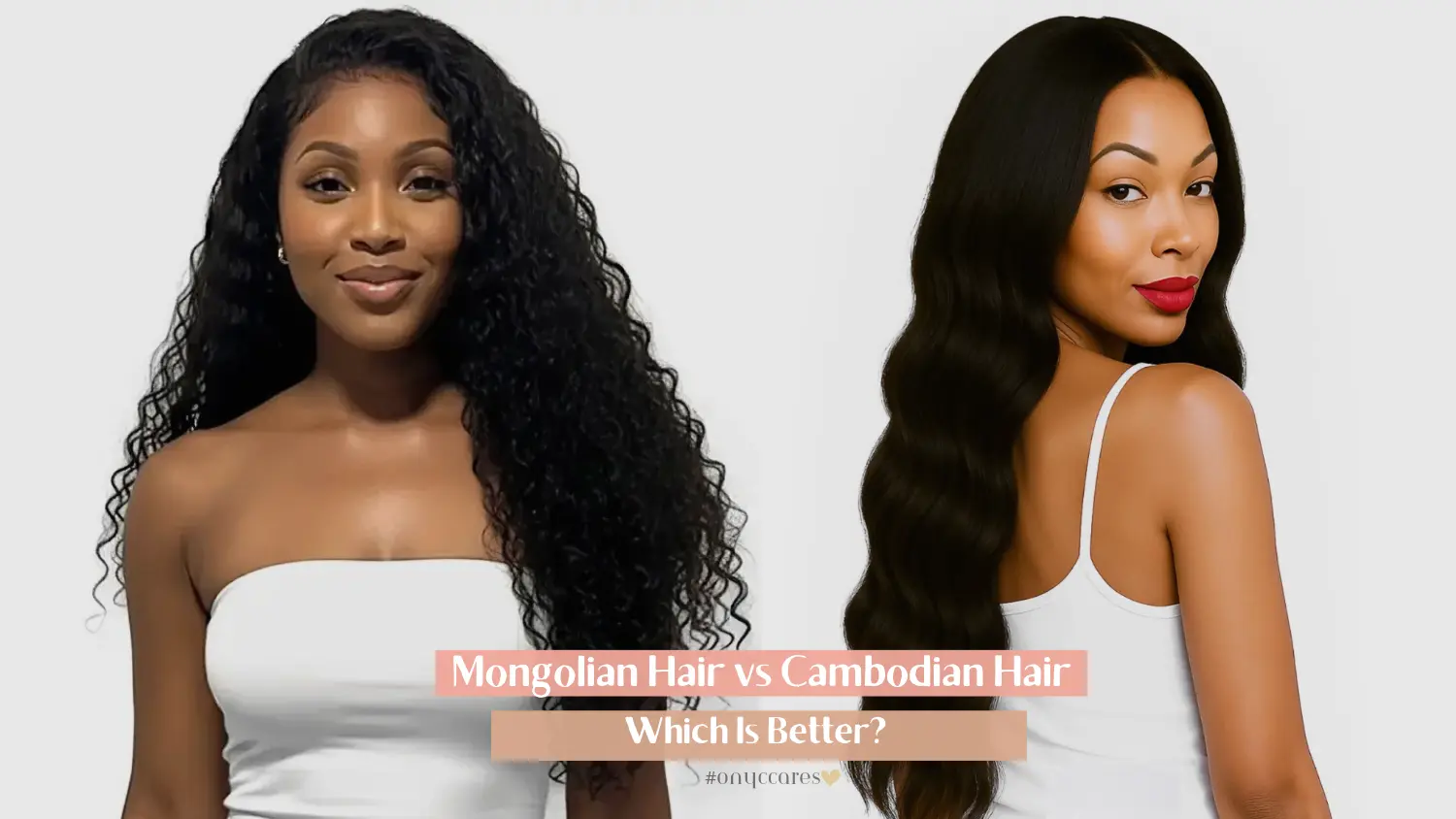
If you’re shopping for raw hair, Mongolian hair vs Cambodian hair is one of the closest comparisons you’ll come across. Most people want to know one thing; Mongolian hair vs Cambodian hair, which is better? Others put it a little differently and ask about the difference between both for the look they want. Both are sold raw and unprocessed, yet they differ in strand thickness, natural texture and how well they blend with your own hair. Getting that choice right shapes how natural your install looks, how it takes heat and color, and how long it lasts. As one of the top raw hair companies sourcing both origins, we carry Mongolian human hair as raw ponytail hair alongside our raw Cambodian textures, so everything in this guide comes from what we see in our own bundles.
Mongolian hair vs Cambodian hair, compared side by side: cuticle thickness, weight, natural shade, bleaching and rarity. See how raw ponytail Mongolian hair and our raw Cambodian Hair Extensions differ, so you can choose the Natural Hair Extensions that suit your hair, color plans and style.
Mongolian Hair vs Cambodian Hair: Origin, Texture and Quality at a Glance
Mongolian hair vs Cambodian hair is a comparison between two rare raw hair origins that are very similar in quality but behave a little differently once you wear, color and style them. Both are natural human hair sourced in Asia, both are hard to source as true raw material, and both blend well with textured hair when the texture is matched correctly. If you are still working out your own pattern, our Hair Texture Chart and Complete Curl Pattern Guide are a good place to start. As a team behind Black Owned Hair Extensions, we match every origin against the natural textures our customers actually wear.
Where Mongolian Hair Comes From
Mongolian hair comes from donors in Mongolia, and the raw Mongolian hair we work with is ponytail hair, cut from a single donor's ponytail. It generally has thicker cuticles, which gives it a heavier texture, and its natural shade tends to come a little lighter. It is also the rarer of the two origins: raw Mongolian material is not easy to source and is harder to access than Cambodian. Our Kinky Curly Human Hair Bundles (3B-3C) and 3c 4a hair extensions (Tight Kinky 3C-4A) are both made from Mongolian ponytail single-donor hair.
Where Cambodian Hair Comes From
Cambodian hair comes from donors across Cambodia. Its cuticles are generally thinner than Mongolian, so it has a lighter texture and is much easier to bleach. It is generally darker in shade because of where the donors are from, though a few bundles come lighter. Raw Cambodian material is also rare and not easy to source, but it is easier to access than raw Mongolian. Our raw Cambodian body wave texture is available as bundles and as a matching body wave closure frontal.
-
Deep Curly Human Hair Bundles – 3B Human Hair Bundles for Sew-In Weave | ONYC® Curly Addiction™
Select options This product has multiple variants. The options may be chosen on the product page


-
Relaxed Straight Hair Extensions Sew-In Weft Bundle Natural Black – ONYC Relax Perm
Select options This product has multiple variants. The options may be chosen on the product page


-
 Pin
 PinOut of Stock
Blow Out Hair Extensions – Kinky Blowout Hair Bundles | ONYC® Fro-Out™
Get notified This product has multiple variants. The options may be chosen on the product page
-
Beach Wave Hair Extensions – Cambodian Body Wave 2A Bundles by ONYC
Select options This product has multiple variants. The options may be chosen on the product page
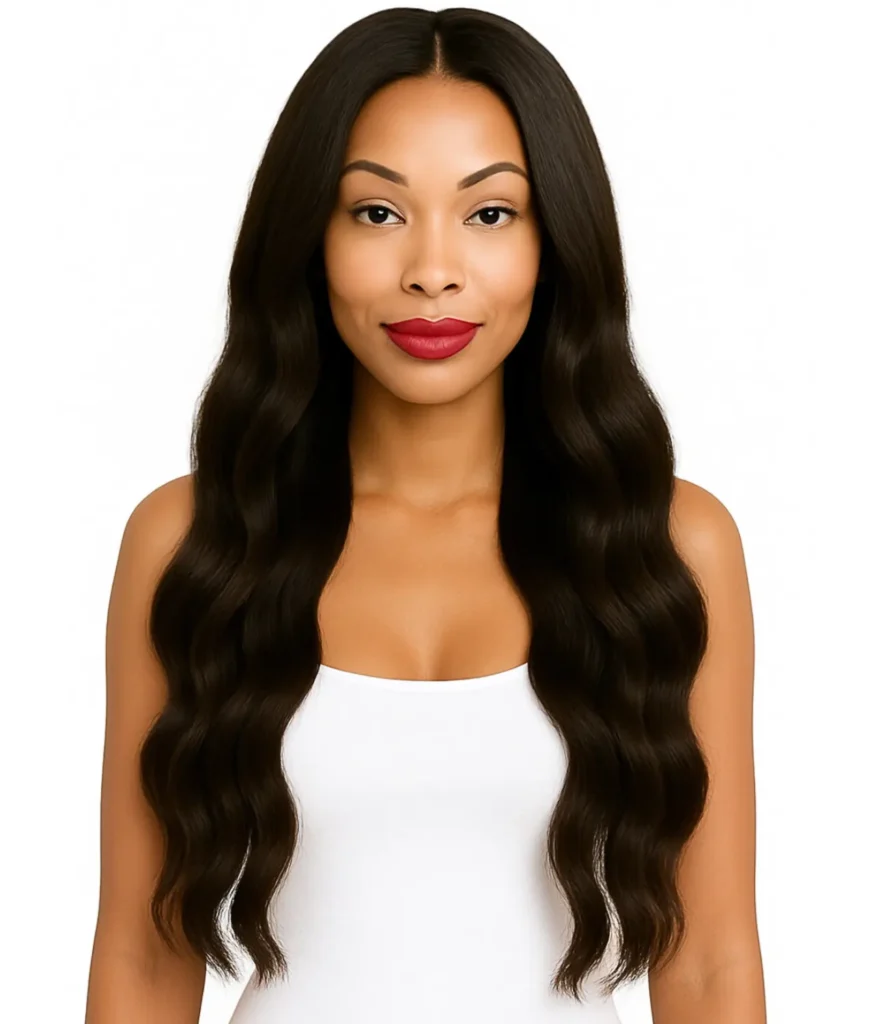

Mongolian Hair vs Cambodian Hair — Comparison Chart
Before choosing between the two, it helps to compare the traits that set each origin apart. Although raw Mongolian and raw Cambodian hair are very similar in quality, they differ in cuticle thickness, weight and texture, natural shade, how easily they bleach, and how rare they are to source. Use the table below as a reference to compare both side by side, then continue reading for a more detailed breakdown of when each one is the right choice. Every row describes raw hair, with cuticles intact and no chemical processing.
| Trait | Raw Mongolian HairRaw ponytail hair with a heavier texture | Raw Cambodian HairRaw hair with a lighter texture |
|---|---|---|
| Hair type | Raw ponytail hair | Raw hair |
| Cuticle | Generally thicker cuticles | Generally thinner cuticles than Mongolian |
| Weight and texture | Heavier texture | Lighter texture |
| Natural shade | Tends to come a little lighter | Generally darker; a few come lighter |
| Bleaching | A little harder to bleach | Easiest to bleach!Much easier to bleach |
| Sourcing | Raw material is not easy to source | Raw material is not easy to source |
| Rarity | Harder to access!Rare, and the rarer of the two | Rare, but easier to access |
| Quality | Very similar to Cambodian | Very similar to Mongolian |
| ONYC® availability | Many existing collections | Beach Wave 2A available now; more raw Cambodian collections coming |
Raw Mongolian Hair Raw ponytail hair with a heavier texture
Raw Cambodian Hair Raw hair with a lighter texture
Texture changes how either origin looks once it is installed, so compare by pattern as well as origin, from soft body waves to defined curls like our Deep Curly Bundles.
Mongolian Hair vs Cambodian Hair Difference: Cuticle, Weight, Color and Bleaching
The Mongolian hair vs Cambodian hair difference starts at the cuticle, the protective outer layer of each strand, and almost every other difference grows from there. Cuticle thickness changes how heavy the hair feels, how light its natural shade is and how it reacts to bleach. None of these traits makes one origin better quality; each one simply suits different goals. Both origins are Real Human Hair Extensions, so you can wash, heat-style and color either one much like your own hair.
Cuticle Thickness and Texture
Mongolian hair generally has thicker cuticles than Cambodian hair. In the hand, that reads as a denser strand with more body. Cambodian hair has thinner cuticles than Mongolian, so each strand feels finer and the hair moves more freely. Neither cuticle is a flaw. What matters most is that the cuticles stay intact and run in one direction from root to tip, as they do in Cuticle Aligned Hair Extensions, because aligned cuticles help the hair stay smooth and tangle less with either origin.
Weight and How the Hair Feels
Thicker cuticles add weight, so Mongolian hair has a heavier texture and Cambodian hair a lighter one. On a full sew-in the difference is easy to feel: Mongolian hair gives a fuller, weightier hang, while Cambodian hair feels lighter on the head and moves with less effort. Weight matters even more in removable pieces. If you wear Curly Clip In Extensions or other Clip In Hair Extensions For Black Hair for a day at a time, a lighter texture can feel more comfortable, while a heavier texture gives each piece more body.
Natural Hair Shade
Mongolian hair tends to come a little lighter in its natural state. Cambodian hair is generally darker because of where the donors are from, though a few bundles come lighter. Our raw Cambodian sourcing shows why the range exists: hair from Cambodia's urban and eastern border regions is naturally finer and softer and lighter in hue, while hair from the deep rural and western regions carries the traditional rich, coarse Khmer textures in a deeper dark shade. Whichever origin you choose, compare the bundle with your own hair in daylight before you install it.
Bleaching and Coloring
Bleaching is where the Mongolian hair vs Cambodian hair difference is clearest. Cambodian hair is much easier to bleach, because its thinner cuticles let lightener in more easily. Mongolian hair is a little harder to bleach; its thicker cuticles resist lightener, so lifting it to blonde takes more patience and is best left to a professional colorist. That makes Mongolian a slower choice for color, not a poor one. If you want a lighter shade without lifting raw hair yourself, start with our Colored Hair Extensions, and if you plan to color at home, read our Hair Coloring Tips And Tricks first.
Raw Mongolian Hair vs Raw Cambodian Hair: Why Raw Matters
Raw Mongolian hair vs raw Cambodian hair is the comparison that matters most, because many bundles sold under both names are not raw at all. An origin label tells you where hair comes from; “raw” tells you what has been done to it. Two bundles both called Mongolian can perform very differently if one has been chemically processed, so every Mongolian hair vs Cambodian hair difference in this guide assumes true raw hair.
What Makes Hair Truly Raw
Truly raw hair has not been chemically processed: no acid wash, no silicone coating, no perm to change its pattern and no dye to change its color. The cuticles stay intact and run in the same direction from root to tip, and the hair keeps its natural shade and natural variation. Processed hair can look glossy in the package, but once the coating washes out it often tangles and loses body. Whether you buy Human Hair Wefts for a sew-in or individual pieces, ask how the hair was treated, not just where it came from. Our Raw Human Hair Extensions are kept unprocessed for exactly this reason.
Raw Ponytail Mongolian Hair vs Raw Cambodian Hair
Our raw Mongolian hair is ponytail hair, collected from a single donor. It is the rarer of the two origins: raw Mongolian material is hard to source and harder to access than Cambodian. Raw Cambodian hair is also rare and not easy to source, but it is easier to access. In quality, the two are very similar. The differences you will notice are the ones you wear: Mongolian's thicker cuticles, heavier texture and slightly lighter shade, against Cambodian's lighter texture, easier bleaching and generally darker shade. To see how Mongolian compares with other raw origins, read our Burmese vs. Mongolian Virgin comparison and Indian vs Mongolian Kinky Straight Hair.
ONYC® Raw Mongolian and Raw Cambodian Collections
We carry many raw Mongolian collections. Our Kinky Curly 3B-3C texture, which InStyle featured in Instyle Magazine's ONYC Hair Review, and our Tight Kinky 3C-4A texture are both made from Mongolian ponytail single-donor hair; you can compare them side by side in Meet the Four ONYC® Kinky Curly Textures.
Raw Cambodian is our newest collection. It is available today in our Beach Wave 2A body wave bundles and closures, and you can see it installed in Raw Cambodian Body Wave Reviews Featuring Maxine in ONYC® Beach Wave 2A Bundles and Closures. More raw Cambodian collections are on the way in two lines: our Sleeker, Lighter Hue hair, sourced from urban and eastern border regions where the hair textures are naturally finer and softer, and our High-Texture, Deeper Dark bundles, sourced from the deep rural and western regions of Cambodia, where the traditional, rich, coarse Khmer hair textures are most prominent.
Mongolian Hair vs Cambodian Hair Pros and Cons: Side-by-Side Comparison
Mongolian hair vs Cambodian hair pros and cons balance out more evenly than most comparisons, because each origin's strength is the other's trade-off. Thicker cuticles give Mongolian hair body and weight but make it slower to lighten; thinner cuticles make Cambodian hair lighter and easier to bleach but give it less weight. Use the lists below to weigh what matters to you, and remember that both origins last longest with gentle care. Our Black Hair Care Guide covers a routine that keeps both your natural hair and your extensions healthy.
Mongolian Hair Pros and Cons
Mongolian hair's strengths trace back to its thicker cuticles and its rarity. It is the origin to choose when body and weight matter more to you than color flexibility.
Pros
- Heavier texture: thicker cuticles give a full, weighty hang with plenty of body.
- Fuller-looking volume: the denser strand gives installs a full finish.
- Slightly lighter natural shade: it tends to come a little lighter than Cambodian.
- The rarer origin: raw Mongolian is the harder of the two to access.
Cons
- A little harder to bleach: lifting it to blonde takes more time and skill.
- More weight on the head: noticeable on full installs and long lengths.
- Limited availability: because raw material is harder to access, genuine raw bundles are limited.
If your leave-out is relaxed or pressed, match texture first and origin second: compare a Mongolian bundle with our Relaxed Straight Hair Bundles before you decide.
Cambodian Hair Pros and Cons
Cambodian hair's strengths come from its thinner cuticles: a lighter texture and much easier color work. Its main trade-off is weight.
Pros
- Much easier to bleach: the best starting point for blonde, highlights or a custom shade.
- Lighter texture: comfortable on long lengths and full installs.
- Generally darker natural shade: blends easily with natural black and dark brown hair.
- Easier to access: still rare, but easier to find as raw material than Mongolian.
Cons
- Less weight: a lighter body than Mongolian, which some installs need.
- Shade can vary: generally dark, but a few bundles come lighter, so match carefully.
- Still rare: true raw Cambodian hair is not easy to source.
To weigh the trade-offs, list your top two priorities. If they are body and rarity, Mongolian is the stronger match; if they are color and comfort, Cambodian is. If shade is the priority, compare each bundle with your own hair, because Mongolian tends to come a little lighter and Cambodian generally darker. Reading the Mongolian hair vs Cambodian hair pros and cons this way turns a close comparison into a clear choice for your own install.
Our Beach Wave Bundles show the lighter raw Cambodian texture in a soft 2A body wave pattern. Weighing these trade-offs is the first half of answering Mongolian hair vs Cambodian hair which is better?, and the verdict below covers the rest.
Mongolian Hair vs Cambodian Hair: Which Is Better?
Mongolian hair vs Cambodian hair which is better? On quality alone, neither. Raw Mongolian and raw Cambodian hair are very similar in quality, and both are rare raw materials that are hard to source. When both are truly raw, with cuticles intact and no chemical processing, you are choosing between two excellent origins rather than a good one and a poor one. So the better hair is the one that fits what you want from your install. It also helps to separate origin from texture. A Mongolian curl and a Cambodian body wave are not competing on quality; they are different looks. Decide on the pattern you want first, then use the points below to choose between origins where both are available.
Rarity: Mongolian Has the Edge
If rarity matters to you, Mongolian has the edge. It is the rarer of the two and harder to access as raw material, so genuine raw Mongolian bundles are the more limited choice. Rarity does not change how the hair performs, but it is a real difference for buyers who want the hardest-to-find origin. To judge quality across any origin, our guide What Is the Highest Quality Human Hair? explains the signs to look for.
Coloring: Cambodian Is Easier to Bleach
If you plan to color, Cambodian is the practical pick. It is much easier to bleach, so lifting it to honey blonde, highlights or a lighter brown is simpler than lifting Mongolian. Mongolian can still be colored, but it is a little harder to bleach, so plan for more time and a skilled colorist. If you would rather skip lightening entirely, our Pre Dyed Bundles arrive already colored.
Feel and Weight: Full Mongolian vs Light Cambodian
If feel matters most, decide how much weight you want. Mongolian's heavier texture gives a full, weighty install with plenty of body. Cambodian's lighter texture is easier to wear on long lengths and full heads, and its generally darker shade blends easily with natural black hair. These are preferences, not quality differences, so let your own hair and the way you like an install to feel make the call.
Our verdict on raw Mongolian hair vs raw Cambodian hair, from working with both: buy the origin that matches your plans, and make sure it is truly raw. We carry many raw Mongolian collections and a growing raw Cambodian range, all kept as high quality raw human hair without chemical processing, so you can choose by preference rather than settle for whatever is available. Weighed against the Mongolian hair vs Cambodian hair pros and cons above, the choice usually comes down to color plans and weight.
Quality settles the first question. The second, difference between Mongolian or Cambodian hair which is better? for your own hair type and style, depends on you, and the next section walks through it.
Difference Between Mongolian or Cambodian Hair: Which Is Better for Your Hair Type and Style?
Difference between Mongolian or Cambodian hair which is better? For your hair, the answer depends on three things: your natural texture and density, your color plans and the styles you wear most. Texture match matters more than the origin label, which is why our guide to What weave looks the most natural? starts with your own hair rather than the bundle. The broader Mongolian hair vs Cambodian hair which is better? verdict above settles quality; this section settles fit. Use the two checklists below, then read the hairstyle notes to settle any tie.
Choose Mongolian Hair If You Want…
- A heavier texture: a full, weighty install with plenty of body.
- A slightly lighter natural shade: it tends to come a little lighter than Cambodian.
- The rarer raw origin: the harder of the two to access.
- Defined curly textures: our Mongolian ponytail collections include Kinky Curly 3B-3C and Tight Kinky 3C-4A.
Mongolian is the better fit when you plan to wear it close to its natural shade, because it is a little harder to bleach than Cambodian. It is also the natural choice if you want an origin that fewer bundles on the market can genuinely claim.
Choose Cambodian Hair If You Want…
- A lighter texture: easy to wear on long lengths and full installs.
- Easy color work: it is much easier to bleach for blonde, highlights or a custom shade.
- A generally darker shade: a close match for natural black and dark brown hair.
- A rare origin that is easier to find: easier to access than raw Mongolian.
If you prefer a wave pattern, our raw Cambodian Beach Wave 2A sits within our Wavy Hair Extensions, and more raw Cambodian textures are on the way. It is the better fit when color, comfort and a darker natural shade top your list.
Hairstyles Each Texture Suits Best
Mongolian hair's heavier texture suits styles where you want fullness and hold, such as voluminous curls, defined twist-outs on our curly textures and full, swingy straight looks. Cambodian hair's lighter texture suits styles that move a lot, such as long body waves and soft layers, and it is the easier base for blonde, ombré and highlighted looks because it bleaches so readily. For a stretched, natural-texture finish, compare either origin with our Blow out hair extensions if a blowout is your go-to. For more style ideas, browse our round-up of the Most Popular Hairstyles.
Color plans can settle a tie. If you want honey blonde or bold highlights, Cambodian saves time in the colorist's chair because it is much easier to bleach. If you plan to stay close to your natural shade, Mongolian's slightly lighter tone and heavier body may be all you need. Either way, choose the texture first and the origin second, and you will end up with an install that looks like your own hair.
Mongolian Hair vs Cambodian Hair FAQs
These are frequently asked questions and answers about Mongolian and Cambodian hair!
Is Mongolian Hair Good Quality?
Raw Mongolian hair is excellent quality when it has been kept unprocessed. Our raw Mongolian is ponytail hair with generally thicker cuticles, a heavier texture and plenty of body, and it is the rarer of the two origins in this guide. Quality depends on processing as much as origin, so check for intact cuticles and no chemical treatment. Our Mongolian textures come from single donors and are sold as 100% Real Human Hair Extensions.
What Is the Difference Between Mongolian Hair vs Cambodian Hair?
In short, cuticle thickness. Mongolian hair has generally thicker cuticles, so it is heavier, a little harder to bleach and tends to come slightly lighter. Cambodian hair has thinner cuticles, so it is lighter, much easier to bleach and generally darker. Mongolian is also the rarer origin. If your real question is difference between Mongolian or Cambodian hair which is better? for your own hair, the decision guide above walks through it. For more comparisons like this one, visit our Hair Extension Buying Guide hub.
Is Cambodian Hair Good Quality?
It is. Raw Cambodian hair is very similar in quality to raw Mongolian, with thinner cuticles, a lighter texture and a generally darker natural shade. It is rare and not easy to source, though easier to access than Mongolian. As with any origin, the label matters less than the processing: true raw Cambodian keeps its cuticles intact and its natural color. With gentle washing and conditioning, as covered in How To Care For Human Hair Extensions, it keeps its softness and body.
Is Mongolian or Cambodian Hair Easier to Bleach?
Cambodian, by a clear margin. Its thinner cuticles make it much easier to bleach, which makes it the natural starting point for blonde, highlights and custom shades. Mongolian hair is a little harder to bleach because its cuticles are thicker, so lifting it takes more time and care. Whichever you choose, test a small section first and leave big color changes to a professional colorist.
Which Is Rarer, Mongolian or Cambodian Hair?
Mongolian. Both are rare, and neither is easy to source as raw material, but raw Mongolian is the harder of the two to access. That is why genuine raw Mongolian bundles are limited, and why it pays to buy from one of the Best raw hair companies that can tell you how its hair is sourced. Raw Cambodian is rare too, but easier to find.
Is Mongolian Hair Heavier Than Cambodian Hair?
Generally, yes. Mongolian hair has thicker cuticles, which give it a heavier texture and more body. Cambodian hair, with thinner cuticles, has a lighter texture that can feel easier to wear on long or full installs. Neither weight is better: heavier hair gives fullness, lighter hair gives movement. If you wear Natural Hair Extensions Clip In pieces for a day or evening, weight is worth considering before you choose.
What Is the Natural Color of Cambodian Hair?
Cambodian hair is generally dark because of where the donors are from, but a few bundles come lighter. Our raw Cambodian sourcing explains the range: our Sleeker, Lighter Hue hair comes from Cambodia's urban and eastern border regions, where textures are naturally finer and softer, while our High-Texture, Deeper Dark bundles come from the deep rural and western regions, where traditional rich, coarse Khmer textures are most prominent. To match shade and texture, start with our guide to Natural Hair Textures.
Final Verdict: Choosing Between Mongolian Hair vs Cambodian Hair
Choosing between Mongolian hair vs Cambodian hair is easier once you know quality is not the deciding factor. The Mongolian hair vs Cambodian hair difference comes down to cuticle thickness: heavier, slightly lighter and rarer Mongolian against lighter, generally darker and much easier-to-bleach Cambodian. Weigh those Mongolian hair vs Cambodian hair pros and cons against your own plans. With many raw Mongolian collections and a growing raw Cambodian range, we make it easy to choose the origin that fits you. When you are ready, shop our Raw Hair Bundles or explore more guides on our Hair Extension Blogs page.
difference between mongolian or cambodian hair hairstyles
When it comes to the difference between mongolian or cambodian hair hairstyles, the clearest split is between hold and movement. Raw Mongolian ponytail hair, with its generally thicker cuticles and heavier texture, holds full looks well: defined curls, big twist-outs and straight styles with plenty of body. Raw Cambodian hair, with its lighter texture, suits styles that need to move, such as long body waves and soft layered cuts, and it stays comfortable on long, full installs. If sleek straight looks are your favorite, compare either origin with ONYC® Silky Straight Hair Bundles to find the finish you want, then choose the origin that gives you the weight you prefer.
what is difference between mongolian hair vs cambodian hair hairstyles?
ONYC® Hair answers what is difference between mongolian hair vs cambodian hair hairstyles? by starting with color, because cuticle thickness and natural shade decide which looks are realistic. Cambodian hair has thinner cuticles and is much easier to bleach, so blonde, honey highlights and ombré styles are simpler to achieve, even though it generally starts darker. Mongolian hair has thicker cuticles and is a little harder to bleach, but it tends to come a little lighter naturally, which suits soft, close-to-natural tones and styles that rely on body rather than color. Put simply, the answer to what is difference between mongolian hair vs cambodian hair? is the cuticle, and the cuticle shapes the hairstyle. For ready-colored options, see our Colored Human Hair Bundles.
Related Posts
 Pin
How to Choose Clip-In Hair Extensions That Match Black Hair Textures
 Pin
Clip-In Hair Extensions for Black Hair | Complete Guide to Texture Matching, Volume, Installation and Care
Click on a star to Rate this!
We are sorry that this post was not useful for you!
Let us improve this post!
Tell us how we can improve this post?


