

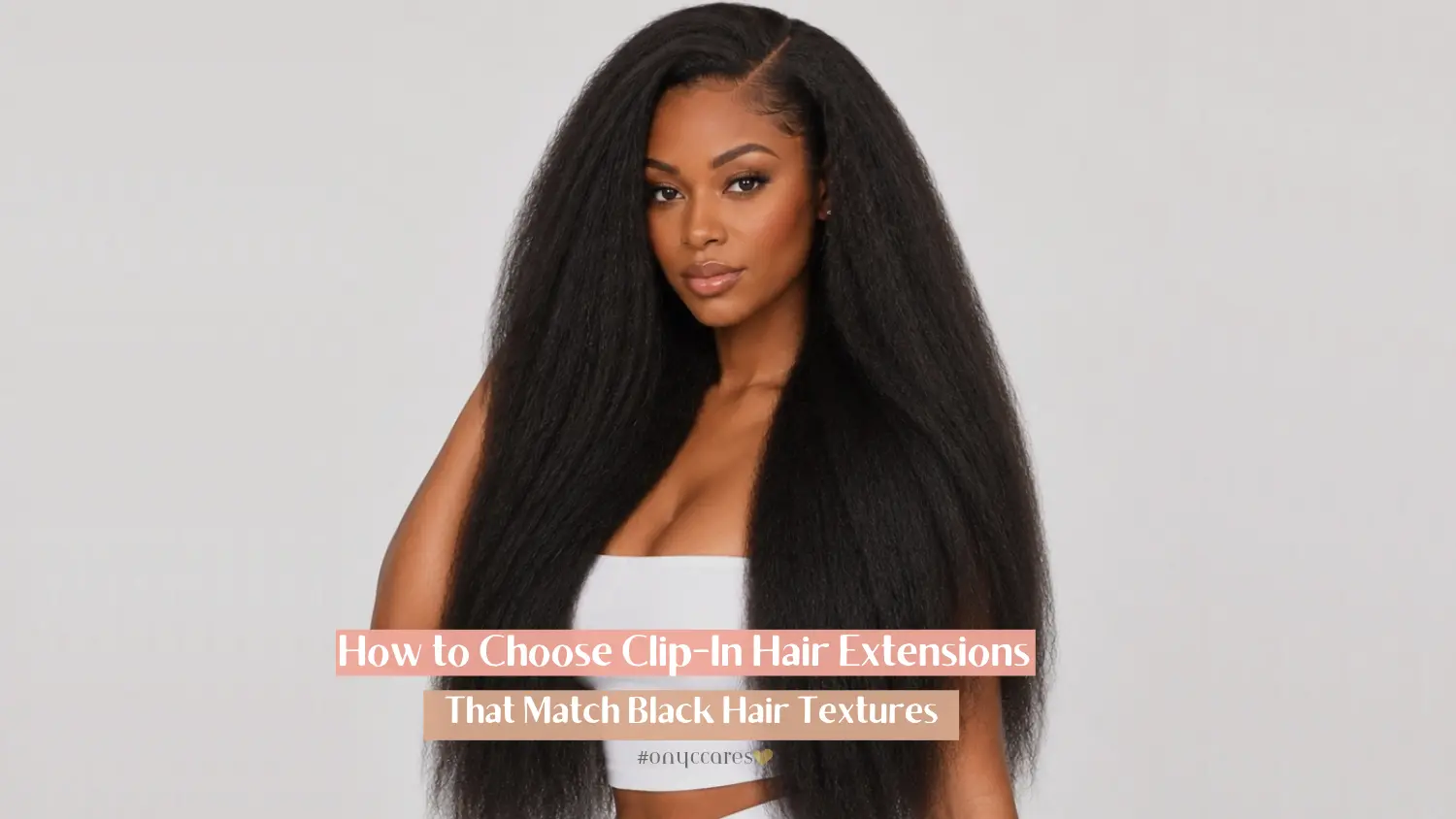
How to choose clip-in hair extensions for Black hair comes down to understanding your natural texture, density, and styling preferences, as these are the same factors that help you determine how to choose the right clip-in hair extensions for a comfortable, natural-looking blend. Whether your hair is curly, coily, relaxed, silk-pressed, or blown out, choosing Clip In Hair Extensions For Black Hair involves more than matching curl patterns. Exploring different Virgin Hair Extensions can help you compare textures and finishes, but factors like hair thickness, luster, length, and volume also affect how naturally the extensions blend. This guide covers texture matching, length, set weight, hair quality, and common blending mistakes to help you make the right choice. The goal is to find clip-ins that complement your hair without adding unnecessary bulk or tension.
Choosing clip-ins for Black hair starts with understanding your natural texture, density, and how comfortably the extensions attach. Exploring Natural Hair Extensions can help you identify textures that closely resemble your own hair. For those who prefer a fuller, blown-out look, Kinky Straight Human Hair Bundles offer a useful reference for comparing texture and volume.
How to Choose Clip-In Hair Extensions for Black Hair
How to choose clip-in hair extensions for Black hair starts with identifying how your hair looks in its usual styled condition, rather than relying only on a curl-type number. Your curls may appear completely different after stretching, blow-drying, or silk-pressing. A clip-in set should resemble the finish you intend to wear, including fullness at the roots and the appearance of the ends. The Hair Texture Chart is a useful starting point for recognizing differences between straightened textures, defined curls, and tightly coiled hair.
 Pin
Next, decide whether you want additional volume, greater length, or both. Adding several inches of length may require more blending than filling out thin ends, while an overly full set can overpower fine natural hair even when the curl pattern matches. Color is another consideration. Extensions do not need to be identical under every light source, but a noticeable difference between the natural hair and added pieces can interrupt the blend. Compare the hair in natural daylight where possible and consider how any highlights or color variation will appear throughout the hairstyle.
What Makes Clip-Ins Different From Other Hair Extensions?
Clip-in extensions consist of hair wefts with small clips attached along their seams. The clips open and close around sections of natural hair, allowing the wearer to install and remove the pieces without adhesive or a sewn-in foundation. Unlike sew-ins, tape-ins, and strand-by-strand methods, clip-ins are intended for temporary styling. They can be useful when you want to alternate between wearing your natural hair and creating a fuller hairstyle for particular occasions. However, removable does not mean tension-free. Heavy wefts, poorly positioned clips, and repeated attachment to fragile sections may still stress the hair. If you are comparing attachment methods, the guide addressing What kind of extensions look the most natural? explains how different extension formats affect the finished appearance.
Who Can Benefit From Wearing Clip-Ins?
Clip-ins can suit people who want occasional styling flexibility without maintaining a longer-term installation. They may add volume to a twist-out, extend a relaxed hairstyle, create a fuller silk press, or add length to naturally curly hair. When comparing Natural Hair Extension Brands, focus on whether the available textures and attachment formats suit your own hair rather than choosing solely by brand recognition.
The important consideration is whether your natural hair is healthy and dense enough to support the clips. Significant thinning, fragile edges, or an irritated scalp may make some attachment methods unsuitable. For a wider discussion of suitability and natural-looking results, ONYC's article answering Are Clip-ins Good For Black Hair? explores factors that influence whether removable extensions are appropriate for different Black hair textures.
-
Kinky Curly Clip In Human Hair Extensions for Black Hair – ONYC® Kinky 3B-3C Clipins Natural Extensions
Select options This product has multiple variants. The options may be chosen on the product page


-
Kinky Straight Clip-In Hair Extensions – Kinky Straight Hair Extensions Clip Ins for Black Hair | ONYC® ClassiQUE™
Select options This product has multiple variants. The options may be chosen on the product page


-
Deep Curly Clip In Hair Extensions 3B Curl Natural Black Hair – ONYC Curly Addiction™ Natural Extensions
Select options This product has multiple variants. The options may be chosen on the product page


-
4C Clip In Hair Extensions For Black Hair 4B-4C Natural Afro Kinky Texture | ONYC® Afro Kinks Clip-Ins ClassiQUE™
Select options This product has multiple variants. The options may be chosen on the product page


How to Choose the Right Clip-In Hair Extensions Based on Length and Set Weight
How to choose the right clip-in hair extensions depends on the length you want, the amount of volume your natural hair can support, and the weight of the individual wefts. Longer extensions are not always the better option, especially when the natural hair is short, fine, or low density.
 Pin
Choosing the Right Clip-In Length
Begin by identifying your natural hair's visible length in the condition you intend to wear it. Curly and coily hair may look considerably shorter than its stretched length. A modest increase in length is often easier to blend because the difference between natural ends and extension ends is less dramatic. Even Quality Hair Extensions may look disconnected when the selected length is much greater than the natural hair can conceal. A successful result depends on proportion, layering, and the overall shape of the hairstyle. For additional guidance across curl patterns, the article How do you choose curly clip-ins for 3A, 3B, 3C, 4A or 4C hair? explains texture-related considerations that can affect the finished length.
Choosing the Right Number of Wefts
Clip-in sets often contain multiple pieces in different widths. The number needed depends on your styling goal and existing hair density. A few pieces may be enough to add subtle volume, while greater length or fullness may require more coverage. Compare the number of pieces, individual weft widths, and total set weight. Remember that using every piece is not necessarily required. When evaluating a clip-in set, consider whether it includes different weft widths for flexible placement.
Wider pieces can provide fullness across larger sections, while narrower wefts may offer better coverage around areas where less hair is needed. Choosing a set with suitable weft sizes can make the attachments easier to conceal. It is also important to distinguish ready-to-wear clip-ins from Human Weave Bundles. Bundles are generally supplied as wefts for sew-ins or other customized installations unless clips are specifically included.
Balancing Length and Fullness
For short or medium-length hair, very long extensions with thin ends may create a noticeable difference between the natural hair and the added lengths. Conversely, extremely full extensions may overwhelm fine natural hair even when the length is reasonable. When evaluating how to choose the right clip-in hair extensions, aim for a balance between the extension length and the amount of hair needed to create a natural-looking outline.
Choosing Clip-Ins for Short Hair
Short hair often requires careful placement and layering because the natural ends must blend into longer extension lengths. A covering layer of natural hair should conceal the clips, particularly around the crown and sides. If there is not enough hair to cover the attachments, clip-ins may not be the most suitable option. The article What Makes Human Hair Clip-Ins Look Natural on Black Hair? discusses installation and blending considerations that can help with shorter hairstyles.
How to Match Clip-In Hair Extensions to Your Natural Hair Texture, Density, and Luster
Matching clip-ins involves more than identifying whether your hair is straight, curly, or coily. Strand thickness, overall hair density, surface sheen, and the way the hair moves can all influence the final result.
Understanding Hair Density and Strand Thickness
Hair density describes how closely hair strands grow together on the scalp, while strand thickness refers to the diameter of individual hairs. Someone can have fine strands but high overall density, or thicker strands with low density. These differences affect the amount of extension hair needed to create a balanced style. If your hair is fine or low density, an extremely full set may create an obvious difference between the natural hair and the extensions. Wide wefts may also be more difficult to hide beneath a thin covering layer.
When comparing Virgin Hair Extensions With Natural Look, examine how their fullness relates to your natural hair. A realistic appearance depends on compatibility, not simply on how thick or expensive the extensions appear. For more guidance on this distinction, the article Why Do Most Hair Extensions Look Unnatural on Natural Hair? explores common blending problems across different natural-hair extension methods.
Matching Luster and Surface Texture
Luster describes how light reflects from the hair. Some natural Black hair textures have a soft, low-sheen finish, while relaxed or silk-pressed hair may reflect more light. Even when two textures are similarly straight or curly, a significant difference in shine can make extensions stand out. Compare the hair in natural daylight where possible, paying attention to both the roots and lengths. The guide What Makes Curly Hair Extensions Look Natural? explains how curl variation, fullness, luster, and blending techniques affect the overall appearance.
Checking Movement and the Shape of the Hair
Extensions should fall naturally alongside the surrounding hair rather than forming a heavy or disconnected section. If your natural hair moves lightly, very dense extensions may create an unbalanced appearance. If your natural hair is naturally full, thin extension ends may appear too sparse. For curly hairstyles, allow both the extensions and natural hair to dry before comparing their movement. The finished silhouette can reveal mismatches that are not apparent while the hair is wet.
Which Clip-In Hair Textures Suit Natural, Relaxed, Silk-Pressed, and Transitioning Black Hair?
The most suitable clip-in texture depends on how your natural hair is styled and how closely the extension pattern resembles it. Black hair can range from loose curls to compact coils, while relaxed, straightened, and stretched hairstyles create additional texture variations. Instead of choosing from a product photograph alone, compare curl size, surface texture, root volume, shrinkage, and how the hair falls when dry. The Complete Curl Pattern Guide explains the differences between neighboring curl patterns and can help you recognize which characteristics matter when selecting extensions.


Choosing Kinky Curly Clip-Ins for Natural Curls
Naturally curly hair often requires extensions that reproduce its curl diameter, spring, and definition. A loose 3A curl will blend differently from a tighter 3C curl, even when both are described as curly. For hair with defined 3B–3C curls, Kinky Curly Human Hair Bundles provide a useful texture reference. These bundles are not automatically ready-to-wear clip-ins, but their curl family may help you identify the appropriate pattern. When comparing removable alternatives, consider Kinky Curly Clip In Hair Extensions if the curl spacing and overall fullness resemble your natural hair. Type 3 curls can vary considerably. The article explaining What Does Type 3 Curly Hair Look Like? provides additional context on the characteristics of 3A, 3B, and 3C hair. Always check how the extensions appear when dry. Hair that looks similar while wet may expand, shrink, or create a different silhouette as it dries.
Matching Relaxed and Silk-Pressed Hair
Relaxed hair may appear smooth while retaining texture, body, and movement. A silk press can create a sleeker finish, but the degree of shine and fullness depends on the natural hair and styling technique. When comparing Relaxed Straight Hair Bundles, evaluate how closely their texture resembles your styled hair. These bundles help illustrate different straight finishes, although removable extensions must have a suitable clip-in construction.
For a ready-to-wear option, Relaxed Straight Clip-in Hair Extensions may complement relaxed hair that retains soft fullness. If you are uncertain about the difference between chemically relaxed hair and temporarily straightened natural hair, the article What Is the Difference Between Relaxed Hair and a Silk Press? provides useful context before selecting an extension texture. The objective is to find a finish that works with your normal routine rather than repeatedly applying high heat to correct a mismatch.
Choosing Clip-Ins for Kinky Straight and Blowout Hair
A blowout creates a stretched appearance while often retaining natural fullness, surface texture, and movement. Extremely silky extensions may therefore look noticeably different from natural hair worn in a blowout. For help distinguishing this finish, the article What is kinky straight hair? explains the texture's appearance and how it differs from smoother straight styles.
Compare the amount of root volume, the subtle bends along the strands, and how the extensions move. Kinky straight textures may be appropriate for a fuller stretched look, while a smoother relaxed straight texture may be more suitable for a sleeker hairstyle. People comparing blowout-inspired textures can also explore the article How to Choose the Right Blowout Style for Your Hair Type?, which discusses different blowout appearances and extension choices.
Selecting Curly Clip-Ins for 3A, 3B, and 3C Hair
For defined natural curls, exploring curly clip in hair extensions for black hair allows you to compare removable options across different curl families. A useful way to narrow your selection is to assess your natural curls individually before comparing extension textures.
3A Hair — Loose Spiral Curls
Type 3A hair generally forms wider, loose ringlets. If you are uncertain about this pattern, the guide How Do I Know If I Have 3A Hair? can help you assess your curl shape and appearance. Choose extensions with a similar spiral width and natural movement. Very tightly curled extensions may create unnecessary contrast with looser 3A hair.
3B Hair — Springy, Defined Ringlets
Type 3B curls are typically more compact than 3A curls, with noticeable spring and fullness. The article What Is 3B Hair? explains how this curl pattern differs from surrounding types. For a removable texture reference, Deep Curly Clip In Hair Extensions offer a defined 3B-inspired appearance.
3C Hair — Tighter Corkscrew Curls
Type 3C hair forms smaller, more compact corkscrew curls. The article What Does 3C Hair Look Like? explains characteristics that can help distinguish 3C from looser 3B and tighter 4A patterns. For a tighter curl reference, 3C Curly Clip In Hair Extensions may be worth comparing with your natural pattern. Across all three curl types, assess the extensions after they have dried. Curl spacing, shrinkage, density, and the way the ends group together all affect the finished blend.
For a broader selection comparison, the guide How to Choose Curly Hair Extensions That Match Your Natural Curl Pattern examines how these characteristics influence extension choices.
Finding Clip-Ins for Coily 4A, 4B, and 4C Hair
Tighter natural coils require attention to compact curl structure, density, and visible length after shrinkage. When identifying the most suitable texture family, Natural Afro Hair Extensions provide examples of fuller coily appearances. Since the category includes different extension formats, verify the construction before choosing a product for temporary wear.
4A Hair — Small, Defined Coils
Type 4A hair usually has small, visible coils with a springy structure. If you are unsure whether your curls fall into this category, the article How do I know if my hair is 4A? provides characteristics to compare. For a related removable texture, Afro Hair Clip In Extensions can be evaluated when a compact 3C–4A-inspired appearance is desired.
4B Hair — Compact Bends and Fullness
Type 4B hair can display tightly packed bends and less uniform visible curl definition. The guide How to tell if your hair is 4B? helps explain why this texture may look different from defined 4A coils. Rather than selecting clip-ins based only on the 4B label, compare their fullness, surface texture, and movement with your own hair.
4C Hair — Tightly Packed Coils
Type 4C hair often forms very compact coils with substantial visible shrinkage. The article What Is 4C Hair? explains the pattern's appearance and the variations that occur within this hair type. When selecting removable extensions, look for a similar level of density and compactness. Extremely loose curls can create a noticeable separation between natural roots and extension lengths.
For those with compact coils, the article How Do You Choose the Right Hairstyle for 4C Hair? offers styling ideas that may help you plan a compatible look. For an overview of all three textures, the guide What Is the Difference Between 4A, 4B, and 4C Hair? provides a useful comparison before selecting a coily extension.
How to Evaluate Clip-In Weight and Tension for Fine or Fragile Black Hair
Clip-in weight matters because natural hair must support the extensions at each attachment point. A set that feels comfortable on thick hair may place excessive stress on fine strands or fragile areas. Independent beauty reviews can provide additional perspective when evaluating human hair clip-in extensions. Byrdie has featured ONYC Clip-In Hair Extensions, recognizing the brand's Kinky 3B–3C Curl 7-Piece set in its roundup of clip-in hair extensions. The feature offers readers a product-specific reference when considering textured human hair clip-ins, natural-looking curls, and styling versatility.
Why Lightweight Extensions Matter
Fine hair can be more sensitive to tension when a heavy weft is attached to a small section. Rather than evaluating the weight of the complete set alone, consider how that weight is distributed across the clips. Smaller pieces or more flexible placement options may help reduce concentrated tension. When comparing High-Quality Extensions, assess the clip construction and weft weight alongside the hair's appearance. A premium texture does not automatically make an attachment suitable for fragile hair.
Where to Position Clips Safely
Before attaching clip-ins, begin with clean, dry, detangled hair in the style you intend to wear. Position each piece where there is enough healthy natural hair to hold it comfortably. Position each piece where there is enough healthy natural hair to hold it comfortably. Avoid placing clips directly on thinning edges, irritated scalp areas, or sections experiencing active breakage. The attachments should not pinch, pull, or create persistent discomfort. If a clip feels tight, remove it and reconsider the placement rather than forcing it to stay in position.
Are Seamless Clip-Ins Better for Fine Hair?
Seamless clip-ins usually have a flatter seam that may be easier to conceal beneath some hairstyles. However, a lower-profile seam does not automatically make the extensions lighter. The total weight, clip design, and amount of supporting natural hair still matter. For a textured example, Seamless 3C Curly Clip In Hair Extensions offer a different attachment construction to compare when the curl pattern is appropriate.
Avoid placing clip-ins on areas with significant thinning, inflammation, or ongoing breakage. Stop wearing the extensions if they cause discomfort or persistent pulling. If you are experiencing unexplained hair loss, consult a qualified dermatologist before using extensions that place tension on the affected hair.
What to Consider About Human Hair Clip-In Quality, Maintenance, and Reusability
Human hair clip-ins are generally selected for their styling flexibility and the ability to reuse them when properly maintained. However, the description “human hair” does not establish how a set will perform. Hair processing, weft construction, attachment quality, and maintenance all affect its usefulness.
Evaluating Human Hair Quality
Look for hair that is manageable, consistent with its stated texture, and suitable for the styling routine you plan to follow. Inspect the stitching and attachment points. The clips should open and close smoothly, and the hair should remain securely attached to the wefts. Even Luxury Virgin Hair Extensions need to match the wearer's texture and styling requirements. A higher price or premium product description is not a substitute for appropriate length, density, and comfortable attachments. For a wider comparison of human hair characteristics, 100% Real Human Hair Extensions provide a relevant product category to explore.
Understanding Raw Hair and Processed Hair
Different hair sources and processing methods can influence texture consistency, appearance, and maintenance needs. When comparing Raw Hair Extensions, consider the stated sourcing and processing characteristics rather than assuming that every raw hair product is supplied in clip-in form. A raw hair bundle may be intended for a sew-in, while a ready-to-wear clip-in set includes its own attachment construction.
Comparing Curly Hair Quality and Definition
Curly extensions should be evaluated for softness, curl consistency, and how their pattern behaves after washing and drying. Textures within deep curly human hair bundles may help illustrate differences in curl density and definition, but deep-curly bundles are not automatically assembled as clip-ins. A curl pattern that blends with your natural hair when dry is generally more useful than one that matches only when freshly styled.
Maintaining Clip-In Extensions Between Uses
Proper maintenance helps preserve softness, manageability, and the appearance of the hair. Detangle gently, starting at the ends and working upward. Support the hair near the weft to reduce pulling, and use suitable conditioning products when necessary. Curly or coily extensions may require section-by-section detangling, while straighter textures may need less manipulation.
Wash according to the manufacturer's care instructions and allow the extensions to dry thoroughly before storage. For more textured-hair maintenance information, the Hair Extension Care Guide offers access to additional educational resources.
Caring for Your Natural Hair Between Installations
Your natural hair still needs regular care when you frequently wear removable extensions. Keep the scalp clean, avoid repeated friction at the same attachment points, and maintain a moisturizing routine appropriate for your hair. The Black Hair Care Guide provides information about detangling, moisture, and maintaining different Black hair textures. Remove clip-ins by opening each attachment fully before lifting away the weft. Never pull the extension downward while the clip is closed.
Common Mistakes to Avoid When Choosing Clip-In Hair Extensions for Black Hair
One of the most common mistakes is selecting extensions primarily for length or visual appeal without considering texture, density, and attachment weight. Understanding how to choose clip-in hair extensions for Black hair also involves recognizing the differences between a hairstyle that looks attractive in a photograph and one that will blend comfortably with your own hair.
| Common Mistake | ✓ Do's | ✕ Don'ts |
|---|---|---|
| Choosing the Wrong Texture |
|
|
| Choosing Based on Length Alone |
|
|
| Choosing Too Much Volume |
|
|
| Ignoring Extension Weight |
|
|
| Incorrect Clip Placement |
|
|
| Forcing Textures to Blend With Heat |
|
|
| Confusing Installation Methods |
|
|
Choosing the Wrong Texture
- Match extensions to your natural hair's texture and finish.
- Choose silky or loose textures that visibly clash with your hair.
Choosing Based on Length Alone
- Select a length that blends naturally with your own hair.
- Prioritize length or appearance over realistic blending.
Choosing Too Much Volume
- Match extension fullness to your natural hair density.
- Use overly full sets that overwhelm your natural hair.
Ignoring Extension Weight
- Choose comfortable, lightweight wefts your hair can support.
- Wear heavy wefts that create unnecessary root tension.
Incorrect Clip Placement
- Position clips away from fragile edges and visible partings.
- Attach clips too close to your hairline or temples.
Forcing Textures to Blend With Heat
- Use compatible textures and gentle styling methods.
- Rely on repeated high heat to blend mismatched textures.
Confusing Installation Methods
- Confirm you're purchasing ready-to-wear clip-ins.
- Assume all hair extensions come with clips attached.
Understanding Different Extension Methods
Not every hair extension product is supplied as a ready-to-wear clip-in set.
- Clip-ins: Temporary wefts secured with clips and removed after wear.
- Sew-ins: Hair wefts attached to a prepared foundation and kept in place for a longer period.
- Tape-ins: Extensions installed with adhesive tabs that require appropriate maintenance.
- I-tips or microlinks: Individual strands attached using small beads or related systems.
- Wigs: Hairpieces covering all or part of the head, available with different attachment designs.
Different installation methods have different maintenance and tension considerations. For information about another method, the guide Are tape-ins good for Black hair? discusses their potential advantages and limitations.
Checklist for Choosing Clip-In Extensions That Match Your Black Hair Texture
Choosing clip-in extensions that blend naturally with Black hair involves more than finding a similar texture. Curl pattern, density, luster, length, and comfort all play a role in achieving a seamless result. Your preferred hairstyle should also guide the extension texture, number of pieces, and length you select. For inspiration, Most Popular Hairstyles provides examples of different looks to help you decide on your desired length, fullness, and overall finish. The checklist below brings these essential factors together, helping you evaluate your options before making a purchase.
Use this 10-point checklist before purchasing to review the details that matter most when choosing clip-in extensions for your natural hair.
Understanding how to choose the right clip-in hair extensions becomes easier when you consider these characteristics together rather than selecting a set based on a single feature.
Additional Clip-In Hair Extensions FAQs
How do I know if the clip-in texture will blend with my own hair?
Compare the extensions with your natural hair in the style you actually wear. Check curl size, luster, density, and shrinkage after both textures are dry. A set that looks similar while wet may form a noticeably different shape after drying.
For curly hair, our guide How to Choose Curly Hair Extensions for Your Natural Curl Pattern explains how to identify the most relevant characteristics. If your hair has compact coils, the Difference Between 3C–4A vs 4C Bundles article offers additional comparisons of neighboring patterns.
How much natural hair needs to be left out?
Leave out enough natural hair to conceal the clips and wefts, especially near your part and hairline. The amount varies according to density, hairstyle, and the size of the extension pieces.
Your natural hair should fall over the attachments without excessive teasing or heat. The guide What Are Clip-In Hair Extensions for Black Hair? explains installation and coverage considerations, while How Much Clip-In Hair Do I Need for My Hair? discusses the amount of hair needed for different styling goals.
Can I wear clip-ins without using heat on my natural hair?
Yes. Clip-ins can be worn without applying heat to your natural hair, particularly when the extension texture closely resembles your existing curls, coils, or stretched hairstyle.
Twist-outs, braid-outs, and gentle stretching may help create a consistent finish without repeated high-temperature styling. For more guidance on realistic curly blending, How To Make Curly Hair Extensions Look Natural? explains characteristics that influence the finished appearance.
Are clip-ins safe for fine, fragile, or low-density Black hair?
Clip-ins may be appropriate for some people with fine or low-density hair, but the individual weft weight and placement are especially important. Avoid attaching pieces to thinning edges, areas of breakage, or an irritated scalp.
A low-profile seam can sometimes help conceal the extensions, but it does not automatically mean the set is lightweight. For a broader comparison, the article What are the best natural-looking extensions for fine hair? discusses factors to consider when choosing an extension method for finer strands.
How should human hair clip-ins be removed and stored after wear?
Open each clip completely before lifting the weft away from your natural hair. Support the roots near the attachment point and avoid pulling the pieces downward.
After removal, detangle gently and allow the extensions to dry completely before storage. Maintain your own hair with a suitable Natural Hair Care Routine, paying attention to any tangling or tension around previous attachment areas.
For tighter curls, the article How to Wash Type 4 Hair? provides additional context on caring for coily natural hair.
What is the most important factor when choosing clip-ins for Black hair?
Texture compatibility is the starting point, but density, length, weight, and attachment placement are equally important to the finished result. How to choose clip-in hair extensions for Black hair should ultimately be guided by the condition of your natural hair and how you intend to style it.
If you are comparing different extension formats, the guide What Should You Look for When Choosing Hair Extensions for Black Women? explains other factors that can influence your choice.
Final Thoughts: Choosing Clip-Ins That Complement Your Natural Hair
How to choose clip-in hair extensions for Black hair is ultimately about creating a suitable balance between texture, length, density, and comfort. The right extensions should complement the way your natural hair looks and moves without requiring excessive heat, unnecessary bulk, or uncomfortable attachment tension. Whether you wear your hair naturally curly, tightly coiled, relaxed, or stretched, selecting a compatible texture and planning thoughtful placement can help produce a more consistent appearance. Finding the Best Virgin Hair Extensions for your styling needs still begins with understanding your natural hair. Once you understand how to choose the right clip-in hair extensions, you can make a more informed decision based on the hair you actually have rather than choosing extensions solely because they appear long or full in a product photograph.
ONYC® Kinky Curly Hair Maintenance Reviews | Navigating 3B-3C, 3C-4A to Afro Kinks 4C
Difference Between Curly, Kinky Curly and Afro Curly Hair Textures
Best Kinky Hair Extensions for Black Hair – Choosing Guide
Best Extensions for 4A 4B and 4C- Type 4 Hair Extensions
Best Clip In Hair Extensions For Black Hair Textures Guide
ONYC® 3B-3C vs Loose Kinks vs 3C-4A vs Afro Kinks 4C Explained | ONYC® Texture Comparison
Related Posts
 Pin
Mongolian Hair vs Cambodian Hair: Which Is Better? Differences, Pros and Cons
 Pin
Clip-In Hair Extensions for Black Hair | Complete Guide to Texture Matching, Volume, Installation and Care
Click on a star to Rate this!
We are sorry that this post was not useful for you!
Let us improve this post!
Tell us how we can improve this post?


