


A traditional hair weave can look full, natural, and beautiful while still being manageable, but many problems begin before the client ever leaves the stylist’s chair: with how the wefts are installed. At ONYC® Hair, our care and installation guidance is designed to help customers get better wear from Virgin Hair Extensions, including traditional sew-ins. For shoppers choosing Black Owned Hair Extensions, the same principle applies as the hair needs enough room to move, separate, dry, and be detangled. These Do’s and Don’ts of Hair Weave focus on one of the most preventable causes of tangling, matting, and nape knots an overcrowded installation. More hair does not automatically mean a better sew-in, and even beautiful human hair can become difficult to manage when too many tracks are compressed into too little space.
KEY TAKEAWAY: Space the wefts. Protect the nape. Do not overcrowd the installation. The fuller, longer, or more textured the hair is, the more important strategic spacing becomes. A beautiful Natural Hair Weave should have intentional fullness, not compressed fullness. When working with High Quality Extensions, thoughtful placement is essential to preserving their natural movement and polished finish.
Hair Weave Do’s & Don’ts at a Glance
The goal is not to make every installation sparse. It is to create enough density for the desired style while keeping the Human Hair Weave accessible enough to maintain. That balance matters whether you wear sleek straight bundles, textured hair, curls, coils, or extra-long lengths. Even Real Human Hair Extensions can tangle when the installation itself creates constant friction and makes routine detangling difficult.
| Feature | DOWhat helps prevent tangling and matting | DON’TWhat can increase friction and nape knots |
|---|---|---|
| Track Spacing | Leave adequate space between the wefts so the hair can move, separate, and be properly detangled. | Don’t sew the tracks extremely close together. Overcrowding increases friction and the tendency to tangle or mat. |
| Nape Installation | Give the nape extra space. Keep the lower tracks lighter and well separated because this area experiences the most friction. | Don’t overcrowd, stack, or unnecessarily double the tracks at the nape. |
| 3–4+ Bundles / Extra Fullness | Distribute the hair naturally. Use only what can be comfortably installed with proper spacing. | Don’t force every bundle into the sew-in simply to achieve maximum fullness. |
| Very Full Hairstyles | Consider a removable wig or a naturally installed sew-in supplemented with clip-ins for added volume. | Don’t create extreme fullness by permanently packing excessive wefts onto the sew-in foundation. |
| Textured Hair | Allow additional spacing with kinky straight, kinky curly, coily, Afro kinky, 4C, Yaki, and other highly textured hair. | Don’t install heavily textured hair as densely as a smoother, lower-maintenance texture. |
| Long Hair | Use thoughtful spacing and density with longer lengths and keep the hair regularly detangled. | Don’t combine very long hair, heavy texture, and extremely crowded tracks and expect a low-maintenance installation. |
| Remy / More Maintenance-Intensive Hair | Be especially careful with track spacing and maintenance when installing Remy or more processed textured collections. | Don’t overcrowd these installations. Give the lower wefts more room. |
| Detangling | Detangle regularly, especially around the nape. Work gradually from the ends toward the roots. | Don’t wait until small tangles become large knots or matting, and never aggressively pull through tangled hair. |
| Product Use | Use products appropriate for the texture, remove buildup when necessary, and keep the hair conditioned and manageable. | Don’t overload textured hair with heavy styling products that can increase buildup, stiffness, and friction. |
| Weft Handling | Keep the weft intact whenever possible and reinforce it when appropriate. | Don’t unnecessarily split or damage the weft. If a weft must be split, reinforce it properly. |
| Shedding vs. Breakage | Check the length of the strands you are losing. Shorter pieces can indicate breakage associated with tangling or improper detangling. | Don’t automatically assume every loose strand means the weft is shedding. |
| Overall Installation Goal | Aim for strategic density: enough fullness to achieve the desired look while still allowing the hair room to move and be maintained. | Don’t judge a sew-in by how much hair can be packed onto the head. |
DOInstallation and care practices that help keep a weave manageable
DON’TPractices that can increase friction, tangling, matting, or nape knots
DO: Space the Wefts Especially at the Nape
This is one of the most important rules for preventing unnecessary tangling. Do not pack one track directly against another simply because there is room on the braid foundation. Leave adequate space between the Sew In Hair Bundles so the installed hair can fall naturally, move freely, be reached during washing and conditioning, dry more effectively, and be properly detangled from one track to the next.
The nape deserves even more attention because this area experiences repeated movement and friction from the neck, clothing, scarves, collars, sleeping, and everyday activity. ONYC® installation guidance recommends reducing density around the bottom of a textured-hair installation and giving the lower tracks more space. When neighboring rows can separate instead of constantly rubbing together, the wearer has a much better chance of catching small tangles before they develop into larger knots.
This is also why the broader relationship between installation and Hair Extensions And Weaves matters. Hair quality is important, but the way the hair is installed can either support manageability or work against it.
Popular Natural Weave Extensions - ONYC®
-
Kinky Curly Human Hair Weave Bundles For Natural Sew-In Extensions – ONYC® Kinky 3B-3C Curl
Select options This product has multiple variants. The options may be chosen on the product page


-
Relaxed Straight Hair Extensions Sew-In Weft Bundle Natural Black – ONYC Relax Perm
Select options This product has multiple variants. The options may be chosen on the product page


-
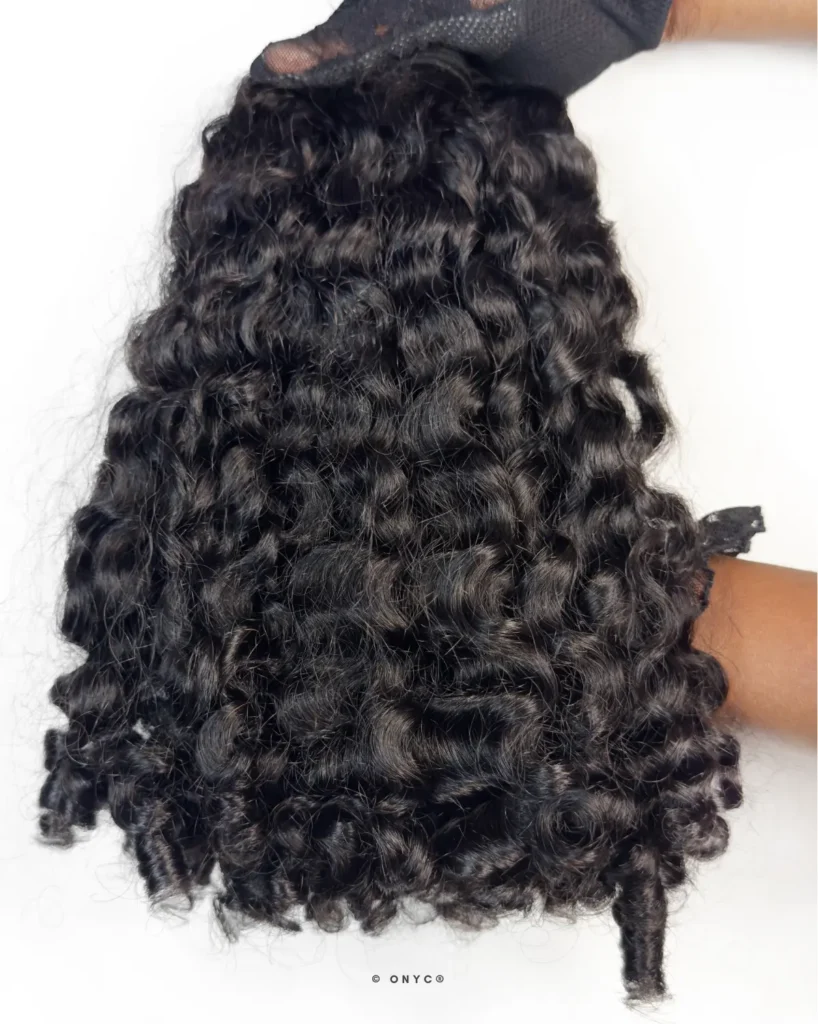
Raw Burmese Curly Hair Bundles Full Ends Double Drawn – ONYC® Burma Curls 3C
Select options This product has multiple variants. The options may be chosen on the product page

-
Afro Kinky Curly 3C 4A Bundles Natural Hair Weave Sew-In Coily 3C-4C – ONYC® Tight Kinky 3C-4A™
Select options This product has multiple variants. The options may be chosen on the product page


DON’T: Double Up or Crowd the Nape
Avoid creating several extremely close tracks at the bottom of the installation. Space the tracks at the nape and do not unnecessarily double or stack wefts in this area. If the nape is overloaded, a large amount of hair is being concentrated exactly where the strands already experience some of the highest friction.
Overcrowding can make it difficult to separate the lower rows during brushing, washing, conditioning, and drying. Strands from neighboring tracks may repeatedly cross and intertwine. Small tangles can then tighten into knots, especially when the hair is left compressed for several days between maintenance sessions.
Even premium Virgin Human Hair Weft should not be expected to perform well if the installation continuously forces neighboring strands to rub, knot, and compact together. The best result comes from pairing good hair with a foundation that allows the hair to behave naturally.
DO: Understand That More Bundles Require More Spacing
There is nothing wrong with wanting three bundles, four bundles, or a very full hairstyle. The problem is not automatically the number of bundles purchased. The problem begins when a stylist feels obligated to fit every inch of every bundle into the sew-in by positioning the tracks too closely together.
If you prefer a fuller look, distribute the density thoughtfully. Buying more Quality Bundles For Sew In does not mean every weft has to be permanently sewn onto the head. Use the amount that can be comfortably installed while preserving access between tracks. Any unused hair can be stored properly for another installation or used when replacement pieces are needed.
The Fuller the Installation, the More Important the Spacing
Imagine installing four bundles in approximately the same amount of space normally used for two or three. If the extra hair is accommodated simply by reducing the distance between every track, the foundation can become extremely dense underneath even when the finished surface looks beautiful.
- Increase spacing between tracks where possible.
- Keep the nape lighter than the crown and mid-length areas.
- Allow the hair from one row to fall naturally over the row underneath it.
- Prioritize natural distribution instead of simply using every weft purchased.
- Do not assume maximum density automatically creates the best or easiest-to-maintain result.
DO: Consider a Wig If You Love Extremely Full Hair
If you consistently prefer exceptionally full, voluminous hair, a removable wig may sometimes be easier to manage than an extremely dense traditional sew-in. A wig can distribute a larger amount of hair over a separate foundation while allowing the wearer to remove the unit for thorough detangling, washing, conditioning, drying, restyling, and nape maintenance.
This does not mean a sew-in cannot be full. It means the installation method should match the amount of hair you want to wear and the amount of maintenance you are prepared to do. If you want inspiration for different finished looks before deciding on density, the Hair Weave Gallery can help you think about fullness, length, and shape without assuming that every style requires tightly packed tracks.
Another Option: A Natural Sew-In Plus Clip-Ins
You do not necessarily have to choose between a natural-looking sew-in and dramatic fullness. Install the permanent sew-in at a comfortable density, leave sufficient space between the tracks, then use Clip In Hair Extensions For Black Hair when you want extra volume for a particular look. Because clip-ins can be removed, the additional density does not have to remain compressed into the foundation every day and night.
This approach can be especially useful when you want flexibility, particularly if you like being able to adjust your volume without committing to a fuller permanent install. ONYC® clip-ins have also received recognition beyond the brand itself, with Byrdie recognition of ONYC® clip-ins for 3B/3C hair offering an independent reference point for anyone comparing options for naturally curly textures. If you are considering adding temporary fullness to your sew-in, the ONYC® guide on How Much Clip In Hair Do I Need For My Hair? can help you work out how much makes sense for the look you have in mind, while keeping the permanent sew-in easier to access and detangle.
DON’T: Treat Every Hair Texture the Same
The more texture the hair has, the more important thoughtful installation and maintenance become. Understanding different Hair Textures helps explain why a dense installation of silky-straight hair may behave differently from a dense installation of kinky, curly, coily, Yaki, or coarse straight hair.
Extra attention should be given to textures such as Kinky Curly Hair Extensions, kinky straight hair, ONYC® Tight Kinky Coily 4A-4C, Yaki hair, and Relaxed Hair Weave. These textures have more surface texture and strand interaction than a very smooth silky-straight finish. When a large volume of textured strands is compressed into a small installation area, friction and intertwining can increase.
If you are unfamiliar with the characteristics of kinky straight textures, the guide What is kinky straight hair? provides additional context on texture and maintenance. For curly installations, our blog on How To Care For Kinky Curly Hair Weave, Bundles and Extensions offers more texture-specific care guidance.
The Nape Becomes Even More Important With Textured Hair
With kinky, coily, Yaki, and other textured hair, give the bottom tracks room. Do not try to create maximum fullness at the nape. You can create overall volume through the installation without concentrating excessive density in the area most prone to friction.
This is also where Natural Hair Extensions should be installed with realistic maintenance in mind. A natural-looking texture should still be accessible enough to separate, condition, and detangle. Texture matching should never become an excuse to pack more hair into the foundation than the wearer can comfortably maintain.
DO: Be More Conservative With Remy & More Processed Hair Collections
Installation technique becomes especially important when working with hair that may require more maintenance than premium virgin or raw-hair collections. With Remy Hair Weave or other more processed textured options, avoid overcrowding, keep the nape well spaced, detangle carefully, follow the recommended care routine, and avoid heavy product buildup that makes neighboring strands stick together.
A lower price point or different processing level does not mean the hair cannot look beautiful. It simply makes it even more important that the installation works with the characteristics of the hair instead of creating unnecessary friction. Care guidance such as How To Care For Natural Hair Extensions can also help reinforce the basics of conditioning, product control, and routine maintenance across extension types.
DON’T: Overcrowd Extra-Long Hair
The longer the hair, the more important the installation becomes. Long strands have more length available to cross, wrap, and knot with neighboring strands. Combining very long hair, heavy texture, excessive density, and tightly packed tracks creates a much more maintenance-intensive installation.
This is especially important with long kinky straight, kinky curly, Afro kinky, 4C, coily, Yaki, and relaxed textures. If you choose long Sew In Hair Bundles, resist the temptation to make every row tighter simply because you also want maximum fullness.
For Long Hair, Think Distribution & not Compression
Rather than asking, “How can we fit all four bundles onto the head?” ask, “How can we distribute this hair so it remains beautiful and manageable?” That change in thinking helps move the focus away from maximum track count and toward a finished style that can actually be maintained between salon visits.
DO: Detangle the Nape Regularly
Even a perfectly spaced installation still requires maintenance. Do not wait until you feel a large knot forming before detangling your weave. Pay particular attention to the bottom tracks, the hair immediately above the nape, the area behind the ears, hair rubbing against clothing, and any place where neighboring rows begin to intertwine. When detangling, work gradually from the ends toward the roots rather than pulling aggressively through knots from the top. For curlier textures, knowing How to Detangle Curly Hair Without Breakage is especially relevant because aggressive brushing can turn a small tangle into breakage.
If your weave is curly, review our blog on How to Keep Curly Weave From Tangling for additional maintenance steps. If matting is already beginning, the question How Do I Keep My Curly Weave From Matting? addresses the same problem from a curly-weave care perspective. The important point is to act early, while the strands can still be separated gently.
Keep products appropriate for the texture and remove buildup when necessary. Heavy styling products can collect around the lower tracks, add stiffness, and increase friction. The goal is conditioned, manageable hair and not coated hair that becomes harder to separate.
DON’T: Confuse Breakage With Weft Shedding
Hair found during brushing is not automatically proof that the weft is shedding. True shedding from the weft generally involves full-length strands releasing from the weft construction. Shorter pieces can instead indicate breakage associated with tangling, matting, aggressive brushing, heat, product buildup, or repeated friction.
If the majority of hairs coming out are noticeably shorter than the installed length, investigate the installation before automatically assuming the Virgin Human Hair Weft itself is failing. Look for overcrowded rows, compressed nape tracks, areas where the hair is rubbing against clothing, product buildup, and sections that are not being detangled often enough.
This distinction matters because replacing hair will not solve the problem if the underlying cause is the installation or maintenance routine. The same issue can repeat with new hair until the source of the friction is corrected.
DO: Make the Installation Match the Hair
A great sew-in is not simply about attaching hair securely. It should allow the hair to behave naturally. Hair texture, length, number of bundles, desired fullness, nape density, and the specific collection should all influence how the tracks are distributed.
- Hair texture: Highly textured hair generally benefits from greater spacing and more deliberate density distribution.
- Hair length: Longer hair requires increased attention to detangling and track placement.
- Number of bundles: Buying more bundles does not mean every bundle must be permanently sewn in.
- Desired fullness: Extremely high-density looks may be easier to maintain as a removable wig or with temporary clip-in fullness.
- Nape density: The nape should generally remain one of the least crowded areas of the installation.
- Hair collection: Different processing levels and textures can require different maintenance routines.
This is why the broader category of Real Human Hair Extensions should never be treated as though every texture, length, and construction behaves identically. Match the installation to the actual hair in front of you, not to a fixed rule about how many tracks “should” fit on the head.
If you want a general extension-care checklist beyond sew-ins, Do And Don'ts Of Hair Extensions? provides a useful supporting reference. For style inspiration after you have chosen a manageable density, Weave Hairstyles for Natural Hair shows different ways natural-looking weave styles can be worn.
The Bottom Line: Give Your Hair Weave Room to Move
One of the simplest principles in a successful traditional hair weave installation is also one of the most overlooked: the hair needs space. A fuller sew-in is not necessarily a better sew-in, and a tightly packed foundation does not automatically create a more luxurious result. For clients who love fullness, the goal should be strategic density rather than compressed density. Space the wefts. Keep the nape lighter. Give heavily textured and extra-long hair additional consideration. If you want dramatic volume, use a removable option or supplement a naturally distributed sew-in with clip-ins instead of permanently crowding the foundation.
Choose Quality Bundles For Sew In that suit your desired texture and length, or explore the Best Sellers in Hair Extensions for more popular options. Remember, however, that the installation must still make room for washing, drying, separating, and detangling. Your technique should help prevent tangling, not create the environment that encourages it.
Click on a star to Rate this!
We are sorry that this post was not useful for you!
Let us improve this post!
Tell us how we can improve this post?


