

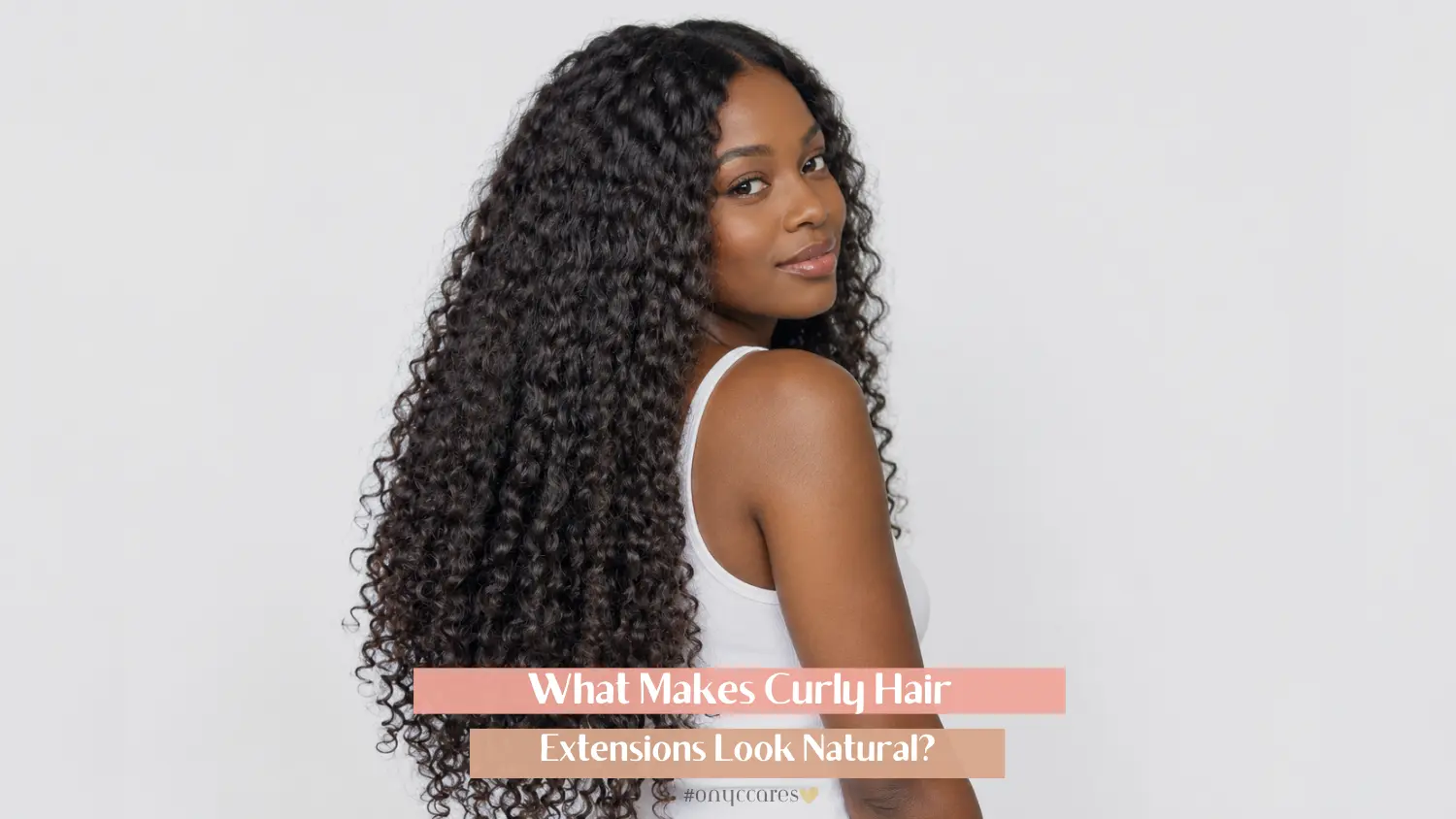
What Makes Curly Hair Extensions Look Natural? How To Make Curly Hair Extensions Look Natural? — These are common questions when you want added curls to blend effortlessly with your natural hair without noticeable differences in texture, volume, or overall appearance. Achieving a realistic finish involves more than simply matching curl patterns. Natural luster, balanced density, organic curl variation, and the way individual strands move all play an important role in creating a seamless look. Choosing the right Virgin Curly Hair Extensions can help you achieve a more natural blend by complementing the unique characteristics of your own curls. The quality and texture of the hair also matter, which is why exploring different Virgin Hair Extensions can help you find options that suit your desired style. In this ONYC® Hair guide, we explore what makes curly extensions look natural, how to identify realistic curl characteristics, and the essential factors to consider when choosing extensions that blend beautifully with your own hair.
What Makes Curly Hair Extensions Look Natural?
Natural-looking Virgin Curly Hair Extensions closely complement the wearer's curl pattern, density, luster, root texture, and natural movement. A realistic finish depends on how these characteristics work together rather than how defined the curls appear individually. Extensions should blend with the natural hair when dry and styled without requiring excessive manipulation to disguise noticeable texture differences.
How Can You Tell Whether Curly Extensions Will Blend When Dry?
When comparing Virgin Curly Hair Extensions, examine their dry curl formation, apparent length, density, and overall fullness. Curly hair can appear longer and smoother when wet, then contract and develop more volume as it dries. Comparing your natural hair with the intended extensions in similar conditions helps you identify differences that may become noticeable after installation.
How Do You Match Curl Diameter and Texture With Your Natural Hair?
The ONYC Curly Hair Extension Selection Guide explains why matching curl diameter, strand appearance, and natural fullness is important when choosing extensions. Start by examining your natural hair after washing and drying, paying particular attention to the crown, hairline, and any areas that will remain exposed. Compare the size and formation of your curls rather than relying entirely on broad curl-type classifications.
What Are the Best Curly Hair Extensions?
The best curly hair extensions for a defined 3B-inspired hairstyle should offer compatible ringlet formation, natural-looking luster, balanced density, and movement. ONYC® Curly Addiction™ 3B Deep Curly provides one texture-specific option for wearers seeking springy ringlets. However, the most suitable extensions depend on the wearer's natural hair characteristics, since loose 3A curls, varied 3C patterns, and compact Type 4 coils require different texture matches.
How To Make Curly Hair Extensions Look Natural?
Making Virgin Curly Hair Extensions look natural begins with selecting a compatible texture, balancing the amount of added hair, and concealing attachment points carefully. Compare your natural curls and extensions when both are dry, then choose styling methods that create a cohesive transition. Gentle blending, appropriate layering, and moderate product application can help the finished hairstyle maintain realistic movement and fullness.
Can Curly Hair Extensions Blend Naturally Without Heat Styling?
Properly matched Deep curly hair extensions can blend naturally without requiring frequent heat styling when their curl diameter and appearance complement the wearer's hair. Gentle finger styling, twist-outs, or suitable curl-defining products may help create a consistent finish. Choosing a compatible texture from the beginning reduces the need to manipulate natural hair repeatedly to imitate a different curl pattern.
Can Curly Clip-In Extensions Look Natural on Black Hair?
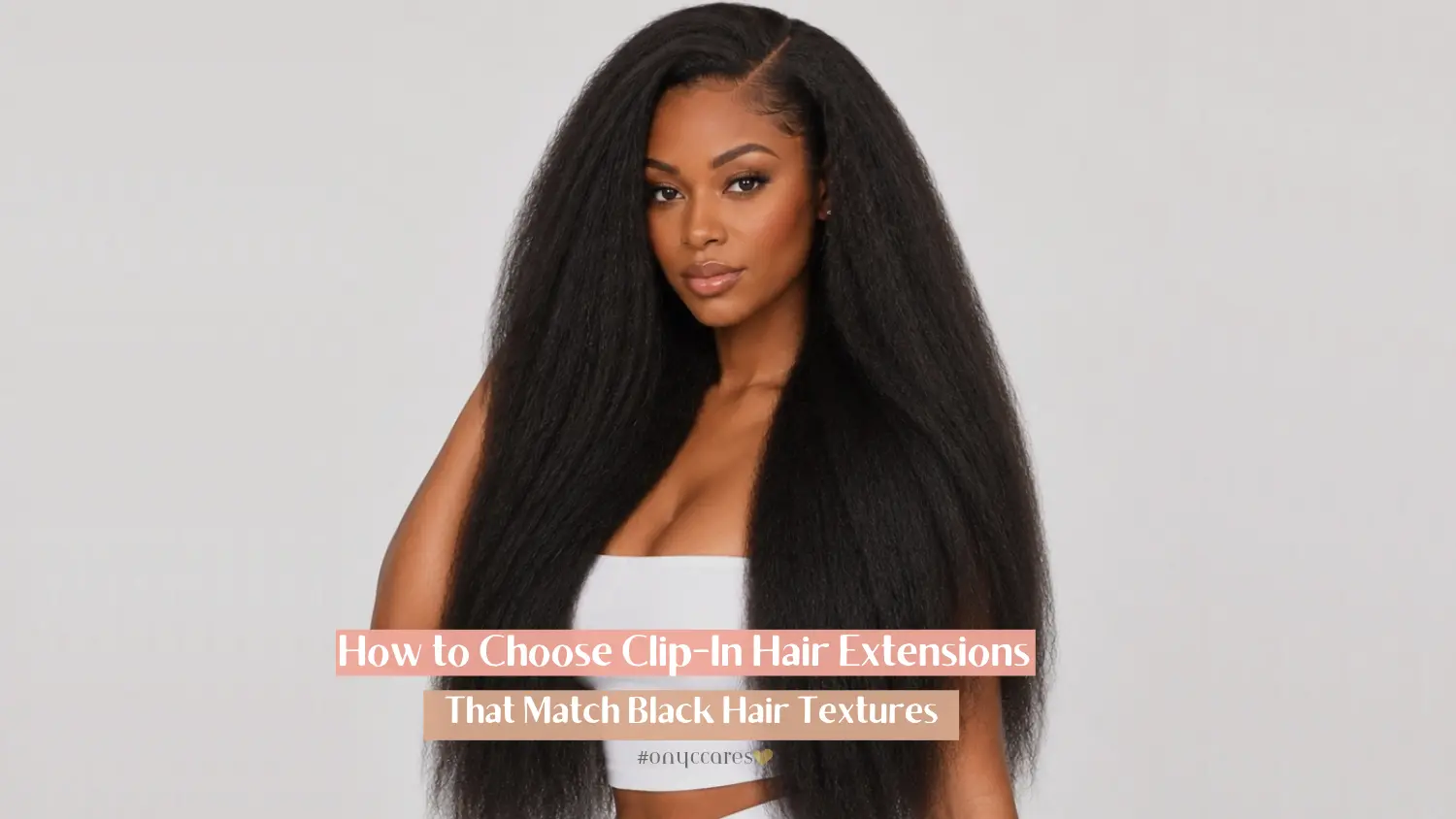
Yes, curly hair clip in extensions can create a realistic appearance on Black hair when the curl pattern, density, and color closely match the surrounding natural hair. Place the clips where they can remain concealed beneath sufficient coverage, and distribute the wefts to avoid excessive volume. The finished hairstyle should look balanced at the roots and ends while allowing the curls to move naturally.
What Are the Best Curly Hair Bundles?
The best curly hair bundles are those that suit your natural curl pattern, intended installation, desired density, and preferred finished style. Compare defined 3B ringlets, varied 3C-inspired curls, and more compact kinky-curly or coily textures according to the hair that will remain exposed. The Best Curly Hair Extensions for Every Curl Pattern guide offers additional comparisons across curl families.
What Should You Check Before Purchasing Curly Hair Bundles?
Before choosing Virgin Human Hair bundles, compare the stated texture, stretched length, dry curl appearance, luster, and available installation options. Consider whether the extensions will be used with leave-out, a closure, or another coverage method. Realistic photographs and accurate product descriptions can help you understand the texture before purchasing.
How Does Installation Affect the Natural Appearance of Curly Extensions?
The installation method selected for Virgin Curly Hair Extensions affects how naturally the curls fall and whether attachment points remain concealed. Sew-ins require balanced weft placement and compatible leave-out, while clip-ins require discreet positioning and sufficient surrounding hair. An installation with excessive bulk or visible attachments can make even closely matched curls appear separate from the natural hair.
Which Curly Hair Extensions Are Best for Your Hair Type?
The best curly hair extensions for your hair type should match the curl diameter, density, luster, and root texture that will remain visible after installation. The ONYC Curly Hair Extension Selection Guide explains how to compare these factors. Looser curls may complement Spanish Curly 3A, defined 3B ringlets may resemble Curly Addiction™ Deep Curly, and tightly coiled hair may call for Kinky Curly or 4C-inspired textures.
What Makes Burmese Curly Hair Extensions Suitable for a Natural-Looking Blend?
Raw Burmese Curly Hair Extensions feature curl variation that can complement natural hair with differences in spiral size and definition. This variation may help create dimension throughout the hairstyle rather than an appearance made entirely of identical ringlets. However, the texture must still match the wearer's natural curl diameter, density, and luster to create a believable transition.
How Does Deep Curly 3B Hair Create a Natural-Looking Finish?
The defined ringlets of ONYC Curly Addiction™ 3B Deep Curly can complement natural hair with similarly springy curl formations. Its rounded ringlet appearance provides a relevant texture comparison for individuals seeking defined curls with noticeable movement. For a realistic result, examine how the ringlet diameter, shine, and fullness compare with your own hair in its normal dry state.
What Are the Best Human Hair Extensions for Natural-Looking Curls?
The best human hair extensions for natural-looking curls should have suitable curl definition, balanced fullness, compatible luster, and manageable styling requirements. Comparing several textures is more useful than assuming that one curl pattern will blend with every hair type. The ONYC® Virgin Curly Hair Extensions collection provides different human hair textures to compare based on the wearer's natural hair.
Does Hair Color Affect How Natural Curly Hair Extensions Look?
The color of Virgin Curly Hair Extensions influences whether the added hair blends with natural strands, particularly around the hairline and leave-out. Differences in undertone, highlights, or overall depth may reveal where the extensions begin. Compare the color in natural lighting and consider whether your own hair has subtle variations throughout the lengths.
Do Curly Hair Extensions Look Different After Washing?
The appearance of Deep curly hair extensions may change between wet and dry states as the curls contract and regain their natural volume. Washing can also remove styling products that temporarily alter shine or definition. Evaluate the texture after appropriate cleansing and drying to understand how it may appear during regular wear.
Which Curly Hair Extensions Are Best for Black Hair?
The best curly hair extensions for Black hair are those that match the wearer's actual curl formation, density, luster, and intended styling finish, since Black hair includes a wide range of textures. For compatible textured 3B–3C curls, Kinky Curly Human Hair Bundles offer one comparison. Looser curls may suit Spanish Curly, while tighter coily hair may call for a 4C-inspired option rather than the same bundle for every curl type.
How Does Curl Shrinkage Affect the Finished Length of Curly Extensions?
Different textures within the Virgin Curly Hair Extensions collection can appear shorter when their curls contract into their natural shape. This difference affects the finished hanging length, overall fullness, and planned layers. Compare the product's stretched measurement with its dry curly appearance before selecting a length for the desired hairstyle.
Can Loose Ringlet Extensions Blend With Natural 3A Hair?
The open spiral pattern of Virgin Spanish Curl Bundles may complement natural hair with similarly loose 3A ringlets. Their flowing curl formation provides a useful comparison for hairstyles emphasizing visible length and softer definition. Evaluate the actual spiral diameter, density, and natural sheen before choosing the texture for blending.
What Should You Look for in Natural-Looking 4C Hair Bundles?
When considering Kinky Curly 4c Hair Bundles, compare compact coil formation, shrinkage, density, and natural surface appearance. Extensions intended to complement 4C hair should support the hairstyle's textured character without requiring the wearer to repeatedly loosen or straighten natural coils. The finished result should maintain balanced volume and a believable transition wherever natural hair remains exposed.
Can a Closure Help Curly Hair Extensions Look More Natural?
Using a suitable coverage method with Virgin Human Hair bundles may reduce the amount of natural leave-out requiring daily blending. A closure can help create a more consistent curl appearance near the parting when its texture, density, and color match the bundles. However, natural-looking results still depend on careful installation, realistic parting placement, and appropriate fullness around the crown.
How Should You Maintain Curly Extensions Between Wash Days?
Maintaining Virgin Curly Hair Extensions between wash days involves gentle detangling, suitable curl refreshing, and avoiding excessive product buildup. Use a care routine appropriate for the specific hair texture and installation method. Protecting the curls during sleep and minimizing unnecessary manipulation can help preserve the intended definition and movement.
Does raw human hair automatically look more natural?
No, Raw Burmese Curly Hair Extensions illustrate how naturally varying curl formations can contribute to a realistic appearance, but raw human hair does not automatically guarantee a seamless blend. The extension still needs to complement the wearer's curl pattern, density, luster, and styling preferences. A texture mismatch may remain noticeable regardless of the hair's sourcing or material description.
Do perfectly uniform curls look artificial?
Defined textures such as ONYC Curly Addiction™ 3B Deep Curly can look natural when their ringlet formation complements the wearer's hair. Perfectly uniform curls are not automatically artificial, but they may create a noticeable contrast when natural hair contains varying curl sizes and levels of definition. A convincing finish depends on how the extensions blend with the complete hairstyle rather than whether the curls appear identical.
Why does luster matter with curly extensions?
The appearance of Virgin Curly Hair Extensions depends partly on how their surface reflects light compared with the wearer's natural hair. Luster can make extensions appear noticeably shinier or duller, even when the curl patterns match closely. Compare both textures in similar lighting conditions and avoid relying solely on photographs taken with heavy styling products.
How important is root-to-tip texture?
The root-to-tip formation of Kinky Curly Human Hair Bundles is one characteristic to compare when blending extensions with textured natural hair. Root texture matters particularly when the wearer's hair remains visible around the parting or crown. A noticeable difference between the natural roots and the added lengths can make the installation appear less cohesive, even when the lower curls look similar.
Can layering make curly extensions look more natural?
Thoughtful layering of Virgin Human Hair bundles can help distribute curly volume and create a more balanced hairstyle. Layers may allow curls to fall at complementary lengths instead of concentrating excessive fullness at the ends. Because curly hair contracts when dry, the finished curl length should be considered before cutting or thinning the extensions.
How do bundle quantity and density affect the finished result?
The amount of hair selected from Virgin Human Hair bundles affects overall coverage and fullness, while curl tightness and strand density influence how voluminous the finished hairstyle appears. Too much hair can create unnecessary bulk, especially around the crown, while insufficient coverage may leave gaps. Choose bundle quantity according to the intended installation, natural hair density, and desired shape rather than assuming more hair is always better.
How does this apply to 3A, 3B, 3C, and Type 4 textures?
The ONYC Curly Hair Extension Selection Guide explains why different curl types require different texture considerations. Natural 3A hair often features larger, more open spirals; 3B hair generally forms springier ringlets; 3C hair may contain compact corkscrew curls; and Type 4 hair includes tighter coily formations. These classifications are broad references, so density, strand appearance, and shrinkage must also be considered when selecting extensions.
Why can two products with the same curl label look different?
Two options in the Virgin Curly Hair Extensions collection may differ in ringlet width, density, luster, shrinkage, and root appearance even when they share a broad curl classification. A 3C label, for example, does not guarantee identical strand characteristics or the same dry-state volume. Compare actual product photographs and natural curl behavior rather than relying only on classification.
ONYC Recommended Curly Hair Extensions and Learning Resources
- General curly hair extension collection: Virgin Curly Hair Extensions
- Defined 3B deep-curly product: ONYC® Curly Addiction™ 3B Deep Curly
- Natural curl-variation example: Raw Burmese Curly Hair Extensions
- Textured 3B–3C curl option: Kinky Curly Human Hair Bundles
- Loose 3A ringlet bundles: Virgin Spanish Curl Bundles
- Compact 4C-inspired bundles: Kinky Curly 4c Hair Bundles
- Removable curly styling option: curly hair clip in extensions
- Deep-curly product collection: Deep curly hair extensions
- Human hair bundle collection: Virgin Human Hair bundles
- Supporting educational resource: How to Choose Curly Hair Extensions for Your Natural Curl Pattern
Natural-looking curly hair extensions depend on more than matching curl patterns. Discover how natural luster, realistic density, organic curl variation, root-to-tip texture, and proper installation create a seamless finish. Explore Raw Burmese Curly Hair Extensions to understand the role of natural curl variation, and compare Natural Hair Extensions for texture-matching options that complement different hair types and styling preferences.
What Makes Curly Hair Extensions Look Natural? Key Factors
What Makes Curly Hair Extensions Look Natural? Curly hair extensions look natural when their curl patterns, luster, density, root-to-tip texture, and movement closely resemble the characteristics of naturally curly hair. The most realistic extensions feature subtle variations in curl formation, balanced fullness, and a natural sheen rather than appearing overly uniform, excessively shiny, or unnaturally thick. Natural curls rarely follow one identical pattern throughout the head. Some sections form well-defined ringlets, while others have softer, fuller, or less structured curls. These organic differences create depth, dimension, and movement, helping curly hair extensions achieve a believable appearance that blends seamlessly with natural hair.
However, curl pattern alone does not determine whether extensions will blend. Two people with similar 3C curls may have completely different strand thicknesses, natural sheen, density, and shrinkage. A curl extension that suits one person may look noticeably different on the other. The Hair Texture Chart provides a useful foundation for understanding these distinctions, while the Complete Curl Pattern Guide explains how curl formations differ from 3A through 4C.
Six Characteristics That Make Curly Hair Extensions Look Realistic
Several characteristics determine whether extensions appear natural:
- Realistic curl formation: Curl diameter, spiral structure, and clumping should complement the intended hairstyle.
- Natural luster: The surface should reflect light in a way that resembles the wearer's hair.
- Balanced density: Fullness should appear proportionate to the head shape and surrounding hair.
- Organic variation: Slight differences in curl formation can contribute to a naturally dimensional appearance.
- Root-to-tip compatibility: The texture should transition smoothly from the visible roots to the ends.
- Appropriate movement and shrinkage: The curls should behave naturally when dry, moving, or exposed to moisture.
These qualities work together. A closely matched curl pattern can still look artificial when the extensions are excessively glossy or installed with disproportionate volume. For a natural-looking finish, begin by examining your hair in its usual wearing state. Compare its curl diameter, surface appearance, fullness, and the way individual strands settle after drying. Then evaluate extensions against those characteristics rather than choosing only from a curl-type label. The most convincing result is not necessarily the most perfectly defined texture. It is the one that complements the natural characteristics of the wearer without requiring constant manipulation.
Explore Popular Curly Hair Textures
-
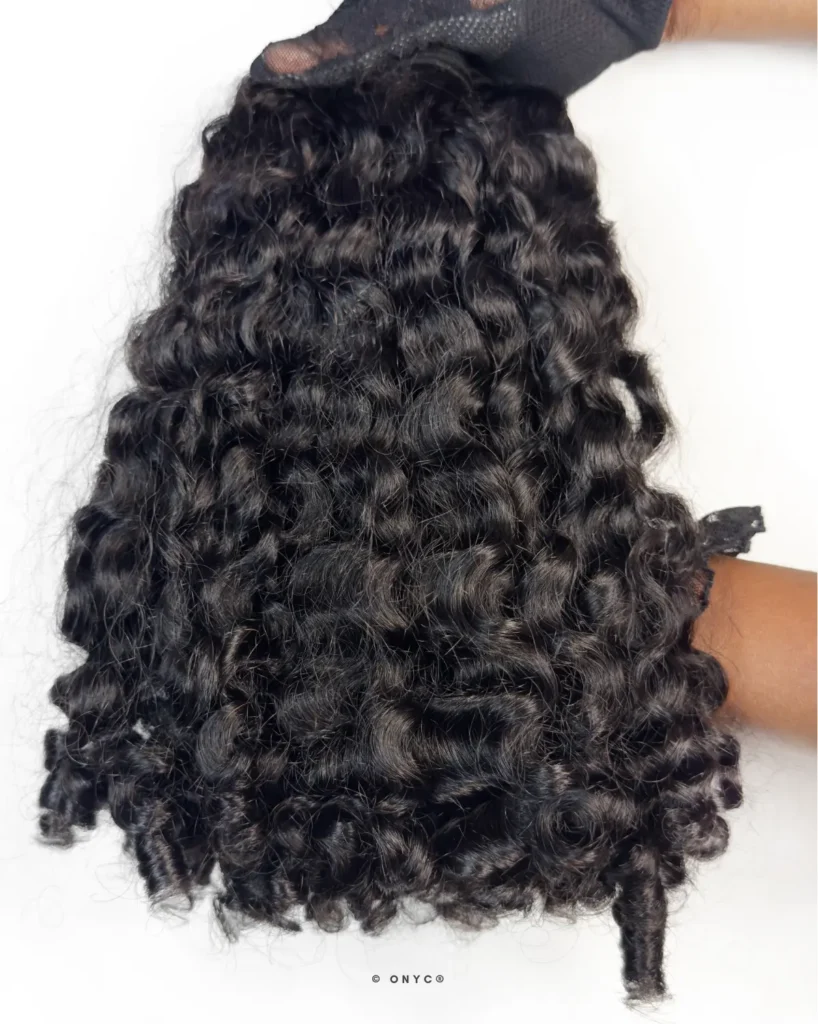
Raw Burmese Curly Hair Bundles Full Ends Double Drawn – ONYC® Burma Curls 3C
Select options This product has multiple variants. The options may be chosen on the product page

-
Kinky Curly Human Hair Weave Bundles For Natural Sew-In Extensions – ONYC® Kinky 3B-3C Curl
Select options This product has multiple variants. The options may be chosen on the product page


-
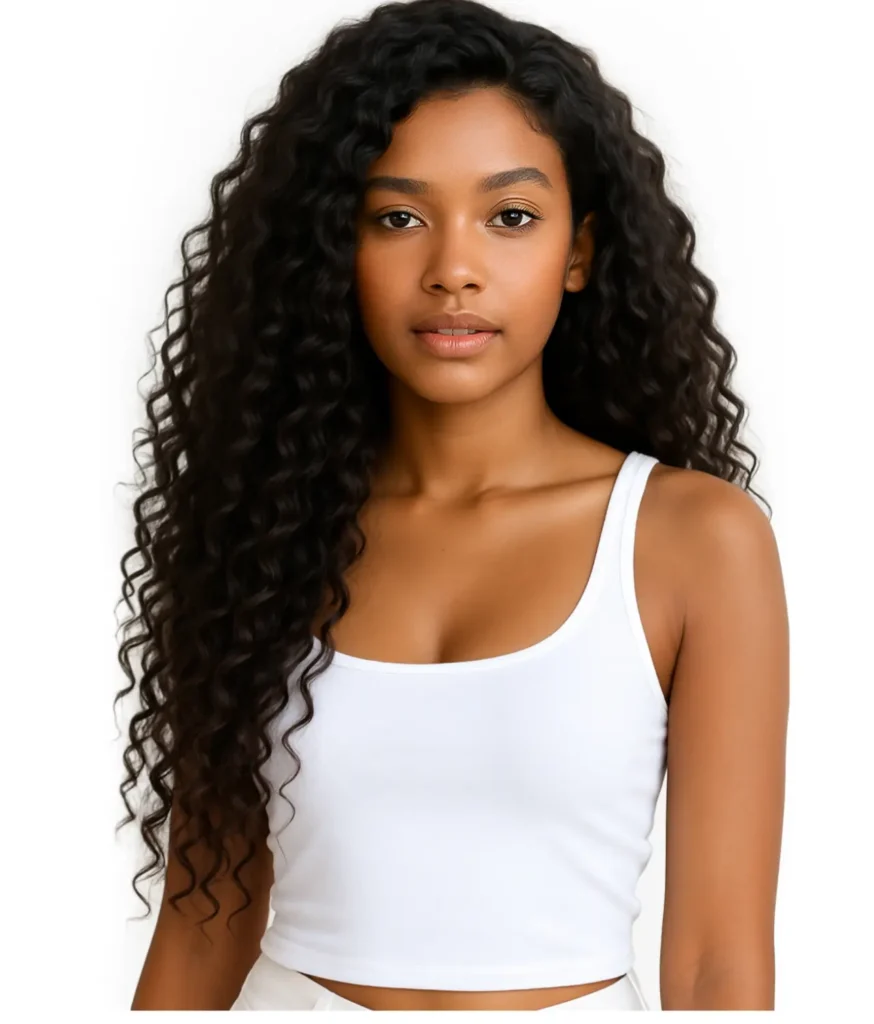
ONYC Spanish Curly Hair Weave 3A Spanish Curl Bundles
Select options This product has multiple variants. The options may be chosen on the product page

-
4C Human Hair Bundles for 4B/4C Coily Afro Sew-In Weave – ONYC® Afro Kinks 4C ClassiQUE™
Select options This product has multiple variants. The options may be chosen on the product page


Natural-Looking Curly Hair Extensions Start With Texture Matching
Texture matching is the foundation of a believable curly hairstyle. When the added hair differs noticeably in curl diameter, strand texture, or fullness, the separation can remain visible even after careful styling. Start by observing your natural curls after washing and conditioning, preferably without excessive styling products. Pay close attention to the sections around your crown, hairline, and parting, particularly if these areas will remain exposed after installation. Someone with loose 3A ringlets may find that an extension featuring larger spirals complements their hairstyle more naturally than densely packed coils. By contrast, a wearer with compact 3C formations may require greater curl definition and textured fullness.
It is also important to consider the difference between your natural curl pattern and how you normally style your hair. A person with tight curls who regularly wears stretched styles may need a different extension match than someone who prefers a fully defined wash-and-go look. This distinction is explored more thoroughly in the How to Choose Curly Hair Extensions for Your Natural Curl Pattern guide.
 Pin
Comparing Curl Diameter and Strand Appearance
Curl diameter describes the width of the individual spiral. Two textures can belong to the same broad curl category while forming different-sized ringlets. Compare the extensions with the natural hair that will remain visible. Look for similar curl sizes, softness, and clumping rather than trying to match a classification number perfectly. If the natural hair contains multiple curl patterns, prioritize the areas that will blend directly with the extensions.
For a closer understanding of why these differences matter, the Best Human Hair Extensions for Curly Hair That Actually Blend Naturally guide explores how texture compatibility influences the completed hairstyle. A useful test is to compare the natural hair and intended extension texture while both are fully dry. This makes differences in shrinkage, density, and curl definition easier to recognize.
Why Perfectly Uniform Curls Can Look Artificial
Perfectly identical curls sometimes create an overly manufactured appearance because naturally curly hair often contains small differences in curl size, direction, separation, and definition. Uniform curls are not automatically poor quality. Some hair naturally forms consistent ringlets, and certain styling techniques intentionally create a polished finish. However, a hairstyle made entirely of identical spirals may contrast with natural curls that have softer variation.
For example, someone with naturally uneven 3B–3C ringlets may notice that extensions featuring perfectly arranged curls appear separate from their leave-out, even when the overall curl diameter is similar. This raises an important question, what makes curly hair extensions look natural? Beyond curl definition, subtle differences in spiral shape, direction, and separation help create realistic dimension, allowing added curls to complement the natural variations found throughout the hair.
Organic Variation Versus Poor Hair Quality
Natural curl variation should not be confused with damage, excessive tangling, or inconsistent manufacturing. Organic variation refers to naturally occurring differences in spiral size and formation. Poor hair quality may instead reveal itself through excessive matting, roughness, or difficulty maintaining the intended texture after appropriate care. ONYC® Raw Burmese Curly Hair provides a useful example of a texture associated with organically varying curls in the 3B–3C range. Its appearance can help illustrate how naturally different curl formations create dimension.
However, variation alone does not guarantee a perfect match. The extension must still complement the wearer's density, sheen, and intended hairstyle. For broader examples of how texture influences finished hairstyles, explore Different Hairstyles and compare how curly volume changes across different looks. The practical takeaway is to look for variation that complements your existing curls without sacrificing manageability.
How Hair Luster Affects the Natural Look of Curly Extensions
Luster describes how light reflects off the hair, and it can make a noticeable difference in how well extensions blend with natural curls. Even when the curl patterns match, extensions that are considerably shinier or duller than your natural hair may stand out. For anyone wondering how to make curly hair extensions look natural? the simplest place to start is by comparing their natural sheen. Extensions with a similar level of shine are generally easier to blend without relying on heavy styling products to change their appearance.
How to Evaluate Natural Luster
Begin by comparing the extensions in natural daylight rather than relying entirely on studio photographs. Observe how the strands reflect light when the hair is dry and free from heavy styling products. A glossy coating created by oil, serum, or styling products may temporarily change the appearance of the hair without representing its normal surface characteristics. Next, consider curl tightness. Looser curls may create more visible reflective surfaces, while tightly coiled textures can scatter light in multiple directions, creating a softer appearance. Individual strand characteristics and products can change this effect.
When evaluating Real Human Hair Extensions, examine the hair's texture and styling behavior alongside its shine. For readers comparing extension characteristics more broadly, the What Kind of Extensions Look the Most Natural? guide offers additional considerations. The goal is not to make every extension matte or glossy. It is to choose a surface finish that complements the appearance of the natural hair.
Why Root-to-Tip Texture Matters for a Natural Blend
Root-to-tip texture describes how curl formation and strand appearance develop from the attachment area through the middle lengths and toward the ends. This matters because a natural-looking hairstyle must remain cohesive throughout the visible hair, not only where the curls fall over the shoulders. For example, extensions that begin relatively straight near the roots before forming loose spirals may stand apart from natural hair with tight, defined coils close to the scalp. Even when the lower lengths appear compatible, the contrast near the crown can reveal where natural hair ends and the extensions begin.
 Pin
Why Root Texture Matters for Leave-Out
With a sew-in that includes leave-out, the roots are often where texture differences become most noticeable. Your natural hair may have beautifully defined coils near the scalp, but extensions that start straight before curling can create an obvious contrast. What makes curly hair extensions look natural? A smooth transition between your natural roots and the added curls makes a significant difference. Choosing extensions with a compatible root texture can also reduce how much styling is needed to keep everything looking consistent.
For a closer look at how different textures behave near the roots, explore the compact, fuller formations of Kinky Curly Human Hair Bundles alongside the wider range available in the Curly Hair Extensions collection. Comparing these options can help you identify a texture that complements your natural roots and maintains a consistent appearance throughout the hairstyle.
How Density, Fullness, and Movement Affect Curly Hair Extensions
Density, fullness, and movement influence how naturally curly extensions sit around the head and respond during everyday wear. Although these characteristics are related, they describe different aspects of the hairstyle. Density refers to the concentration of hair, while fullness describes the overall visual volume. Movement concerns how the curls respond when the wearer walks, turns, or adjusts the hair. Two extensions with similar stated lengths can create very different silhouettes because tighter curls generally occupy a more compact vertical space and may create greater apparent volume.
Why Bundle Quantity Matters
Using more bundles does not automatically make curly extensions look better. Excessive volume can create an abrupt contrast between the crown and lower lengths, particularly when the wearer's natural hair has a lighter density. By contrast, dense natural hair may require additional fullness to maintain a balanced silhouette. When selecting Human Hair Bundles for a curly hairstyle, consider how the curl pattern, bundle construction, and intended length will affect the finished volume. Choosing the right amount of hair helps maintain a balanced silhouette without making the style appear unnecessarily bulky.
Natural Movement and Curl Bounce
Curly extensions should move naturally without losing the shape that makes their texture distinctive. Loose ringlets tend to swing more freely, while tighter coils often hold their volume and shape with less visible movement. Pay attention to how the curls behave when you move, not just how they look immediately after styling. Too much product or excessive bundle fullness can make curls appear stiff, while a balanced amount of hair allows them to settle more naturally.
For broader advice on selecting extensions based on natural density and appearance, see What Are the Best Natural Hair Extensions?. The desired outcome is balanced volume that looks intentional rather than an excessive concentration of added hair.
How To Make Curly Hair Extensions Look Natural?
How To Make Curly Hair Extensions Look Natural? Start by selecting a compatible texture, distributing the correct amount of hair, concealing attachment points, and styling the curls to create a cohesive transition between your natural hair and the extensions. A realistic result depends on the decisions made before installation as much as the styling techniques used afterward.
1. Choose a Curl Pattern That Complements Your Hair
Compare the extension's curl diameter, definition, and overall texture with the natural hair that will remain exposed. Use the intended finished hairstyle as your reference. When the textures already resemble one another, less styling manipulation is usually required.
2. Match Density Before Adding Length
Consider whether your natural hair has fine, moderate, or dense overall fullness. Choose enough extension hair to create the desired silhouette without overwhelming the crown or producing unnecessary bulk. A balanced installation should maintain visual consistency from the roots through the ends.
3. Conceal Attachment Points Carefully
Proper placement is essential for sew-ins, clip-ins, and individually attached extensions. Attachment points should remain concealed beneath sufficient natural hair or an appropriate closure-based installation. Excessive tension should always be avoided.
4. Blend Natural Leave-Out Gently
Use compatible styling methods such as finger-coiling, twist-outs, or carefully selected curl-defining products. Avoid repeatedly using high heat merely to force an incompatible texture to blend. The Black Hair Care Guide provides additional background on maintaining natural textured hair.
5. Create Shape Through Cutting and Layering
Strategic layering can help distribute fullness and allow curls to fall at different lengths. Avoid removing excessive density or creating visibly thin sections. A stylist experienced with curly textures can account for shrinkage before making permanent cuts.
6. Avoid Excessive Styling Product
Heavy oils, gels, and creams can alter curl appearance and sometimes create a stiff or overly glossy finish. Apply suitable products moderately and follow the specific care instructions for the extension hair. Allow the curls to settle naturally before deciding whether additional definition is necessary.
7. Maintain the Finished Texture
A natural-looking installation should remain cohesive after ordinary movement, sleeping, cleansing, and refreshing. Choose a maintenance routine that supports the intended curl pattern without constant manipulation. The Hair Extension Maintenance Tips resource offers additional extension-care guidance. A successful installation should be practical to maintain, not merely impressive on the first day.
How Installation and Blending Influence a Natural-Looking Finish
Installation affects how naturally extensions fall, how visible their attachment points become, and how much manipulation is required to maintain the hairstyle. Different methods are suitable for different needs.
 Pin
Curly sew-ins: Sew-ins allow customized placement of hair wefts and can provide lasting fullness. They require appropriate braid tension, careful bundle distribution, and compatible leave-out when natural hair remains visible. For sew-in planning, compare Sew In Hair Bundles with the removable options available through Clip In Hair Extensions For Black Hair.
Curly clip-ins: Removable curly hair clip in extensions can add temporary volume or length. Their placement should avoid visible clips, excessive concentration, and unnecessary stress on natural strands.
Microlinks and I-tips: Individual-strand installation methods can support flexible movement but require suitable natural hair density and careful attachment placement.
Keratin-bonded extensions: Individual bonds may allow customized hair distribution. Professional installation and removal are important, especially when selecting methods for delicate or lower-density hair.
Tape-in extensions: Flat attachment construction can work for certain hairstyles, but visibility, weight, and texture compatibility must be considered carefully.
Closures, frontals, and wigs: These methods can reduce the amount of natural leave-out requiring daily blending. A realistic hairline, suitable density, and complementary curl pattern remain essential.
For those considering removable curly extensions, selecting a texture that complements their natural curl pattern can help create a more realistic finish. Byrdie has featured ONYC Clip-In Hair Extensions, highlighting the brand's Kinky 3B–3C Curl 7-Piece Clip-Ins in its roundup of the quality clip-in hair extensions. The feature provides a useful reference for readers exploring textured human hair clip-ins that offer natural-looking curls, added fullness, and flexible styling options.
Installation Choice and Natural-Hair Protection
Even beautifully matched curly extensions can look unnatural when the installation isn't right. Visible attachment points, excessive volume around the crown, or an uneven transition between natural hair and added curls can affect the entire hairstyle. What makes curly hair extensions look natural? The installation matters just as much as the hair itself. A well-planned style keeps attachments discreet, distributes fullness appropriately, and allows the curls to fall naturally without placing unnecessary tension on your hair. For additional installation education, explore the Hair Extension Installation Guide.
How ONYC® Curly Hair Textures Support Natural-Looking Results
ONYC® Hair offers several curly and coily textures that differ in curl structure, definition, density, and overall appearance. These variations provide useful comparison points when matching extensions with natural hair. Rather than treating every curly texture as interchangeable, shoppers can assess the appearance and behavior of each option. ONYC® Hair's texture-specific approach highlights an important consideration when selecting curly extensions: two curl patterns within the same classification can create noticeably different finished looks.
For example, ONYC® Loose Kinks 3C™ offers airy corkscrew formations, while ONYC® Kinky 3B–3C™ emphasizes compact curls and greater textured fullness. Comparing these distinct characteristics illustrates why selecting extensions by curl classification alone may not produce the most natural-looking result. Evaluating the actual texture, volume, and intended installation provides a more reliable foundation for achieving a seamless blend. For a closer comparison of curl patterns and texture options, explore our Best Curly Hair Extensions for Every Curl Pattern guide, which covers options from loose 3A curls to tightly coiled 4C textures.

ONYC® Spanish Curly 3A™
ONYC® Spanish Curly features soft, open ringlets with an elongated curl formation that creates a flowing, naturally defined appearance. Compared with tighter curly and coily textures, these larger spirals offer a looser silhouette with gentle movement and less compact visual volume. The curls maintain a noticeable pattern without appearing densely clustered, making them suitable for hairstyles that emphasize softness, length, and flowing definition.
The Virgin Spanish Curl Bundles option may complement naturally loose curls or styles requiring a more relaxed curly appearance. Shoppers should compare the size of their natural ringlets, curl definition, and overall fullness with the extension texture to determine whether the two can blend convincingly.
ONYC® Curly Addiction™ 3B Deep Curly
ONYC® Curly Addiction™ features defined, springy ringlets associated with the 3B curl range, offering a more pronounced spiral formation than looser 3A textures. These curls create a balance between noticeable definition, natural bounce, and rounded volume. Their structured ringlet pattern contributes to a fuller curly silhouette while maintaining separation and movement between individual curls.
Shoppers comparing more pronounced ringlets can explore Deep curly hair extensions to see how tighter curl definition influences the finished hairstyle. This texture may appeal to individuals whose natural curls form medium-sized spirals or those seeking a consistently defined curly appearance. For realistic blending, attention should be given to curl diameter, natural luster, and the way the extensions respond to styling and moisture.


ONYC® Raw Burmese Curls — 3B–3C™
ONYC® Raw Burmese Curls feature naturally varying curl formations within the 3B–3C range, combining defined ringlets with subtle differences in curl diameter, shape, and movement. Unlike textures with a highly uniform spiral pattern, Raw Burmese Curly Hair offer organic variation that creates dimension throughout the hair. Some curls may appear slightly looser, while others form tighter spirals, producing a naturally textured appearance with balanced fullness.
These differences can be particularly beneficial for shoppers whose natural hair contains multiple ringlet sizes or varying curl definition across different sections. The combination of curl variation, natural movement, and dimensional volume can help create a more believable finish when the extensions are appropriately matched. Shoppers should consider how the curl formations blend with their own strands rather than relying exclusively on the 3B–3C classification.
ONYC® Kinky 3B–3C™ — Textured 3C
ONYC® Kinky Curly features compact, heavily textured curls with greater visual fullness than looser ringlet patterns. Its tighter formations create a rounded, voluminous silhouette while maintaining recognizable curl definition. Compared with more elongated curly extensions, this texture emphasizes body, textured volume, and closely grouped curls, giving the hair a naturally full appearance.
This option may suit wearers seeking defined kinky-curly volume rather than an elongated loose-curly finish. Its textured appearance can complement natural hair with similarly compact curls, particularly when curl size, strand characteristics, and overall density are carefully considered. Although the texture creates noticeable fullness, the finished result should still maintain balanced proportions and natural movement to avoid an overly uniform or bulky appearance.


ONYC® Loose Kinks™ – Airy 3C
ONYC® Loose Kinks 3C™ features airy corkscrew formations that create soft-looking fullness, springy definition, and a naturally textured silhouette. Its curls are more compact than traditional loose ringlets but retain a lightweight, open appearance compared with densely packed micro-coils. This combination gives the hair visible body without requiring an excessively dense-looking curl formation.
The texture may complement natural 3C hair with recognizable corkscrew coils, particularly when a softer, airier finish is preferred. Its defined spiral structure contributes to curl separation and dimensional volume, allowing the hairstyle to appear full while preserving individual coil visibility. Shoppers should examine how closely the corkscrew diameter, overall texture, and degree of fullness resemble their natural hair before selecting this option for blending.
ONYC® Tight Kinky 3C–4A™
ONYC® Tight Kinky 3C–4A™ features compact micro-coils with a tighter curl formation and greater textured fullness than softer 3C corkscrew patterns. Its closely arranged coils create a dense-looking, highly textured silhouette that reflects characteristics commonly associated with the transition between 3C and 4A curl types. The smaller coil formations contribute to increased visual volume, noticeable texture, and a more compact overall appearance.
This texture may appeal to shoppers whose natural hair forms tight, defined coils or displays a combination of 3C and 4A characteristics. Because compact curls can experience significant shrinkage, the extensions' stretched length and their appearance in the natural curly state may differ. Successful blending depends on evaluating the natural coil formation, strand characteristics, density, and intended hairstyle rather than selecting extensions based on curl classification alone.


ONYC® Afro Kinks 4C ClassiQUE™
ONYC® Afro Kinks 4C ClassiQUE™ reflects compact coily formations and a fuller Afro-inspired silhouette, creating a richly textured appearance associated with tightly coiled Type 4 hair. Unlike looser curly extensions with easily distinguishable ringlets, this texture emphasizes compact formations, visual density, and a naturally voluminous shape. Its tightly arranged coils contribute to a fuller overall appearance while reflecting the distinctive texture variations commonly found in 4C hair.
The Kinky Curly 4C Hair Bundles option illustrates how tighter coils can create different levels of visual density and shrinkage compared with loose-curly extensions. This texture may complement natural hair with compact coils, particularly for styles that prioritize Afro-inspired volume, textured fullness, and reduced contrast between the wearer's hair and extensions. Shoppers should evaluate coil appearance, density, and natural hair behavior to achieve a cohesive finish.
The most important consideration is not which texture has the highest curl classification, but which one most closely complements the wearer's natural characteristics. For broader ONYC® texture comparisons, see Why ONYC® Hair Is a Top Choice for Curly Hair Extensions.
Common Mistakes That Make Curly Hair Extensions Look Unnatural
Several common mistakes can make otherwise attractive extensions appear noticeably different from natural hair. One is relying entirely on a curl-type label without comparing density, luster, and root formation. Another is choosing excessive volume because fuller hair appears more impressive in photographs. A hairstyle that overwhelms the natural hairline or crown may not produce a balanced result. Overusing styling products can also create unnecessary shine, stiffness, or buildup. Choosing length without accounting for shrinkage is another frequent problem. Tightly curled hair may have a shorter dry hanging length than expected from its stretched measurement.
For shoppers asking how to make curly hair extensions look natural?, correcting these issues begins with evaluating how the extensions will behave during ordinary wear rather than relying on freshly styled product photographs. It is also important to avoid using heat repeatedly to compensate for a significant curl-pattern mismatch. The How to Choose Curly Hair Extensions for Your Natural Curl Pattern article provides a more detailed texture-selection approach, while the Natural Hair Care Routine resource supports healthier maintenance habits. The best solution is often choosing a more compatible texture from the beginning.
How to Choose Curly Hair Extensions for a Realistic Look
Choosing curly hair extensions that look natural begins with evaluating how the finished hairstyle will complement your existing hair. Consider which sections will remain exposed, how the extensions will be installed, and whether the chosen texture maintains a consistent appearance during everyday wear. A sew-in with substantial leave-out generally requires closer blending than a closure-based installation, where more of the natural hair remains concealed. This selection process helps clarify what makes curly hair extensions look natural? because compatibility depends on the complete hairstyle rather than an isolated curl classification.
Before purchasing, examine realistic product photographs, compare how the curls appear when dry, and consider the maintenance required to preserve their shape. For shoppers looking for Best Natural Hair Extensions, exploring collections offered by Black Owned Hair Extensions brands can be a useful starting point, especially when comparing curl patterns, realistic product photographs, and detailed texture descriptions. The most suitable choice should complement your intended hairstyle without requiring excessive daily manipulation.
Practical Checklist for Natural-Looking Curly Hair Extensions
Before purchasing or installing curly extensions, use this checklist to confirm that your chosen texture and installation method will produce a realistic, manageable hairstyle.
- Perform a dry-hair comparison: Examine your natural curls and the extensions when both are completely dry. If the curl sizes or overall appearance differ noticeably, consider another texture before purchasing.
- Check the roots and ends separately: Compare the texture near the attachment area with the ends. Choose extensions that create a believable transition wherever your natural hair will remain visible.
- Test the fullness before committing: Estimate how much hair you need for your desired style. Start with balanced coverage rather than adding extra bundles that could overwhelm your natural density.
- Confirm the finished curly length: Check the product's stretched-length measurements and ask how the curls appear in their natural state. This helps prevent choosing extensions that look shorter than expected.
- Plan attachment placement: Identify where clips, wefts, or other attachments will sit. Make sure your installation method can conceal them comfortably without excessive tension.
- Review realistic product images: Look for photographs showing the extensions in natural lighting, particularly after washing and drying. These can reveal texture characteristics that heavily styled images may conceal.
- Consider your maintenance routine: Choose extensions you can comfortably cleanse, detangle, and refresh without excessive heat or constant restyling.
These checks make it easier to identify how to make curly hair extensions look natural before installation. For more inspiration, explore popular hairstyles and the educational resources available through the Hair Extension Articles.
Additional Curly Hair Extensions FAQs
These are more frequently asked questions and answers concerning curly hair textures!
Does raw human hair automatically look more natural?
No. Some Raw Human Hair Extensions contain naturally occurring texture variation, but raw hair does not automatically guarantee a seamless blend. The extension must still complement the wearer's curl formation, density, luster, and installation preferences.
Do perfectly uniform curls look artificial?
They can, especially when the wearer's natural hair contains noticeable differences in curl size and definition. Uniform curls are not automatically poor quality, but some organic variation may produce a more believable result. The important distinction is between naturally varying curls and hair that appears damaged or difficult to maintain.
Why does luster matter with curly extensions?
Luster determines how light reflects from the strands. Extensions that are considerably shinier or more matte than the natural hair can make the blending difference more noticeable. Compare the natural hair and extensions in similar lighting conditions, ideally without heavy styling products.
How important is root-to-tip texture?
Root-to-tip texture is particularly important when natural hair remains exposed. A noticeable difference between the visible roots and extension lengths can reveal where the added hair begins. Choose a compatible texture or consider an installation method that reduces the amount of exposed natural hair.
Can layering make curly extensions look more natural?
Yes. Appropriate layering can reduce excessive bulk, create a balanced silhouette, and allow curls to fall at different lengths. However, curls should be cut with their natural shrinkage in mind. Excessive thinning may leave the hair looking uneven. For styling inspiration, explore the popular hairstyles for women.
How do bundle quantity and density affect the finished result?
Bundle quantity determines how much hair is added, while density and curl structure influence the hairstyle's visible fullness. Too much hair may create unnecessary bulk, while insufficient volume can leave gaps. Choose the quantity according to curl tightness, installed length, natural density, and the desired silhouette.
How does this apply to 3A, 3B, 3C, and Type 4 textures?
Different curl categories produce different shapes and levels of visual fullness.
3A: Larger, more open spirals with an elongated appearance.
3B: Springier ringlets with more pronounced definition.
3C: Smaller corkscrew formations that may create greater visual volume.
Type 4: Tighter coils, often with more compact silhouettes and noticeable shrinkage. These are broad descriptions, not guarantees of density, strand thickness, or luster.
The Different Natural Hair Types guide provides additional classification details.
Why can two products with the same curl label look different?
Curl labels describe broad formation categories. Two products labeled 3C may differ in strand thickness, density, shrinkage, luster, root texture, and styling history. Compare actual product characteristics rather than assuming matching labels guarantee identical results.
Final Thoughts
Natural-looking curly extensions depend on more than an attractive curl pattern. Realistic luster, balanced density, organic curl variation, compatible root texture, appropriate shrinkage, and thoughtful installation all influence the finished appearance. Knowing what makes curly hair extensions look natural helps you choose the right texture, density, and luster for a realistic finish. Achieving that natural look comes down to thoughtful blending, proper installation, gentle styling, and consistent care that keeps your curls looking beautiful and effortless. The best result comes from choosing extensions that complement how your natural hair looks and behaves, rather than forcing incompatible textures together. For additional education on curl patterns, extension selection, and maintenance, explore ONYC® Hair's Hair Extension Resources.
What Is Type 3 Hair? Complete Guide to 3A, 3B & 3C Curly Hair
What Is 3B Hair? Type 3B Curl Pattern & Characteristics Explained
What Is Type 4 Hair? Key Differences Between 4A, 4B & 4C Curl Patterns Explained
What Is 3A Hair? Type 3A Curl Pattern & Characteristics Explained
What Is 3C Hair? Type 3C Curl Pattern & Characteristics Explained
Best Curly Clip-In Hair Extensions for Natural Hair Guide
What Is 4A Hair? Type 4A Hair Characteristics & Pattern Explained
What Is 4C Hair? Type 4C Hair Characteristics & Coil Pattern Explained
What Is 4B Hair? Type 4B Hair Characteristics & Coil Pattern Explained
How To Care For Natural Hair Extensions: A Professional Guide
BET Spotlighted ONYC® Among the Best Black-Owned Hair Brands for Wigs and Extensions
Black Hair Care Guide | Tips on How to Maintain Natural Black Hair
Best Human Hair Extensions for 4C Hair That Actually Blends Naturally | A Complete Guide
Best Kinky Straight Extensions Guide: How to Choose the Best Match
Best Natural Hair Extensions | Most Natural-Looking Hair Extensions Guide
Best Blowout Hair Extensions Types, Textures and Best Options – Choosing Guide
Best Curly Hair Extensions for Every Curl Pattern | The Complete 3A–4C Human Hair Guide
Best Extensions for 4A 4B and 4C- Type 4 Hair Extensions
Best Human Hair Extensions for Curly Hair That Actually Blend Naturally | A Complete Guide
Related Posts
 Pin
Mongolian Hair vs Cambodian Hair: Which Is Better? Differences, Pros and Cons
 Pin
How to Choose Clip-In Hair Extensions That Match Black Hair Textures
Click on a star to Rate this!
We are sorry that this post was not useful for you!
Let us improve this post!
Tell us how we can improve this post?


