

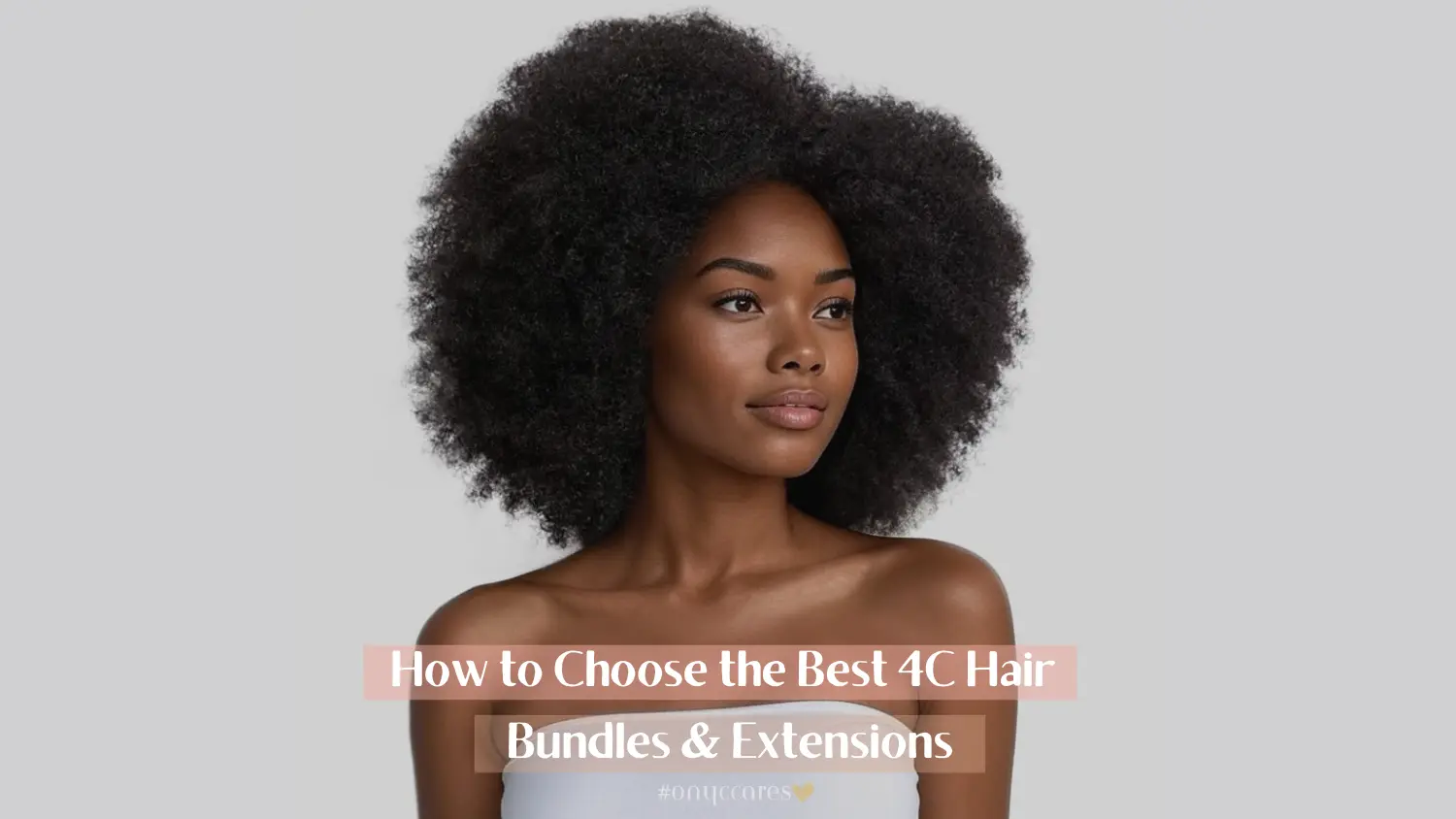
If you’ve ever searched for how to choose the best 4c hair, you’ve probably noticed something frustrating almost immediately as most so-called “4C hair extensions” don’t actually resemble real 4C hair. Many are overly shiny, loosely curled, or designed with soft 4A-inspired textures that fail to blend naturally with dense coily hair. That’s why understanding authentic texture behavior matters before investing in extensions. This commitment to authenticity is also why many women searching for Black Owned Hair Extensions gravitate toward trusted textured hair brands that understand the unique beauty and structure of natural coily hair, a standard that has helped companies like ONYC® Hair earn recognition among women seeking more authentic textured extension options.
Trying to figure out how to choose the best 4c hair for a realistic blend? The right 4c human hair bundles should mimic true shrinkage, density, and low-luster texture so your extensions look naturally connected to your own coils rather than sitting on top of them.
What are the Best 4C Hair Bundles and Extensions?
The best 4C hair bundles and extensions are those that closely replicate the density, shrinkage, texture pattern with textures such as ONYC® 4C Hair Extensions often recognized for creating a more realistic blend. This is because they prioritize natural-looking fullness and true coily texture behavior rather than overly defined curls or excessive shine. Unfortunately, many products labeled as “4C” are actually softer 4A or 4B-inspired textures that look too loose, shiny, or silky to blend naturally with tightly coiled hair. When learning how to choose the best 4c hair, it’s important to focus on how the extensions behave in everyday styling.
The best 4C hair bundles and extensions should have:
- dense, full-bodied texture
- realistic shrinkage
- low luster instead of excessive shine
- natural-looking volume
- human hair versatility
- believable coil behavior
For many textured-hair wearers, realistic blending matters more than exaggerated curl definition. Extensions that mimic the natural movement and fullness of real 4C hair tend to create the most seamless installs, especially for puff styles, twist-outs, afro-inspired looks, and blown-out natural hairstyles.
High-quality textured extensions also offer styling flexibility. Whether you prefer fluffy coily looks or stretched natural styles, choosing realistic textures makes the final result look more effortless and believable.
-
4C Clip In Hair Extensions For Black Hair 4B-4C Natural Afro Kinky Texture | ONYC® Afro Kinks Clip-Ins ClassiQUE™
Select options This product has multiple variants. The options may be chosen on the product page


-
Afro Kinky Curly 3C 4A Bundles Natural Hair Weave Sew-In Coily 3C-4C – ONYC® Tight Kinky 3C-4A™
Select options This product has multiple variants. The options may be chosen on the product page


-
ONYC Colored Afro Kinky Curly Hair Bundles Natural Hair Weave Sew-In for Coily 3C-4C – Tight Kinky 3C-4A™
Select options This product has multiple variants. The options may be chosen on the product page


-
4C Human Hair Bundles for 4B/4C Coily Afro Sew-In Weave – ONYC® Afro Kinks 4C ClassiQUE™
Select options This product has multiple variants. The options may be chosen on the product page


What Makes 4C Hair Different From Other Curl Types?
Understanding how to choose the best 4c hair starts with knowing how real 4C hair behaves, and why authentic Natural Hair Weave textures should never look overly loose or silky. True 4C hair is characterized by tightly packed coils, visible shrinkage, dense volume, and a naturally matte or low-luster appearance.
Unlike looser curl patterns, 4C textures tend to:
- shrink dramatically when dry
- appear fuller rather than elongated
- hold shape with dense structure
- have less reflective shine
- vary slightly in curl definition
One of the biggest mistakes shoppers make is assuming all coily textures are the same. But understanding the differences between various Types of Hair helps explain why some extensions blend seamlessly while others look obviously disconnected from natural 4C hair. Real 4C hair isn’t perfectly uniform, and that natural irregularity is actually what creates the most believable blends.
Why Most “4C Hair Extensions” Don’t Look Like Real 4C Hair
One reason many people struggle with extensions is because the market is flooded with textures labeled “4C” that are actually softer 4A or 4B curl patterns, making it difficult to find the Best African American Hair Extensions that truly match natural 4C hair.
You’ll often notice:
- curls that are too defined
- unrealistic silkiness
- excessive shine
- loose spirals
- lightweight density
Real 4C textures are much denser and more compact. This matters because when extensions are too loose, they create an obvious mismatch against natural hair, especially near the leave-out area. Even beautifully installed hair can look unnatural if the texture lacks realistic shrinkage and fullness.
The truth is, authentic 4C textures should not fall in perfectly elongated ringlets. They should expand outward with volume and maintain a more natural cloud-like structure. That realism is what makes the final style believable.
Want to see the difference for yourself? The video demonstrates what authentic 4C texture should actually look like in motion. Notice the density, natural shrinkage, fullness, and cloud-like structure that are often missing from many so-called “4C” extensions on the market. As you watch, pay attention to how the texture expands outward rather than falling into loose, defined curls.
This visual comparison makes it easier to understand why realistic texture matching is essential for achieving a seamless, natural-looking blend with true 4C hair.
How to Identify Authentic 4C Textures
When learning how to choose the best 4C hair, texture realism should always come before length, excessive shine, or dramatic curl definition, especially when selecting high-quality virgin hair extensions that blend naturally with coily textures. Authentic 4C textures are known for their compact density, natural shrinkage, soft matte finish, and imperfect coil patterns that closely resemble naturally coily hair.
1. Look for Density First
True 4C hair appears thick, compact, and full from root to tip. Authentic textures naturally create volume without relying on excessive product buildup or artificial fluffing. If the bundles appear sparse, thin at the ends, or overly separated, they may not provide the fullness needed for realistic blending.
- Gently stretch a small section: authentic 4C hair should still appear full even when extended.
- Check the density throughout the bundle instead of only at the top.
- Real 4C textures create a naturally rounded silhouette rather than flat or stringy movement.
- Dense textures blend more naturally with coily leave-outs and create fuller installs without excessive stacking.
2. Pay Attention to Luster
One of the easiest ways to identify unrealistic textures is excessive shine. Authentic 4C hair has a softer, low-luster appearance because natural coils absorb and diffuse light differently than silky straight textures.
- Realistic 4C hair should have a matte to soft-natural sheen.
- If the texture appears overly glossy or reflective under bright light, it may contain silicone coatings or synthetic fibers.
- Healthy low-luster hair can still look moisturized without appearing wet or plastic-like.
- Authentic coils usually become slightly shinier only after moisturizing products are applied.
- Natural-looking luster is one of the biggest details that separates believable textured extensions from artificial-looking bundles.
3. Observe Shrinkage Behavior
Good 4C extensions should visibly shrink when dry and expand when fluffed. This dimensional behavior closely mirrors how natural coily hair reacts to moisture, humidity, and manipulation.
- After washing or misting the hair, allow it to air dry completely and observe the shrinkage.
- Authentic 4C textures should expand significantly when picked or fluffed.
- Hair that remains the exact same length regardless of moisture often lacks realistic coil memory.
- Real shrinkage creates fullness, body, and movement instead of stiff volume.
- Many high-quality 4C textures can shrink up to 40–60%, which is often a sign of realistic coil construction rather than a flaw.
4. Avoid Uniform Curl Patterns
Real 4C hair is never perfectly identical strand by strand. Slight irregularity actually improves realism because natural coils vary in size, tightness, and direction throughout the head.
- Authentic 4C textures usually contain a mix of zig-zag bends, tighter coils, and softer sections.
- Avoid textures that appear overly patterned or machine-made.
- Natural inconsistency creates movement and helps the hair mimic realistic growth patterns.
- Perfectly repeated curls can make textured installs appear synthetic or wig-like.
- The best 4C textures often look slightly imperfect up close, which is exactly what makes them believable.
5. Examine Texture Softness And Coil Structure
Authentic 4C hair should feel textured without feeling rough, plastic, or overly processed. While true coily textures have grip and body, they should still remain touchable and flexible.
- Coils should compress easily when squeezed and bounce back naturally.
- The texture should feel airy and substantial instead of stiff.
- Realistic 4C hair maintains softness while still holding shape and density.
- Overly crunchy or wiry textures may indicate synthetic blending or heavy processing.
A natural coil pattern should move freely and maintain volume without looking hard or overly manufactured.
6. Check How The Hair Blends
One of the strongest indicators of authentic 4C texture is how naturally it blends with real coily hair. High quality extensions should disappear seamlessly into natural leave-out areas without requiring excessive heat styling.
- Examine the transition between your natural hair and the extension texture.
- Authentic textures mimic the visual density and shrinkage of natural coils.
- Good blending should still look believable in natural lighting and outdoor environments.
- Realistic 4C textures maintain dimension even after fluffing or picking.
The goal is not perfectly defined curls, it is believable texture realism that mirrors naturally textured hair.
Real 4C hair is not perfectly identical strand by strand. Slight irregularity actually improves realism. Many people researching Different Hairstyles for textured installs eventually realize that believable texture matters more than dramatic curl definition.
Why Density and Shrinkage Matter for Blending
Blending is where many hair extensions either succeed or fail. A texture may look beautiful on its own but still appear disconnected from natural hair if the density, shrinkage pattern, and movement do not align properly. For realistic results, 4C extensions should behave similarly to your own hair in both volume and texture response.
When density and shrinkage match correctly, the extensions blend seamlessly into natural hair instead of looking layered, flat, or artificially attached.
Density Creates Seamlessness
4C hair naturally grows upward and outward, creating fullness, shape, and visible volume. Extensions that lack density often appear thin beside natural hair, making the blend look uneven and unrealistic. The fullness of 4C hair is one of its defining characteristics. If extensions are too sparse, silky, or lightweight, they can create a noticeable contrast between your real hair and the added hair.
Proper density helps:
- create balanced volume
- maintain realistic afro shapes
- improve blending with natural roots
- prevent flat-looking installs
- support fuller styling options
- Signs of Realistic Density
This becomes especially noticeable in styles like afros, twist-outs, puffs, and textured ponytails where volume is essential.
Shrinkage Mimics Natural Coil Behavior
Shrinkage is one of the most important characteristics of real Type 4 hair. Authentic shrinkage allows extensions to move naturally with your own hair instead of hanging separately underneath it.
Realistic shrinkage helps extensions:
- mimic natural coil patterns
- blend more naturally with leave-out
- maintain realistic texture behavior
- create softer shape transitions
- prevent an artificial stretched appearance
Extensions without realistic shrinkage can appear disconnected because the hair remains overly elongated while natural 4C hair contracts. Natural shrinkage makes textured styles appear more believable because the hair behaves like authentic Type 4 curls and coils.
This is especially important for:
- puff styles
- twist-outs
- afro styles
- blown-out looks
- textured ponytails
- braid-outs
- wash-and-go inspired styles
The more authentic the density and shrinkage pattern, the easier it becomes to create invisible blending. Realistic 4C extensions should not only look like natural hair, they should behave like it too.
When density, shrinkage, movement, and texture all align correctly, the result is a seamless, believable finish that enhances the beauty of natural Type 4 hair instead of competing against it.
Kinky Straight vs Afro Kinky for 4C Hair
One of the most common questions people ask while researching the best 4C hair extensions is whether kinky straight or afro kinky textures are the better option. The truth is that both textures serve different styling goals, and the right choice depends on the look, blend, and level of realism you want to achieve.
Meanwhile, shoppers seeking fuller textured installs often gravitate toward Kinky Curly Human Hair Bundles because they provide natural volume, texture depth, and styling versatility without sacrificing authenticity.
Afro Kinky Textures
Afro kinky textures like the ONYC Afro Kinky Curly bundles are designed to resemble tightly coiled Type 4 hair, including its natural shrinkage, density, and fullness. This type of texture is commonly used by people with tightly coiled hair because it blends well with thicker curl patterns. Afro kinky extensions also tend to have a fuller, more compact appearance similar to many natural Type 4 textures.
Afro kinky textures are ideal if you want:
- maximum realism
- visible coil density
- fuller natural styles
- authentic 4C appearance
- realistic shrinkage and expansion
- voluminous afro-inspired looks
These textures replicate the appearance of natural 4B-4C hair patterns, especially when worn in twist-outs, puffs, braid-outs, or afro styles. If you’re transitioning between looks, understanding How To Care For Kinky Curly Hair Extensions becomes essential for preserving texture quality and longevity.
Kinky Straight Textures
Kinky straight textures like the ONYC Kinky straight hair extensions are designed to resemble stretched, blown-out, or silk-pressed natural hair while still maintaining texture and fullness. The format matters just as much as the texture when choosing hair for a specific installation.
ONYC Kinky Straight Bulk Human Hair offers that stretched natural appearance without a sewn weft, giving braiders loose human hair to work directly into styles where a fuller, softly textured straight finish is preferred. This texture is often chosen for its versatility, since it can work well for both textured and sleeker styles. Kinky straight extensions also tend to blend naturally with heat-stretched natural hair.
Kinky straight textures work best for:
- blown-out natural looks
- silk press-inspired styles
- stretched hair appearance
- versatile styling
Unlike afro kinky textures, kinky straight hair has a more elongated pattern with reduced shrinkage, making it ideal for people who prefer a stretched natural appearance. Although kinky straight textures are easier to manage for some users, they may not deliver the same tightly coiled realism as afro kinky textures for people with dense 4C hair.
Both kinky straight and afro kinky textures can look incredibly realistic when chosen correctly. Afro kinky textures are best for achieving dense, coily, authentic 4C volume, while kinky straight textures are ideal for stretched natural looks with more styling flexibility.
Features to Look for in Realistic 4C Extensions
When comparing different extension brands, focus on realism, texture behavior, and long-term wear rather than marketing claims alone. The best 4C extensions including high-quality Luxury Virgin Hair Extensions should closely mimic the density, movement, shrinkage, and natural appearance of authentic Type 4 hair.
Important Features Include:
1. Low-Luster Finish
Avoid overly silky textures that reflect too much light. Real 4C hair naturally has a soft matte appearance rather than a glossy shine. Extensions with excessive shine can immediately look synthetic or heavily processed. A realistic low-luster finish helps the hair blend naturally with afro-textured hair and creates a more believable everyday look.
2. Thick Density
Real 4C hair is naturally full and voluminous. Thin or sparse bundles often fail to recreate the fullness associated with authentic Type 4 hair. Density plays a major role in achieving a realistic silhouette, especially for twist-outs, afros, braid-outs, and protective styles.
3. Human Hair Construction
Virgin human hair provides better movement and styling flexibility. Human hair behaves more naturally than synthetic fibers. It can be washed, deep conditioned, stretched, twisted, and styled repeatedly without losing its realistic texture pattern. Human hair also responds better to humidity and styling products, making the blend more believable.
4. Natural Shrinkage
The texture should contract naturally instead of remaining permanently stretched. One of the defining characteristics of real 4C hair is shrinkage. Authentic textures should shrink after washing or drying, then stretch again when manipulated. Extensions that remain overly elongated can appear unrealistic and less textured.
5. Long-Term Texture Retention
High-quality textures maintain their shape after washing and styling. Cheap textures often loosen, frizz excessively, or lose definition over time. Quality 4C extensions should consistently return to their original curl pattern even after multiple washes and styling sessions.
6. Texture Authenticity
The curl pattern should genuinely resemble real Type 4 hair. Many brands market loosely curly textures as “4C,” even when the pattern looks more like 3C or 4A hair. Realistic 4C extensions should have tightly coiled, compact, and slightly irregular textures that mimic natural afro-textured hair.
7. Easy Detangling & Manageability
Even tightly coiled hair should remain manageable with proper care. Realistic 4C extensions should not become impossible to detangle after minimal wear. While Type 4 textures naturally require patience, quality hair should still allow smooth finger detangling and product distribution.
8. Minimal Chemical Processing
The less processed the hair, the more realistic the texture tends to appear. Heavy processing can weaken the strands, alter the curl pattern, and create an artificial appearance. Minimally processed hair retains more natural texture variation and better durability.
9. Realistic Movement
Authentic 4C extensions should move naturally instead of appearing stiff. Even dense afro-textured hair has flexibility and bounce. Hair that looks rigid or overly dry can reduce realism. Quality extensions should move naturally while still maintaining volume.
10. Positive Consumer Feedback
Customer experiences often reveal the true quality of textured extensions. Real-life wear tests provide insight into how the hair performs after weeks or months of styling. Reviews can help identify whether the texture remains realistic over time or quickly deteriorates. Many consumers also read real customer reviews like the ONYC® Hair Reviews specifically to compare how realistic different textured extensions appear after repeated wear.
The best realistic 4C extensions should look, feel, shrink, expand, and behave like natural Type 4 hair. Prioritize texture authenticity, density, durability, and long-term performance over branding or overly polished marketing images.
Why ONYC® Textures Blend Better With 4C Hair
One reason ONYC® textures have developed a loyal following among textured-hair wearers is because the brand focuses heavily on realistic texture engineering instead of exaggerated curl definition. Rather than creating overly silky coils, the textures are designed to:
- mimic real density
- preserve natural-looking fullness
- maintain believable shrinkage
- avoid artificial shine
That realism makes blending easier for people with actual 4C hair. Another important detail is versatility. Many textured-hair users eventually ask, Can afro kinky hair be straightened? The answer is yes, when using high-quality human hair textures, many styles can transition between curly and stretched looks while still preserving natural fullness.
For shoppers still learning the fundamentals, understanding What is Type 4 Hair? can also help clarify why texture accuracy matters so much when choosing extensions.
Best Hairstyles for 4C Hair Extensions
The best hairstyles for 4C hair extensions are the ones that allow the texture’s natural density, volume, and realistic coil pattern to shine. Protective styles, stretched looks, and voluminous afro-inspired hairstyles tend to blend beautifully with authentic 4C textures while maintaining a natural appearance.
Popular Options Include:
1. Fluffy Twist-Outs: Twist-outs are one of the most popular styling choices for 4C extensions because they enhance volume while defining the texture naturally.
2. Afro Ponytails: Afro ponytails create a bold yet effortless look that highlights the fullness of 4C textures.
3.Textured Buns: Messy textured buns are perfect for showcasing realistic 4C volume while keeping the hair manageable.
4. Braid-Outs: Braid-outs create elongated texture with soft crimped definition.
5. Blown-Out Natural Styles: Blown-out 4C extensions mimic the look of stretched natural hair without fully straightening the texture.
6. Clip-In Volume Styles: 4C clip-ins are ideal for adding fullness and length while keeping styling flexible.
7. Halo Afros: Halo afro styles create rounded, balanced volume that showcases the beauty of 4C textures.
8. Stretched Puff Styles: Stretched puff styles combine the volume of an afro with slightly elongated texture.
9. Wash-and-Go Inspired Styles: Well-made 4C extensions can also mimic soft wash-and-go looks when properly moisturized and shaped.
10. Protective Updos: Protective updos help maintain the extensions while minimizing daily manipulation.
The most believable 4C extension hairstyles usually preserve the texture’s natural characteristics instead of forcing it into overly sleek or artificial looks. Styles that embrace shrinkage, fullness, texture variation, and volume tend to look the most authentic. When selecting textures, many consumers also research What are the best Extensions for Type 4 Hair? to compare realistic density, blending ability, and long-term styling versatility.
The best hairstyles for 4C hair extensions are styles that celebrate texture, fullness, and natural movement. Whether you prefer twist-outs, afro puffs, blown-out looks, or protective buns, realistic 4C extensions perform best when styled in ways that mimic the beauty and versatility of real Type 4 hair.
Important Note: Many people mistakenly shop for 4C extensions based only on curl definition, but authentic 4C hair is more about density, shrinkage, and texture behavior than perfectly defined coils. Extensions that appear “too pretty” or overly silky often create the least believable blend with real 4C hair.
Final Thoughts
Choosing realistic textured hair requires more than simply selecting the tightest curl pattern. If you want to choose the best 4C hair, focus on authenticity, density, shrinkage, low luster, and natural texture behavior are far more important than overly defined curls. Whether you wear protective styles regularly or are investing in premium extensions for the first time, learning how to evaluate texture quality can help you achieve better long-term results. Many experienced stylists and successful hair entrepreneur prioritize texture accuracy and hair quality because they understand the lasting value of premium extensions.
Many of today's Best Sellers In Hair Extensions prioritize texture realism, making it easier to find options that match your natural curl pattern and provide a believable, undetectable blend. Brands such as ONYC® Hair are often included in discussions about realistic textured extensions because of their focus on natural-looking hair textures.
What Is Type 4 Hair? Key Differences Between 4A, 4B & 4C Curl Patterns Explained
Best Extensions for 4A 4B and 4C- Type 4 Hair Extensions
How to Care for Type 4 Hair: Everything You Need to Know
Difference Between Curly, Kinky Curly and Afro Curly Hair Textures
ONYC Afo Kinks 4C Coily Launch
ONYC® Kinky Curly Hair Maintenance Reviews | Navigating 3B-3C, 3C-4A to Afro Kinks 4C
Related Posts
 Pin
Complete ONYC Curl Pattern Guide: From Spanish Curly 3A to Afro Kinks 4C
 Pin
What Is 4C Hair? Type 4C Hair Characteristics & Coil Pattern Explained
 Pin
What Is 4B Hair? Type 4B Hair Characteristics & Pattern Explained
Click on a star to Rate this!
We are sorry that this post was not useful for you!
Let us improve this post!
Tell us how we can improve this post?


